
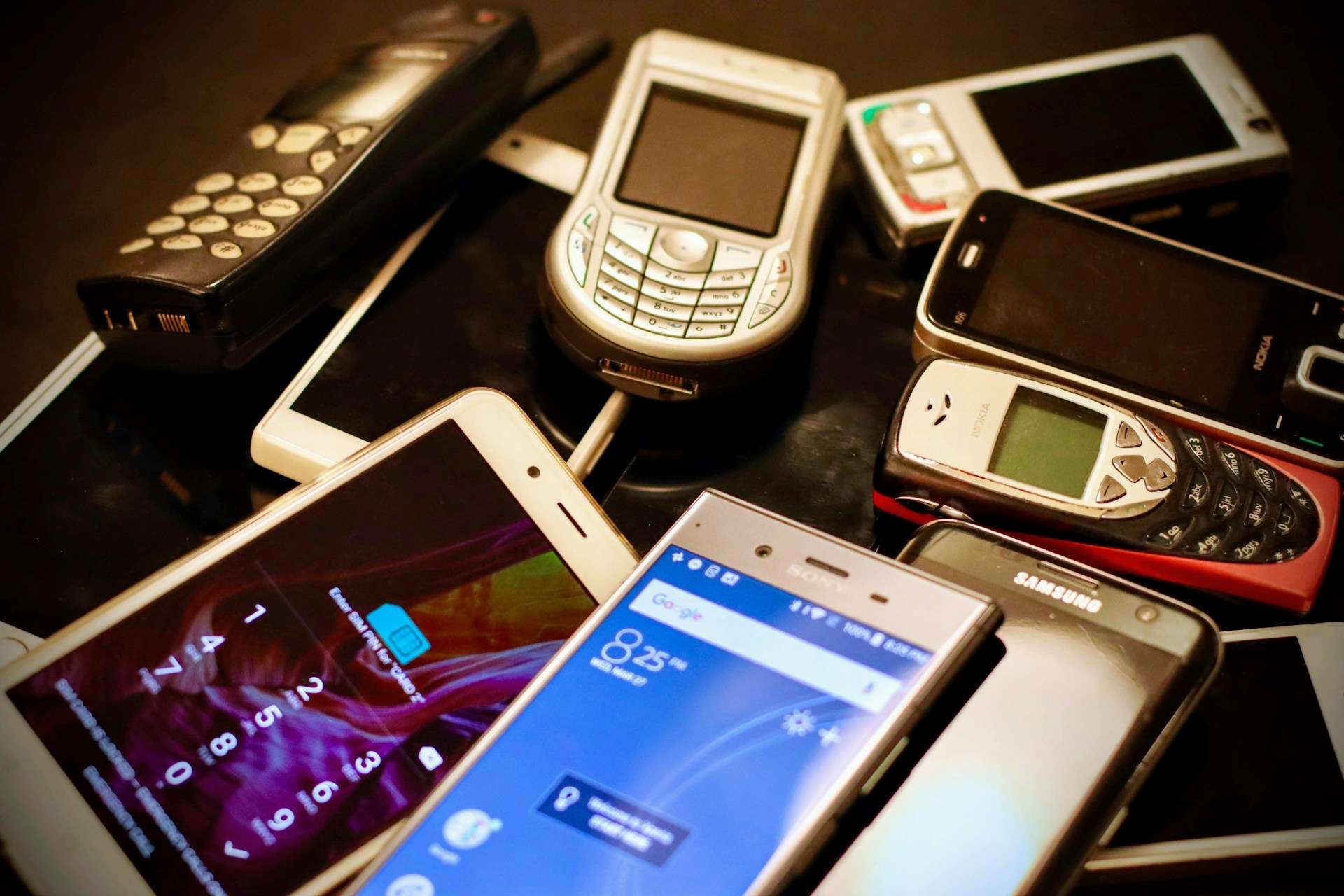
The University of California San Diego is developing, with support from Google, an unconventional experiment to reduce the cost and carbon footprint of computing: building a small cloud platform using 2,000 retired Pixel smartphones. The goal isn’t to compete with large AI data centers filled with GPUs, but to demonstrate that many academic services, light workloads, and educational applications can run on hardware that would normally be discarded in a drawer or turned into e-waste.
The project is based on a simple premise. Many mobile phones are replaced every few years, even though their computing capacity remains useful. According to Google Research, users switch phones approximately every four years, but retired devices still have fully functional processors, accelerators, memory, and storage. Reusing these boards instead of building new servers can reduce some of the emissions associated with manufacturing new hardware.
This approach is called phone cluster computing. It involves extracting the motherboard from retired smartphones, removing unnecessary components for a server environment, grouping these modules into clusters, and managing them as a general-purpose computing platform. Instead of stacking full phones on a rack, the system leverages the device’s core components: the SoC, memory, storage, and integrated accelerators.
From used phone to computing node
A smartphone isn’t designed to operate in a data center. It has a screen, battery, cameras, speakers, casing, and peripherals that don’t contribute to cloud workloads. Some of these elements, like batteries, can even pose problems in continuous operation environments. Therefore, the project removes all excess parts and retains only the motherboard.
Google Research notes that this motherboard accounts for roughly half of the device’s embedded carbon footprint, based on internal assessments. The embedded footprint includes all emissions from manufacturing: raw material extraction, chip production, assembly, transportation, and the entire supply chain. It’s difficult to reduce once the product exists, but extending its lifespan allows better distribution of that impact.
| Reused Element | Reason |
|---|---|
| Smartphone motherboard | Contains CPU, accelerators, memory, and storage |
| Arm SoC | Provides good per-core performance and energy efficiency |
| Integrated memory | Sufficient for many light educational workloads |
| Internal storage | Useful for small applications and local services |
| Integrated accelerators | Can assist with specific tasks depending on the model |
| Linux and containers | Allows managing phones as compute nodes |
The operating system is also replaced. Android is based on Linux but its user environment is optimized for mobile use, not for servers. Researchers replace that layer with a general Linux distribution, making it easier to run applications in a manner similar to a traditional cloud environment. Additionally, mobile-specific mechanisms like aggressive memory management are removed, as they make sense on personal devices but not in a server cluster.
To coordinate dozens or hundreds of boards, the project uses containerized applications managed via Kubernetes. Each group of 25 to 50 phones is organized as an autonomous cluster. This number isn’t accidental: Google Research’s cited SPEC tests show that 25 to 50 mobiles can offer capacity comparable to a modern server CPU in certain scenarios.
Not a replacement for large AI data centers
The comparison requires nuance. A cluster of retired phones doesn’t replace NVIDIA Blackwell, AMD Instinct, or Google’s TPUs for training large AI models. Nor is it intended for workloads demanding extensive memory, GPUs, or low-latency networking. Its value lies elsewhere: small, repetitive, educational, and research tasks that don’t require new hardware or oversized cloud instances.
At universities, many teaching and assessment applications already run in the cloud. These include Jupyter notebooks, automatic grading backends, small virtual machines for labs, or programming course services. Some of these workloads are typically deployed on small instances like an AWS t3.micro with 2 vCPUs and 1 GB of RAM.
Researchers have demonstrated that a cluster of 20 phones can support throughput levels comparable to a class of over 75 students, with correction latencies below the default cloud backend. An estimated deployment of 2,000 mobiles could support around 100 classes of this type simultaneously.
| Scenario | Outcome described by Google Research |
| 20 phones | Supports a class of over 75 students |
| 25–50 phones | Approximately equivalent to a modern server CPU based on SPEC benchmarks |
| 2,000 phones | About 50 server equivalents |
| Planned deployment | Supports around 100 simultaneous classes |
| Expected launch | Fall 2026 |
| Initial use | Teaching, research, and low-cost cloud at UC San Diego |
Effective load distribution is crucial. While phones have fewer cores, limited memory, and lower total capacity than servers, their high-performance cores can be competitive in single-threaded tasks. If the application fits within available memory and can be distributed across many small nodes, this model can work well.
A response to the hidden costs of server manufacturing
The project addresses a factor often overlooked in data center debates: not all environmental impact comes from electricity consumption. The operational footprint—energy used during the device’s lifespan—is significant, but so is the embedded footprint of manufacturing new servers, motherboards, memories, SSDs, power supplies, and cooling systems.
Energy efficiency improvements and renewable energy use help reduce operational impact. However, manufacturing emissions are harder to offset. Every new server requires raw materials, wafers, assembly, logistics, and an intensive industrial supply chain. Reusing already produced hardware can avoid some of this impact, provided its performance and reliability are adequate.
| Type of footprint | What it measures | How the project impacts |
| Operational carbon | Emissions from energy use during operation | Uses efficient hardware and light workloads |
| Embedded carbon | Emissions from manufacturing hardware | Extends the lifespan of already produced phones |
| E-waste | Discarded or abandoned devices | Reuses motherboards before recycling or disposal |
| Economic cost | Cost of servers and infrastructure | Reduces need for new hardware investment |
| Educational scalability | Capacity for classrooms and labs | Uses many small nodes managed via Kubernetes |
This approach also has an educational component. A data center built from retired phones can serve as a research platform to study hardware reliability, energy consumption, orchestration, networking, and maintenance under sustained load. The insights gained could inform future low-cost architectures, edge computing, or local infrastructures in resource-constrained settings.
Reliability will be the challenge
The key question is: how much will a converted smartphone as a server node withstand? Phones were not designed for 24/7 operation in racks. Their components are optimized for burst workloads, limited heat dissipation, and different charging cycles. Removing the screen, battery, and case alleviates some issues but introduces others: stable power supply, cooling, physical connectivity, maintenance, and replacing failed boards.
Google Research recognizes that a primary goal of deployment will be to study the durability of consumer hardware under continuous use. This will be critical in determining whether the model can move from a university experiment to a scalable solution for more institutions.
Software limitations also exist. Not all applications are suitable for thousands of small nodes. Workloads requiring extensive inter-process communication, high memory consumption, or powerful GPUs don’t fit well. However, many teaching services, lightweight microservices, assessment systems, small APIs, and lab environments can be adapted.
A model suitable for universities, not for replacing hyperscalers
This initiative isn’t meant to be a universal replacement for traditional data centers. Google isn’t proposing to replace its cloud regions with recycled phones. Rather, alongside UC San Diego, they are exploring a way to reuse functional hardware for specific types of workloads.
This distinction matters. The industry invests hundreds of billions in AI data centers, with enormous energy, memory, accelerators, and networking needs. Compared to that scale, a cluster of 2,000 phones appears small. But the value of this project lies in demonstrating that not all workloads require new, expensive, and oversized infrastructure.
For universities, labs, local governments, or training centers, this model offers an interesting avenue. It can reduce costs, teach distributed computing with real hardware, study sustainability, and make use of devices still holding technical value.
It also aligns with a broader vision of edge computing. If many retired devices can be organized into small clusters, local computing models could support education, research, community services, or low-intensity tasks. While they won’t meet the energy demands of generative AI, they can reduce loads typically sent to the cloud.
The UC San Diego and Google project serves as a reminder that hardware doesn’t lose its computational value the day it’s no longer attractive to consumers. A smartphone from three or four years ago might not be the latest model, but it remains a compact, efficient, and capable computer. Reusing it as a computing node isn’t just a technical curiosity; it’s a practical way to reconsider how much new infrastructure we truly need.
Frequently Asked Questions
What is UC San Diego building with Google’s support?
They plan to deploy a platform of 2,000 retired Pixel smartphones to provide low-cost, low-carbon footprint cloud computing for students and researchers.
How are mobile phones turned into servers?
Components such as screens, batteries, cameras, and casings are removed. The motherboard is retained, a Linux distribution is installed, and applications are managed via containers and Kubernetes.
Can this system replace a large AI data center?
No. It’s designed for lightweight, educational, and research workloads. It doesn’t replace GPU or TPU clusters used for training or inference of large models.
When will the system be operational?
Google Research indicates that the full system is expected to be ready by fall 2026.
