
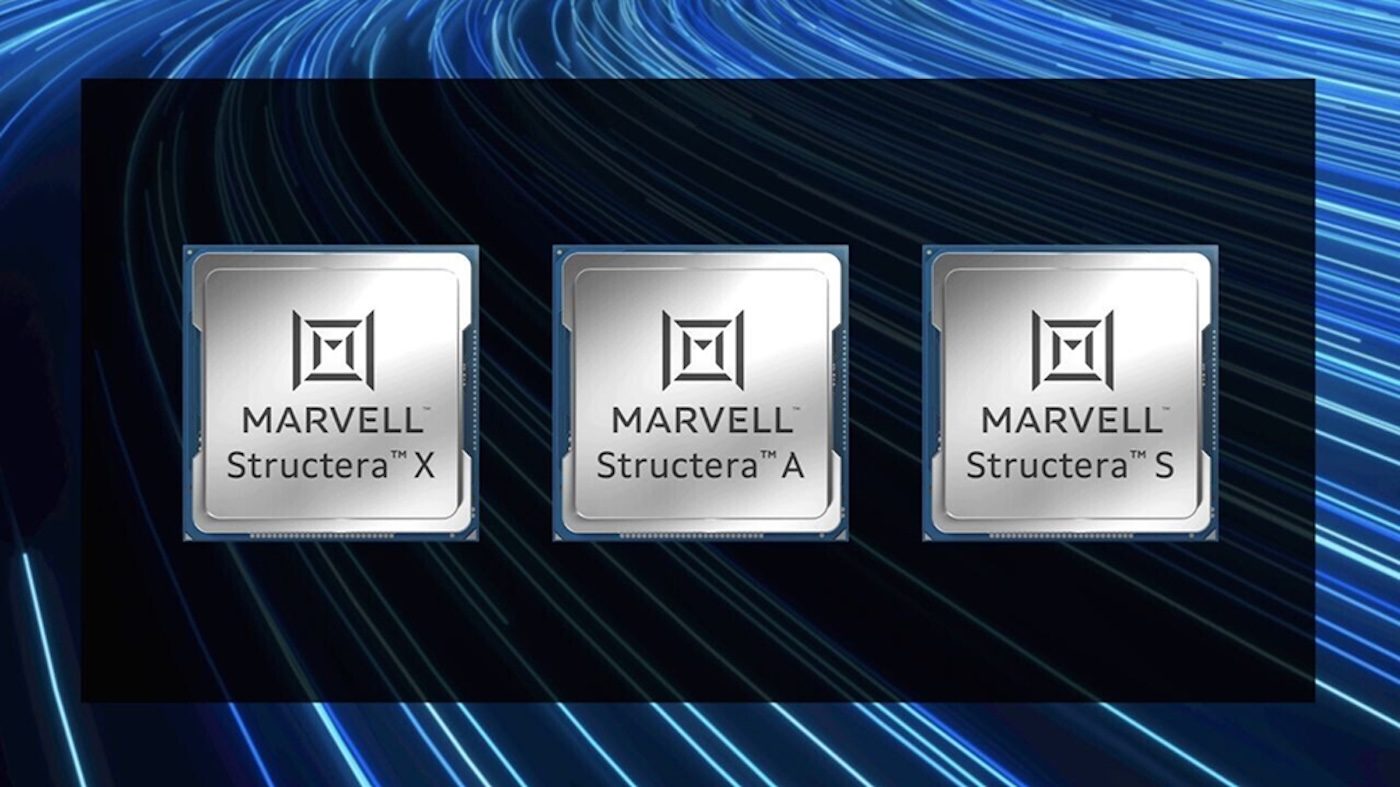
Google and Marvell Technology have widened their custom semiconductor partnership with a deal that ties the tech giant’s future chip purchases to the right to buy up to 58,970,907 Marvell shares at $206.58 apiece. If every option consolidates and is exercised at that price, they’d be worth roughly $12.18 billion, though Google hasn’t invested that amount and doesn’t own all those shares from day one.
The Google-Marvell agreement in 20 seconds
- Marvell has granted Google rights to buy up to 58.97 million shares at $206.58 each.
- Most will unlock based on purchases of custom semiconductors made through fiscal year 2033.
- The deal covers inference accelerators, storage controllers, networking, and memory components.
- It strengthens Google’s push for in-house chips around its TPUs.
The filing Marvell submitted to the U.S. Securities and Exchange Commission (SEC) shows this is far more involved than a simple share purchase. The commercial agreement was signed on July 29, 2026, and the warrant granting Google rights over the shares was issued on August 18.
The structure is meant to align supplier and customer over several years. The more custom products Google buys from Marvell, the bigger the slice of the share package that can vest.
Up to $12.18 billion, but tied to Google’s purchases
The eye-catching number is the package’s potential value.
Google holds a warrant to buy up to 58,970,907 Marvell common shares at an exercise price of $206.58 per share. Multiply the two and the maximum theoretical cash payout on exercise is around $12.18 billion.
That doesn’t mean Google has already invested it.
Of the shares in the deal, 1,360,867 vest in four quarterly tranches during the first year. The first tranche is 340,216 shares, and the next three are 340,217 shares each.
The really significant part is the other 57,610,040 shares.
Their possible acquisition depends on the business Google generates for Marvell. The deal sets 240 tranches, each tied to $500 million in qualified revenue Marvell earns.
In the first 239 tranches, 240,042 shares vest at each revenue level, with 240,002 shares in the final tranche.
That structure lets you gauge the scale of the commercial commitment needed to unlock the whole package: 240 blocks of $500 million add up to $120 billion in qualified revenue.
It’s worth being clear that this isn’t a forecast that Marvell will earn $120 billion from Google. It’s the cumulative volume needed for every performance-linked vesting event in the warrant to happen.
The measurement period runs from August 1, 2026, to January 29, 2033, and the warrant expires on August 18, 2033.
The document also covers both cash exercise and certain forms of cashless exercise.
Google expands its TPU supply chain
This goes well past contracting the manufacture of a single processor.
Marvell says in its filings that the collaboration covers a range of custom silicon programs tied to Google’s TPU (Tensor Processing Unit) ecosystem.
They include AI inference accelerators, storage controllers, networking controllers, memory interfaces, and near-memory computing technologies.
That range stands out because it shows how far custom AI infrastructure design now reaches.
A modern platform for training or running models doesn’t ride on accelerators alone. It has to move vast amounts of data between processors, memory, storage, and networks, so components that once played a minor role can shape overall performance.
Google has built its own TPUs for years, and this expanded relationship with Marvell fits the trend among big cloud providers to design more of the hardware in their data centers.
The goal may be more than replacing Nvidia GPUs. ASICs (Application-Specific Integrated Circuits) let you tailor hardware to specific workloads, chasing different trade-offs among performance, power, cost, and density.
This market matters more and more as AI inference grows.
Once a model is trained, serving millions of requests over years can run up enormous infrastructure costs. Even a modest efficiency gain in that phase can mean big savings, especially at Google’s scale.
Marvell’s critical role in the custom silicon boom
For Marvell, the deal is a chance to turn one of the world’s largest digital infrastructure operators into an even bigger customer over the coming years.
It also creates an unusual link between sales and equity.
Google doesn’t just get a discount for buying more chips. Purchases that hit certain revenue levels can give it the right to buy progressively more shares from its supplier.
If all 58.97 million shares vested and were exercised, the stake would be sizable. At the time the warrant was issued, Marvell reported 876,926,613 shares outstanding.
Using that as a reference, the maximum potential stake would be roughly 6.7% of the shares outstanding then, before accounting for issuance and future capital changes.
So saying Google will necessarily become Marvell’s main shareholder goes beyond what the documentation guarantees. The final percentage will depend on how many rights vest and are exercised, and on how Marvell’s capital evolves.
The structure clearly reflects a pattern taking shape around AI infrastructure: long-term commercial agreements paired with financial instruments that share the economic results between client and supplier.
The potential size also shows the expectations around custom silicon for data centers.
In the early AI boom, most attention went to GPUs. Now the competition spreads to almost everything around them: HBM memory, high-speed networks, interconnects, controllers, storage, and ASICs built specifically for hyperscale workloads.
Google and Marvell’s agreement runs through 2033. To reach the full package of performance-linked shares, Marvell would need to generate up to $120 billion in qualified revenue under the set conditions.
That’s a huge figure, but it also shows the scale at which the leading cloud providers are planning their AI infrastructure today.
Frequently Asked Questions
Has Google invested $12.2 billion in Marvell?
No. Marvell has granted Google a warrant that could give it the right to buy up to 58,970,907 shares at $206.58 each. Most of those rights depend on hitting certain business milestones.
How many Marvell shares can Google buy?
The maximum is 58,970,907 shares. Of those, 1,360,867 are tied to the passage of time in the first year, and the remaining 57,610,040 depend on revenue from Google’s purchases.
What chips will Marvell develop for Google?
The deal covers various custom products tied to TPUs, including AI inference accelerators, storage and network controllers, memory interfaces, and near-memory computing technologies.
How long will the agreement last?
Revenue-linked vesting events are measured through Marvell’s fiscal year 2033, and the warrant expires on August 18, 2033.
via: CNBC
