
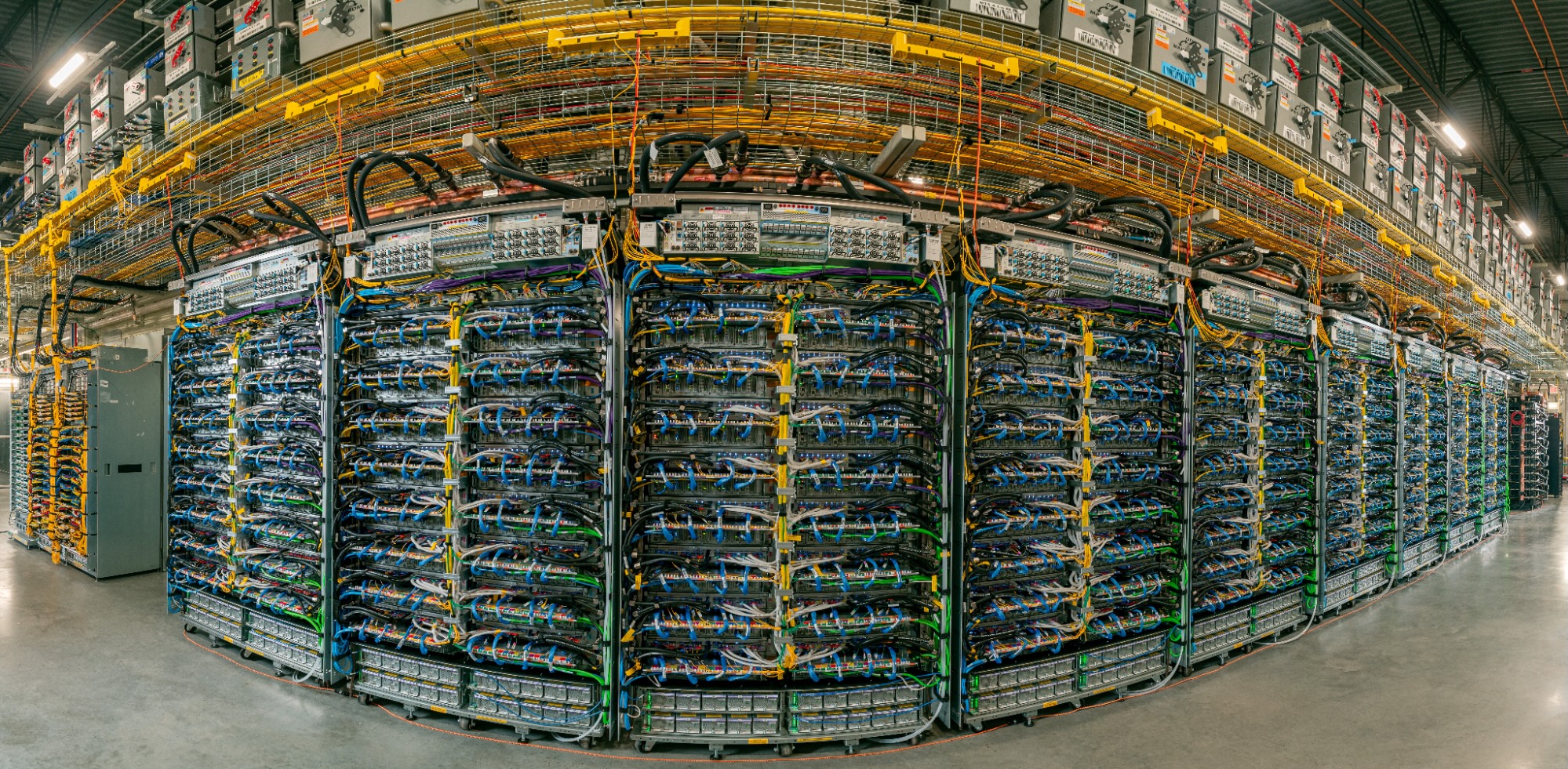
Google has begun construction on its new AI hub in Visakhapatnam, also known as Vizag, in the Indian state of Andhra Pradesh. The project, valued at $15 billion over five years, will be the company’s largest digital infrastructure deployment in India to date and will focus on data centers, international connectivity, cloud services, and large-scale artificial intelligence.
The groundbreaking ceremony took place on April 28 in Tarluvada, one of the planned locations for the complex. Google is developing the project in partnership with AdaniConneX and Nxtra by Airtel, who will lead the construction of data center buildings and connection infrastructure. The plan envisions a gigawatt-scale AI ecosystem spread across three campuses, capable of supporting increasingly demanding workloads in training, inference, and digital services.
Three campuses to make Vizag a hub for AI
The project was announced by Google in October 2025 and is now entering the construction phase. According to official Google Cloud communications, the hub includes India’s first gigawatt-scale AI center, consisting of three data center campuses. The investment will be deployed between 2026 and 2030 and is part of the country’s strategy to accelerate its digital economy within the Viksit Bharat 2047 vision.
The location is strategic. Visakhapatnam sits on India’s east coast and aims to become a technological and industrial hub with international connectivity. Sector reports indicate that the three sites will cover 266.6 acres in Tarluvada, 160 acres in Adivivaram, and 174.8 acres in Rambilli-Achyutapuram. The goal is to have data centers operational by July 2028, though timelines for such infrastructure often depend on permits, energy supply, construction, and equipment availability.
The infrastructure will go beyond server rooms. The project includes three high-capacity submarine cables, dedicated landing stations, metropolitan fiber networks, and other telecom infrastructure. This is key: an AI hub requires not only energy and buildings but also low-latency data routes to clients, cloud regions, national networks, and international connections.
Google already operates cloud regions in India, including Mumbai since 2017 and Delhi since 2021. The Vizag hub adds a different dimension: physical capacity for AI, international connectivity, and collaboration with local partners. It also aligns with other company initiatives in the country, such as its upcoming sovereign AI cloud with Airtel Business and the deployment of submarine infrastructure linked to the Blue Raman cable.
AdaniConneX and Airtel strengthen cloud infrastructure involvement
AdaniConneX and Nxtra by Airtel will be key players in the deployment. AdaniConneX, a joint venture of Adani Enterprises and EdgeConneX, has already established itself as a significant data center operator in India. Nxtra, Bharti Airtel’s data center subsidiary, provides digital infrastructure, connectivity, fiber, and related services.
These partnerships illustrate how the new AI infrastructure is being built. Hyperscalers no longer rely solely on their own teams; they require local alliances for land, permits, energy, construction, connectivity, operations, and government relations. In countries like India, where digital demand is growing rapidly and electrical and network infrastructure must scale accordingly, these alliances are essential for progress.
Google presents the project as a comprehensive ecosystem, not just a data center. Beyond computing capacity, the company discusses an expanded fiber network, a long-term clean energy strategy, and community impact programs. Initiatives include watershed and water resource management, digital training for fishing communities, funding for schools and social enterprises, and support for women-led startups.
This approach reflects an increasing focus on the local impact of large data centers. A gigawatt-scale installation requires energy, water, land, construction, networks, and personnel. In regions with rapidly expanding infrastructure, tech companies must justify not only economic returns but also how they manage shared resources and integrate with the community.
India aims to be more than just a user market
The Vizag hub comes at a time when India seeks to establish itself as a digital power and strategic player within the global tech supply chain. The country already has a vast user base, technical talent, IT service companies, and an expanding startup ecosystem. The next layer involves infrastructure: data centers, cloud presence, international connectivity, and indigenous AI capabilities.
Thomas Kurian, CEO of Google Cloud, described the start of construction as a turning point for India’s “AI-native” future. Andhra Pradesh’s Chief Minister, N. Chandrababu Naidu, highlighted it as a central element of the state’s technology corridor, with the potential to attract investment, skilled jobs, and opportunities for youth, startups, and local businesses.
The presence of Indian Minister Ashwini Vaishnaw at the ceremony further emphasizes the national importance of the project. The Indian government aims for the country to be seen as a reliable partner in technological value chains, not just a final market. In AI, this entails developing infrastructure where companies, researchers, and developers can train, deploy, and scale solutions domestically without always relying on centers abroad.
The initiative also has a geopolitical dimension. The U.S., China, Europe, Japan, and Gulf countries are competing for data centers, chips, energy resources, and AI talent. India positions itself as a third major hub, leveraging its demographic scale, technological capacity, cost advantages, and strategic relationships with U.S. companies. A $15 billion Google hub reinforces this narrative.
Energy, connectivity, and timelines will be critical
The main challenge will be execution. A gigawatt-scale AI hub isn’t built solely with announced investment; it requires stable energy access, supply agreements, environmental permits, water and cooling systems, submarine cables, fiber optic networks, substations, critical equipment, skilled personnel, and logistics chains for servers and accelerators.
Clean energy strategies will be closely watched. Google states that the project will prioritize the addition of renewable energy to the grid, aligning with India’s goal of reaching 500 GW of non-fossil capacity by 2030. While this is a significant pledge, balancing data center growth with decarbonization will be a key challenge, as in other markets experiencing rapid AI expansion.
Submarine connectivity will also be pivotal. To become an AI and cloud node, Vizag must establish redundant, low-latency routes to other markets. The three announced cables and dedicated landing stations could redefine the city’s role in India’s digital landscape, which has traditionally centered around hubs like Mumbai, Chennai, Hyderabad, Bengaluru, and Delhi.
For Google, the Vizag project strengthens its competition with AWS, Microsoft Azure, and other cloud providers in one of the world’s most significant digital markets. For India, it provides vital infrastructure to support research, public services, businesses, startups, and corporate AI deployments. For Andhra Pradesh, it’s an opportunity to position itself on the global data center map.
The construction has just begun. The outcome will depend on the ability to translate substantial investments into tangible services, local talent, available energy, and reliable connectivity. In the AI era, infrastructure is no longer just the invisible backbone of the internet; it has become an industrial policy instrument.
Frequently Asked Questions
Where will Google build its new AI hub in India?
Construction has started in Visakhapatnam, Andhra Pradesh. The project will be spread across three campuses, with Tarluvada serving as one of the sites.
How much will Google invest in the project?
The company plans a $15 billion investment over five years, from 2026 to 2030.
Who are the partners involved in construction?
AdaniConneX and Nxtra by Airtel will oversee the building of data centers and the associated connection infrastructure for the hub.
When will the data centers be operational?
Initial projections suggest a rollout by July 2028, though timelines depend on progress in construction, permits, energy supply, and equipment deployment.
