
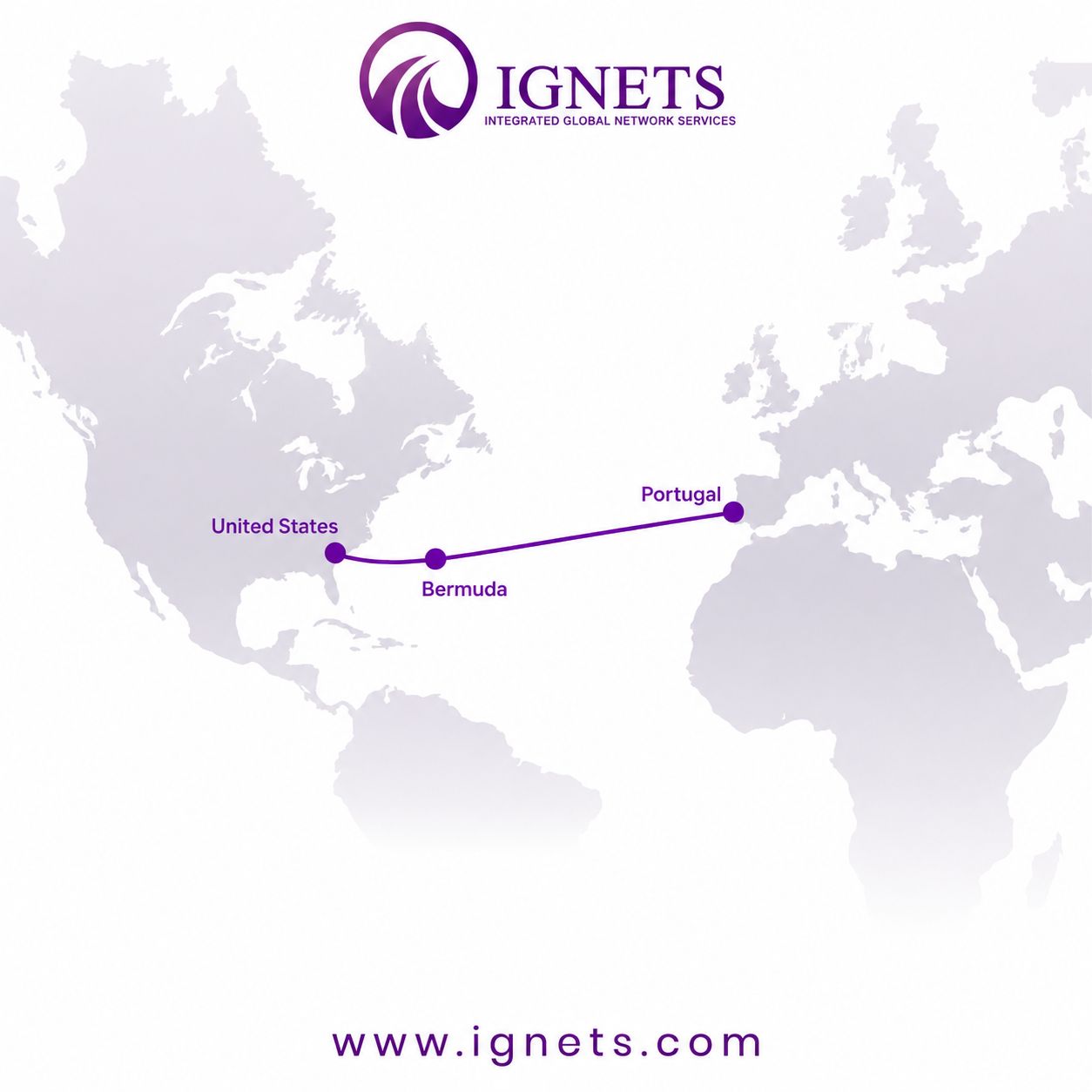
Google has taken another significant step in its global private network strategy with Nuvem, its new transatlantic undersea cable connecting the United States and Portugal. The system, whose name means “cloud” in Portuguese, has already achieved key anchoring milestones in the Atlantic and is scheduled to go into service in the second half of 2026, after completing the final phases of installation, activation, and testing.
This news extends beyond just a new cable between two continents. Nuvem encapsulates the current direction of digital infrastructure: major cloud providers are not only buying capacity from third parties but are increasingly designing, funding, and controlling critical portions of the physical network that supports their services. In a moment marked by high demand for AI, cloud, video, enterprise data, and low latency, having proprietary fiber optic links under the ocean has become both a technical and strategic advantage.
A new corridor between the US, Portugal, Bermuda, and the Azores
Nuvem will connect Myrtle Beach, South Carolina, with Sines, Portugal, and will include branches toward Bermuda and São Miguel in the Azores. According to U.S. FCC documentation, the system is designed with 16 fiber pairs and an approximate capacity of 24 Tbps per pair, raising the total expected capacity to around 384 Tbps.
| Technical Data | Nuvem |
|---|---|
| Owner | Google, through subsidiaries |
| Main route | Myrtle Beach, South Carolina – Sines, Portugal |
| Branches | Bermuda and São Miguel, Azores |
| Fiber pairs | 16 | Capacity per pair | 24 Tbps |
| Design capacity | 384 Tbps |
| Expected service entry | Second half of 2026 |
| System provider | SubCom |
The anchoring in Myrtle Beach was confirmed in May 2026, while Bermuda celebrated in June the arrival of the Nuvem and Sol systems—another Google cable linking the US, Bermuda, Azores, and Spain. In Portugal, Sines will be the key point, a site that has been increasingly gaining prominence as an Atlantic gateway for undersea cables, data centers, and new routes connecting Europe, America, and Africa.
The choice of Sines is no coincidence. Portugal combines advantageous geographic positioning, Atlantic coastline, connectivity with other systems, and a public strategy aimed at attracting digital infrastructure. Google had already indicated that Nuvem would complement other cables in its portfolio, such as Equiano, which connects Portugal with various points in Africa. The addition of more international routes reinforces the idea of the Iberian Peninsula as a region of growing importance for global traffic—not just as a consumer market but as an interconnection hub.
Why it matters for cloud, AI, and resilience
The gross capacity of a cable like Nuvem is impressive, but the more critical aspect lies in its architecture. A new transatlantic route provides diversity, reduces dependence on more saturated corridors, and allows traffic rerouting if infrastructure fails. In cloud services, this diversity translates into greater margins for supporting critical workloads, data replication, incident recovery, and regional connectivity.
For Google, Nuvem is not an isolated piece. It fits alongside Sol, Firmina, and other systems linking the Americas, Europe, and Africa. Sol, announced in 2025, will connect the US, Bermuda, Azores, and Spain, and Google presents it as part of an investment aimed at strengthening transatlantic resilience alongside Nuvem. The combined deployment of both systems enables the creation of complementary routes between the US and Iberia, with Bermuda and the Azores serving as valuable intermediate points.
This design has direct implications for the cloud market. Cloud regions are no longer defined solely by data centers, servers, and power availability. They also depend on international optical routes, terrestrial agreements, anchoring stations, regulatory permissions, and data movement costs across continents. In practice, cloud infrastructure is becoming more vertical—those controlling more network layers can better optimize performance, latency, resilience, and internal costs.
There’s also a geopolitical aspect. Submarine cables carry the majority of international internet traffic and are sensitive infrastructure. That Google employs dedicated subsidiaries for different segments of Nuvem, as shown in FCC documentation, reflects the regulatory complexity of such projects. It’s not enough to install fiber; compliance with national laws, maritime permits, security requirements, and operational conditions in each jurisdiction are essential.
Portugal’s growing role as an Atlantic node
For Portugal, Nuvem reinforces a position it has been steadily developing. Sines is increasingly appearing in discussions about connectivity, data centers, and international routes. Its advantage lies in its Southwestern European location, offering a strategic vantage point to connect with the Americas, Africa, and other parts of the continent.
The impact is not limited to Google. The presence of high-capacity cables can attract operators, cloud providers, digital platforms, data center projects, and services requiring international connectivity. While not automatic, the availability of submarine routes provides a foundational condition for viable digital projects.
The arrival of Nuvem also confirms a trend affecting traditional operators, bulk carriers, and infrastructure providers. Hyperscalers no longer behave solely as capacity customers; they increasingly act as network owners, controlling system design, stations, branches, and integration with their private backbones. This shift changes market dynamics: the most valuable traffic can flow over private networks, while excess capacity and alternative routes reshape prices, agreements, and interconnection models.
Nuvem still needs to complete its final phases before going into service. However, its deployment sends a clear signal: cloud doesn’t only exist in data centers. It also resides in thousands of kilometers of undersea fiber, discrete coastal stations, and engineering decisions that will influence how data moves over the next decade.
Frequently Asked Questions
What is Google’s Nuvem cable?
Nuvem is a transatlantic undersea cable by Google connecting the US and Portugal, with branches toward Bermuda and the Azores.
How much capacity will Nuvem have?
The system is designed with 16 fiber pairs and an approximate total capacity of 384 Tbps, based on FCC documentation.
When will Nuvem enter service?
The scheduled start is in the second half of 2026, after completing installation, activation, and testing phases.
Why is Sines important for this cable?
Sines enhances Portugal’s role as an Atlantic gateway connecting Europe, America, and Africa, and can attract more digital infrastructure along its submarine routes.
via: LinkedIn
