
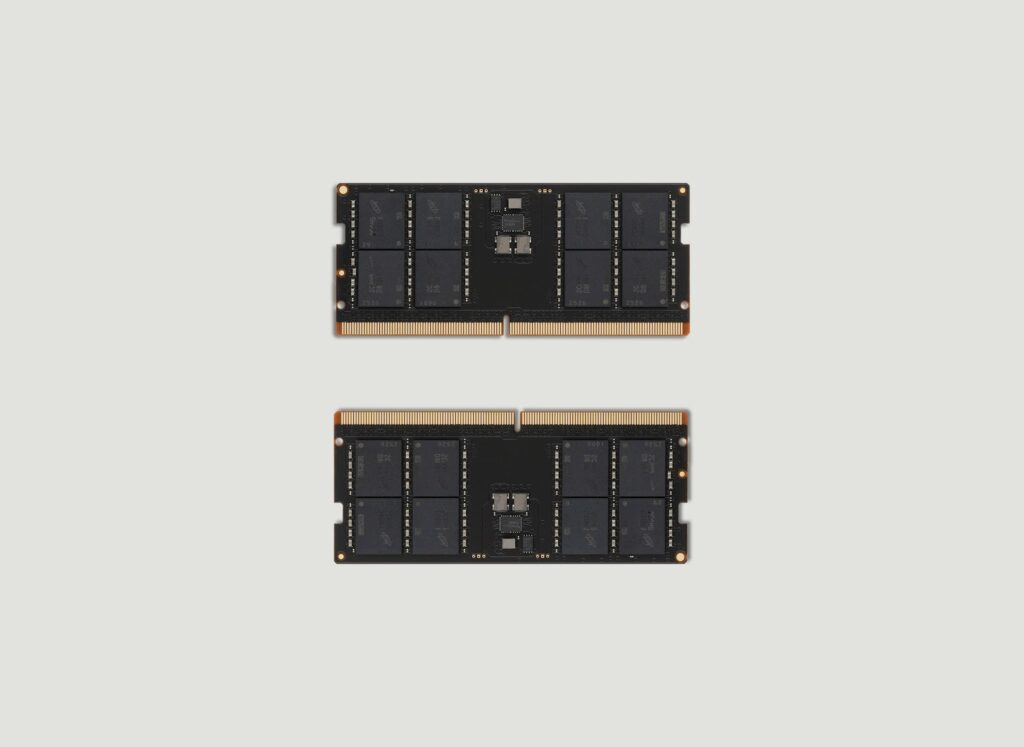
Framework, the maker of modular and repairable laptops, has announced a 50% increase in the price of configurable DDR5 memory for orders of the Framework Laptop DIY Edition. The adjustment, as explained by the company itself, is due to the significant cost increases they are experiencing from memory module suppliers and distributors.
Despite the rise, Framework states that their prices remain below the open market and that they will not make changes to existing pre-orders. Additionally, for now, they will also keep the price of the memory included in their pre-configured laptops and the Framework Desktop unchanged, which they acknowledge makes the 128 GB configuration “an absolute bargain” within their current lineup.
As always with the brand’s DIY model, users retain the option to purchase the laptop without memory or storage, allowing them to reuse modules they already have or take advantage of third-party offers.
A Memory Market Fully Tensioned by AI
In the statement, Framework paints a clear outlook: the memory market is experiencing a period of high volatility, with continuous price increases expected to last in the coming weeks and months. The imbalance between supply and demand is evident, with a main cause: the explosion of artificial intelligence in data centers.
The company offers a very illustrative example. A single rack of the NVIDIA GB300 solution can consume:
- 20 TB of HBM3E memory,
- 17 TB of LPDDR5X.
Those 17 TB of LPDDR5X alone would be enough to equip approximately a thousand laptops, and an AI-oriented data center could be filled with thousands of racks of this type. In other words, a single installation of this scale can absorb the equivalent in memory demand of an entire segment of the PC market.
Meanwhile, the memory sector has decades of boom and bust cycles, making the three major DRAM chip manufacturers —Micron, SK Hynix, and Samsung— very cautious about investing billions in new manufacturing capacity. Now that demand is surging again, the gap between actual need and available capacity is measured in years, not months.
The PC Industry in the Shadow of the Server Market
Framework also warns of another side effect: both the current capacity and new deployments are being prioritized towards higher-margin products, especially:
- HBM memory for AI GPUs.
- DDR5 and LPDDR5X modules for servers.
This puts the PC market in a less favorable position: it competes for the same production capacity but with lower margins per module, leading to less availability and more aggressive price increases for laptop and desktop manufacturers.
Transparency, Small Margins, and Future Price Reductions
The company announces the price hike alongside three public commitments to its community of users:
- Total transparency
Whenever they change memory or system prices, they will explain the reasons and context. - No taking advantage of the situation
Framework assures that price increases will only cover rising costs, and when possible, they will absorb part of the impact to maintain some stability. - Market-based reductions
If costs decrease in the future, they pledge to lower their prices again and update the blog where they centralize this information.
This approach is not new: the brand recalls acting similarly during the 2025 tariff changes, informing about each adjustment and reversing increases when regulatory pressure eased.
The DIY Model Advantage and Supply Chain Partnerships
Framework emphasizes that their business model provides some flexibility to navigate this volatile environment. On one hand, their DIY Edition allows users to buy laptops without RAM or SSD, installing modules they already own or find cheaper through other channels.
On the other hand, the company highlights its long-term agreements with:
- Micron, one of the largest manufacturers of chips and memory modules.
- Module assemblers like ADATA, which in turn purchase chips from the big three suppliers.
- Specialized memory distributors.
These relationships give them some margin to ensure supply and, as much as possible, limit the direct impact of the memory crisis on the final price.
Revised Return Policy to Prevent “RAM Arbitrage”
A unintended consequence of the memory price being below the market is the risk of speculation. The company admits that some buyers might attempt to:
- Order a DIY Edition laptop with discounted memory.
- Keep the RAM modules.
- Return the empty system, exploiting the price difference with the market.
To prevent this, Framework has updated its return policy: from now on, any return of a laptop that includes memory will also require returning those modules. Partial returns with the customer keeping the RAM will no longer be accepted.
Implications for the End User
Potential buyers of a Framework Laptop or Framework Desktop face a dual message:
- In the short term, memory will be more expensive, and there may be further upward revisions if the demand driven by AI and servers remains high.
- In the medium and long term, if investments in new DRAM factories and demand normalization lower costs, Framework promises to reflect those reductions in their prices.
In any case, the company turns its blog into a sort of “market thermometer,” explaining how the AI frenzy —with racks consuming dozens of terabytes of specialized RAM— is impacting something as everyday as the price of laptop memory.
For advanced users valuing modularity and repairability, the implicit advice is clear: if you need more memory in the coming months and a good deal appears, it might be a good time to buy early. The rest will depend once again on the pulse between data centers demanding gigabytes of memory and an industry that always seems to lag demand by a step.
via: frame.work