
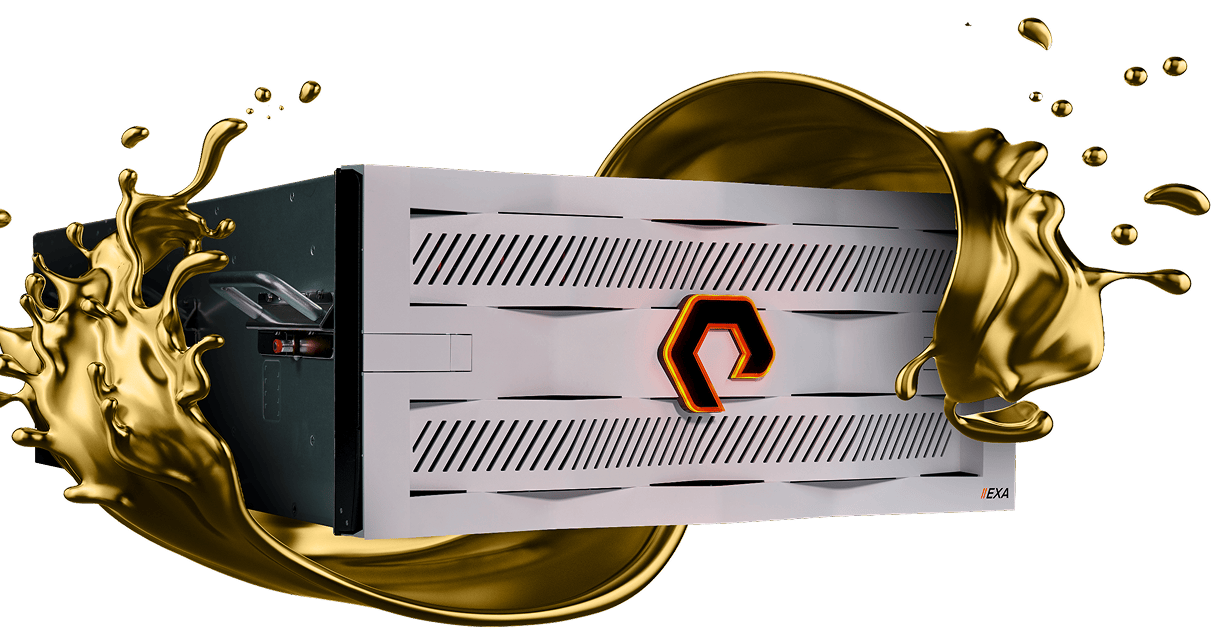
Everpure, the company formerly known as Pure Storage, has sent a letter to its customers explaining a price increase that well summarizes the current state of the tech industry. According to its president and CEO, Charles Giancarlo, the company’s products have become approximately 70% more expensive on average since early 2026 due to sharp rises in the costs of components such as CPUs, DRAM memory, flash chips, and other essential semiconductors.
The letter does not mention a temporary strain or a simple commercial review. Everpure places the problem within a new supply crisis caused by demand for artificial intelligence infrastructure — a pressure that is absorbing manufacturing capacity and increasing costs even for customers not directly investing in AI. This warning is significant because it impacts a fundamental layer of any modern digital strategy: enterprise storage.
AI Also Raises the Cost of the Unrelated
Everpure’s message is clear. The company states that the tech sector is experiencing its third major supply disruption in less than a decade. First was the 2021 pandemic, which shut down factories and drove up demand for remote work equipment. Next, in 2025, the company mentions the impact of tariffs dubbed “Liberation Day” on electronics from Asia. Now, in 2026, the pressure comes from the demand for semiconductors to fuel AI growth.
The most uncomfortable fact for customers is that this inflation isn’t limited to GPUs or specialized servers. Everpure purchases large volumes of processors, DRAM, flash memory, and thousands of components to build storage systems for enterprises, hyperscalers, and AI workloads. If these components go up in price, so do enclosures, data platforms, and solutions that many organizations consider basic infrastructure.
Giancarlo confirms that some high-volume components have increased in cost by four to ten times since mid-2025, with cumulative increases ranging from 300% to 900%. The company reports that costs started rising slowly in Q3 2025, roughly doubled between December and January, and doubled or tripled again in February and March.
The contrast with the previous decade is stark. Everpure recalls that, in dollars per terabyte, its products had decreased by an average of 20% annually over the last ten years. This pattern, common in flash storage and much enterprise hardware, has been abruptly broken. Technologies that customers increasingly expected to become cheaper have turned into uncertain budget items.
From Stable Budgets to 30-Day Offers
The letter also reveals how the commercial relationship between manufacturer, channel, and end customer is evolving. Everpure states that in December and January it maintained open offers according to their terms, which previously had validity of 60 to 90 days. Later, it applied its first price increase in February and reduced the validity of offers to 30 days. With costs moving faster, the company now maintains this shorter window.
For technology and purchasing managers, this detail may be almost as critical as the percentage increase. Approval cycles in mid-sized and large companies often don’t align with 30-day budgets. If there are tenders, internal validations, financial processes, or investment committees involved, a narrow window forces earlier decisions with less margin for error.
Everpure emphasizes that it is not passing the entire increase in costs onto customers. The company claims that its price hikes are below the actual increase in the supply chain and that it will operate at the lower end of its historical gross margin range to absorb part of the impact. This is a corporate stance worth noting, but it also shows how infrastructure manufacturers are attempting to secure orders without completely sacrificing margins.
The company attributes some of this ability to several advantages of its own: simpler hardware designs, greater software integration, improvements in data compression, DirectFlash technology, and Evergreen programs for expanding capacity and performance in existing systems. The underlying idea is that if raw material costs rise, any improvement that reduces physical component needs or enhances available capacity becomes even more valuable.
A Wake-Up Call for CIOs, CFOs, and Infrastructure Teams
Everpure’s letter isn’t just a message to customers; it’s a market signal. If enterprise storage prices have risen so sharply, many organizations will need to reassess renewal projects, capacity expansions, AI deployments, backup strategies, analytics, and data center modernization.
The pressure may hit especially hard for companies that planned to grow data capacity through cost-reduction assumptions. For years, many teams believed each new generation would offer more capacity at a lower cost. That assumption is no longer guaranteed—manufacturers now prioritize higher-margin AI components, leaving less capacity for other uses.
Giancarlo warns that this crisis could last longer than the pandemic-driven disruption for two reasons. First, semiconductor manufacturers are shifting capacity toward higher-margin AI chips. Second, building new fabs takes years and involves billions of dollars in investments, plus increasingly expensive equipment. If AI demand remains high, elevated costs could persist for years.
For corporate clients, the practical takeaway is uncomfortable: better planning, securing critical capacity early, and thoroughly reviewing the lifespan of existing infrastructure are essential. Routine upgrades may become costly, but delaying capacity expansion could expose companies to higher prices, shortages, or longer lead times.
This situation also underscores the appeal of models that extend the life of installed systems, improve data compression, review data retention policies, and segregate hot, warm, and cold data. Not all data require the same performance or availability, and in a market with more expensive flash, data architecture is once again a financial decision as much as a technical one.
The AI-driven pressure on the supply chain reveals a less visible consequence than the GPU race: even companies not training massive models might partially bear the brunt of higher prices. Storage, memory, networking, servers, and enterprise electronics often share suppliers, factories, and materials. When demand spikes in one segment, the entire industry feels the impact.
Everpure positions itself as transparent and restrained in its response. Nevertheless, its clients are left with a straightforward message: the era of increasingly cheap enterprise hardware may have paused—and if AI demand keeps absorbing capacity, that pause could last much longer than many budgets anticipated.
Frequently Asked Questions
Why has Everpure increased its prices?
The company attributes the rise to the significant increase in costs for components like CPUs, DRAM, flash memory, and other semiconductors driven by AI infrastructure demand.
How much have Everpure’s prices increased?
According to the CEO’s letter, the company’s prices have increased by about 70% on average since early 2026.
Does this crisis only affect companies investing directly in AI infrastructure?
No. Everpure warns that even customers not directly investing in AI can be affected because they share the same supply chain for components.
Why could this crisis last several years?
Because manufacturers are prioritizing higher-margin AI chips, and expanding semiconductor capacity involves years, enormous investments, and specialized equipment.
