
Telefonica, Deutsche Telekom, Orange, and Vodafone have moved from talks to a letter of intent to explore a joint bid for European spectrum for mobile satellite services — the kind that lets an ordinary phone connect directly to a constellation in orbit. The announcement, made on October 19, confirms what Bloomberg had reported in September, but it remains a first step: there is no company set up yet, no satellite partner has been chosen, and the rules for the tender still aren’t approved in Brussels.
Europe’s telecom satellite alliance in 20 seconds
- The four operators have signed a letter of intent, not a binding agreement.
- They would provide the ground network and coordination; the satellites would come from a partner not yet chosen.
- Licenses for the 2 GHz band expire in May 2027, and the EU still has to settle how it will be divided.
We reported back in September that the four carriers were weighing a European alliance against Starlink. The plan now has a written form, and the joint statement frames it within the European Commission’s ambition to strengthen the sovereignty, security, and resilience of critical connectivity. The commercial goal is direct-to-device (D2D) service, the technology that enables messages, calls, and data from a phone in areas no terrestrial antenna reaches.
A shared-infrastructure model, not a constellation of their own
The most relevant part of the announcement for the infrastructure sector is how the roles are split. The operators aren’t planning to invest directly in satellites. Their proposal is to deploy the key ground infrastructure across Europe — the stations and systems that connect the constellation to their networks — along with coordination and oversight functions. The space segment would come from a satellite partner they haven’t chosen yet.
With that split, the operators would keep the ground segment, where traffic passes through and gets managed, without taking on the cost and risk of launching a constellation. The companies add that access would be open and non-discriminatory for any mobile operator wanting to offer D2D, with a model designed, according to the text, to encourage competition, reduce fragmentation, and widen the offering for users. They also clarify that the initiative doesn’t replace the satellite partnerships each of them already has in place.
The statement leaves out the details that would let anyone assess the project: there’s no timeline, no investment figures, no corporate structure, and no executive statements. It also doesn’t explain how control and revenue would be split among the four.
What’s at stake in the 2 GHz band
The spectrum in dispute is the 30 MHz paired block in the 2 GHz band for mobile satellite services, which the EU awarded in 2009 to Viasat and EchoStar and whose licenses expire in May 2027. According to Light Reading, EchoStar’s would pass to SpaceX as part of its spectrum purchase.
The European Commission proposed on May 27 a single EU-wide selection process, splitting the band into three parts: one-third for a company under majority European control, another for government services through IRIS², and a third open to any operator, including SpaceX or Amazon. The European Parliament and the Council still have to approve it before the current licenses expire. According to Bloomberg’s reporting, as picked up by Light Reading, the four-operator consortium would compete for a 2×10 MHz block.
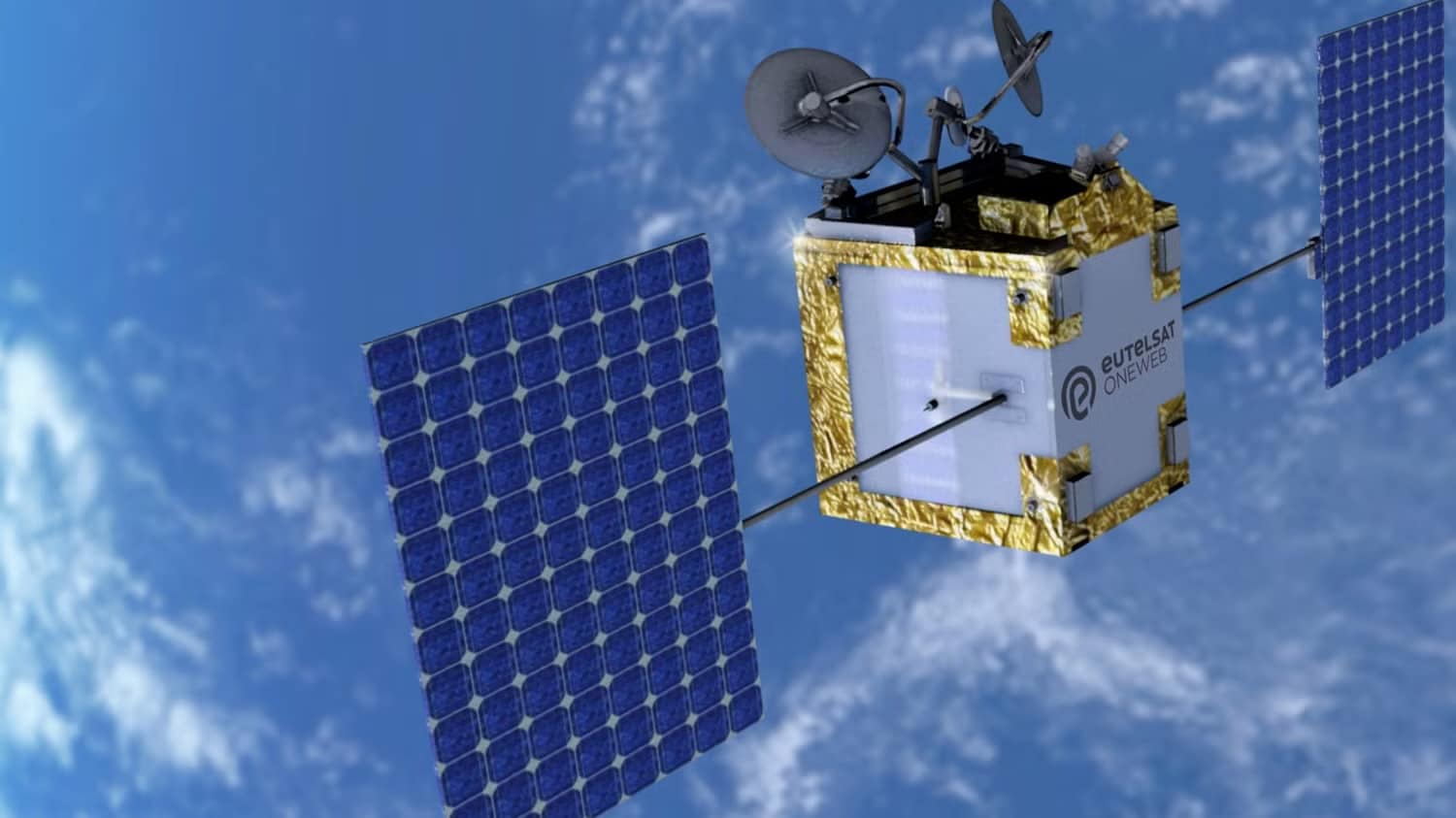
Europe’s public alternative won’t be ready in time to cover that gap. IRIS² is planning 348 satellites, but its service won’t launch until 2029 and will start with broadband, with limited capacity for mobile. In the meantime, Europe has had to lean on OneWeb and Eutelsat to buy time, and Starlink has already tested its satellite mobile network in Spain during this summer’s wildfires.
Prior partnerships and Brussels, the two sticking points
Each operator arrives with existing commitments that complicate the fit. Deutsche Telekom has a deal with SpaceX to offer Starlink’s satellite mobile service, with launch planned for 2028. Vodafone co-owns Satellite Connect Europe 50/50 with AST SpaceMobile, a venture that, according to Bloomberg, might not meet the European-control requirement in the Commission’s proposal. Neither company has said what will happen to those agreements.
The other sticking point is competition. An alliance between the dominant operators of Germany, France, the UK, and Spain would need the Commission’s approval, which would have to reconcile its competition rules with its own push for a satellite operator under European control. The open-access commitment for other operators seems designed precisely with that review in mind. In Spain, the move affects Movistar and, indirectly, Vodafone Spain, owned by Zegona since 2024, since it’s the British group that is the actual signatory.
Frequently Asked Questions
What have Telefonica, Vodafone, Orange, and Deutsche Telekom signed?
A letter of intent to explore a joint bid in the upcoming European spectrum award for mobile satellite services. It isn’t a binding agreement.
Will they build their own satellite constellation?
No. The operators would provide the ground infrastructure and coordination across Europe, and the satellites would come from a partner they haven’t chosen yet.
When will Europe’s mobile satellite spectrum be allocated?
The current licenses expire in May 2027. The Commission proposed a three-way split in May, but the European Parliament and the Council still have to approve it.
Sources:
