
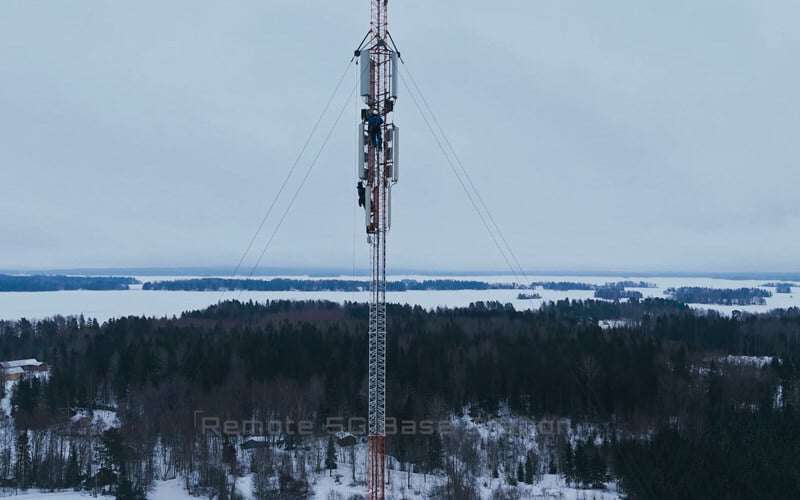
Brussels is once again pushing for EU member states to reduce or eliminate Huawei and ZTE presence in their telecommunications networks. The European Commission recommends that countries avoid using equipment from these Chinese providers in critical connectivity infrastructure and is preparing regulatory changes so that current recommendations in the 5G Toolbox can become more binding obligations.
The debate is not new, but it is now entering a more delicate phase. Since 2020, the European Union has considered certain providers to pose a high security risk to 5G networks, especially when governed by legal frameworks of third countries that could interfere with their independence. The problem is that, six years later, the implementation of these recommendations remains inconsistent. Some states have clearly restricted Huawei and ZTE. Others, like Spain and Germany, prefer to maintain national decision-making margins and avoid an automatic EU veto.
The discussion comes at an inconvenient time for Europe. The EU wants to focus on digital sovereignty, artificial intelligence, European cloud, and strategic autonomy, but its networks still depend on a global supply chain where China, the United States, Korea, Japan, and Taiwan are significant players. Banning Chinese technology may be a security measure, but it also raises a practical question: does Europe have real, competitive, and sufficiently scalable alternatives?
Spain and Germany oppose a complete ban
The European Commission has recommended that member states exclude Huawei and ZTE equipment from connectivity infrastructure. Additionally, reform of the European cybersecurity framework could empower Brussels to promote the phase-out of providers considered high-risk in critical sectors. The debate is extending beyond 5G to fiber, energy, medical equipment, drones, semiconductors, and other essential infrastructure layers.
Spain and Germany have shown resistance to an EU-wide ban imposed from Brussels. Both countries argue that risk assessments should remain at the national level, considering the specific situation of each network, existing contracts, replacement costs, and trade relationships with China.
Germany already committed in 2024 to remove critical Huawei and ZTE components from sensitive parts of its 5G networks before the end of the decade, but has avoided a faster, more general break. Spain, on the other hand, has not adopted a total ban and has taken a more flexible stance, although its operators have also been diversifying providers in critical areas.
The Spanish case is especially sensitive. Telefónica renewed contracts with Huawei for parts of its 5G network serving retail customers, while awarding Nokia infrastructure for core 5G services to businesses and administrations. Meanwhile, MasOrange awarded Ericsson the unification of its Stand Alone 5G network and its IMS platform, reducing technological fragmentation and limiting the influence of Chinese providers in critical layers.
The issue is not whether Huawei makes good equipment. The company has been one of the most competitive telecommunications providers worldwide for years. The question is whether European critical infrastructure can depend on a provider subject to a jurisdiction and political structure that Brussels considers risky. Huawei denies these accusations and argues that bans based on origin can be discriminatory, but the Commission insists that the problem must be analyzed from a supply chain security perspective.
European alternatives exist but do not cover the entire supply chain
Europe is not starting from zero. In mobile networks, it has two top-tier global players: Nokia, based in Finland, and Ericsson, based in Sweden. Both companies can supply 5G radio, 5G core, transport solutions, network management, automation, cloud RAN, and professional services for operators. They are real alternatives to Huawei and ZTE, not experimental projects.
There are also relevant European players in other layers. Orange Business, Deutsche Telekom, Telefónica Tech, Thales, Atos/Eviden, Capgemini, SIAE Microelettronica, Amarisoft, Rohde & Schwarz, Adva (part of Adtran), and specialized cybersecurity, integration, and private network providers can participate in deployments of connectivity, private 5G, mission critical, transport, security, or edge solutions. However, it’s important not to overstate: the core of the macro 5G equipment market remains concentrated in a few global manufacturers.
| Area | Relevant European Alternatives | Important Note |
|---|---|---|
| RAN 5G and 5G core | Nokia, Ericsson | Most mature European options against Huawei and ZTE |
| Private 5G networks | Nokia, Ericsson, Orange Business, Deutsche Telekom, European integrators | Dependent on use cases, spectrum, integration, and local support |
| Security and integration | Thales, Eviden, Capgemini, Telefónica Tech, and others | Complement the network but do not replace RAN providers alone |
| Open RAN | European ecosystem partial, with Nokia and operators as key players | Still not replacing traditional networks at scale across all scenarios |
| Testing and measurement | Rohde & Schwarz | Key for validation, certification, and operation, but not a full network provider |
The idea of a fully “European 100%” solution sounds appealing, but today it’s hard to sustain. Although Nokia and Ericsson are European, they manufacture and purchase components through global supply chains. Their equipment includes semiconductors, memory, software, operating systems, design tools, and industrial processes that are not entirely produced in Europe. The same applies to any major sector supplier.
True sovereignty does not mean pretending that everything can be made within the EU overnight. It involves reducing critical dependencies, diversifying suppliers, controlling sensitive layers, auditing software, safeguarding operations, demanding transparency in contracts, and maintaining enough European capacity to avoid being blocked by external decisions.
Open RAN can help but is not a magic wand
In theory, Open RAN can reduce dependence on closed providers by separating hardware, software, and access network interfaces. The goal is for operators to combine components from different manufacturers and avoid being trapped in proprietary architectures. For Europe, this aligns with diversification and increased competition.
But Open RAN does not solve all problems. Its large-scale deployment remains complex, especially in national networks with high demands for performance, coverage, low latency, energy efficiency, and maintenance. Additionally, a more open architecture introduces new points of integration and security concerns. Opening interfaces does not automatically mean a more secure network; it requires better governance.
Therefore, Europe’s most realistic approach is not to replace Huawei overnight with a single alternative, nor to expect Open RAN to fix all dependency issues. A sensible strategy involves gradually phasing out high-risk equipment in critical layers, strengthening European suppliers, diversifying in new generations, promoting private 5G networks for industry and government, and investing in domestic capabilities in software, chips, cybersecurity, and operations.
It also comes at a cost. Replacing installed equipment is not free. It affects operators, suppliers, deployments, contracts, maintenance, and potentially final prices. China has already warned of possible reprisals, and studies linked to Chinese interests significantly increase the cost of a broad withdrawal. The Commission considers more limited scenarios for certain non-upgradable equipment, but economic debates will continue.
Digital sovereignty without naivety
Perhaps some fears about Huawei are exaggerated. Perhaps not. The problem is that for critical infrastructure, decisions are not made solely on commercial criteria. A 5G network is no longer just for faster video streaming on mobile phones. It connects factories, ports, hospitals, defense, vehicles, sensors, energy, logistics, and public services. If that network becomes strategic infrastructure, trust in its providers also changes.
Europe has real alternatives with Nokia and Ericsson, but it still lacks complete technological sovereignty. It needs more industrial capacity in semiconductors, more specialized providers, more critical proprietary software, greater scale in cloud and edge computing, and a public procurement policy that supports European companies without falling into harmful protectionism.
The Commission may be right to call for less dependence on Huawei and ZTE. Spain and Germany also have reasons to advocate prudence, realistic timelines, and decisions based on national analysis. The path forward should not be an improvised trade war nor a dependence that ignores risks.
The goal should be to build safer, more auditable, and less externally dependent European networks—whether on China, the US, or any other actor. Digital sovereignty is not achieved simply by banning providers; it is achieved by developing independent alternatives that can compete.
Frequently Asked Questions
Why does the EU want to limit Huawei and ZTE?
Because the European Commission considers that certain providers may pose high risks to cybersecurity and the resilience of critical infrastructures, especially due to their exposure to third-country jurisdictions.
Why do Spain and Germany oppose an automatic EU veto?
Because they argue that risk assessments should be maintained at the national level, considering each network’s specific situation, existing contracts, costs, and trade relations with China. They also fear trade tensions and increased deployment costs.
Are there real European alternatives to Huawei?
Yes. Nokia and Ericsson are top-tier European providers for 5G networks, RAN, core, and related services. There are also relevant European companies in integration, security, private networks, and testing, though not the entire supply chain is European.
Can Open RAN replace Huawei and ZTE?
It can help diversify providers and enable interface openness, but it is not yet a universal solution for all deployments. It requires integration, operational maturity, security, and large-scale support capacity.
