
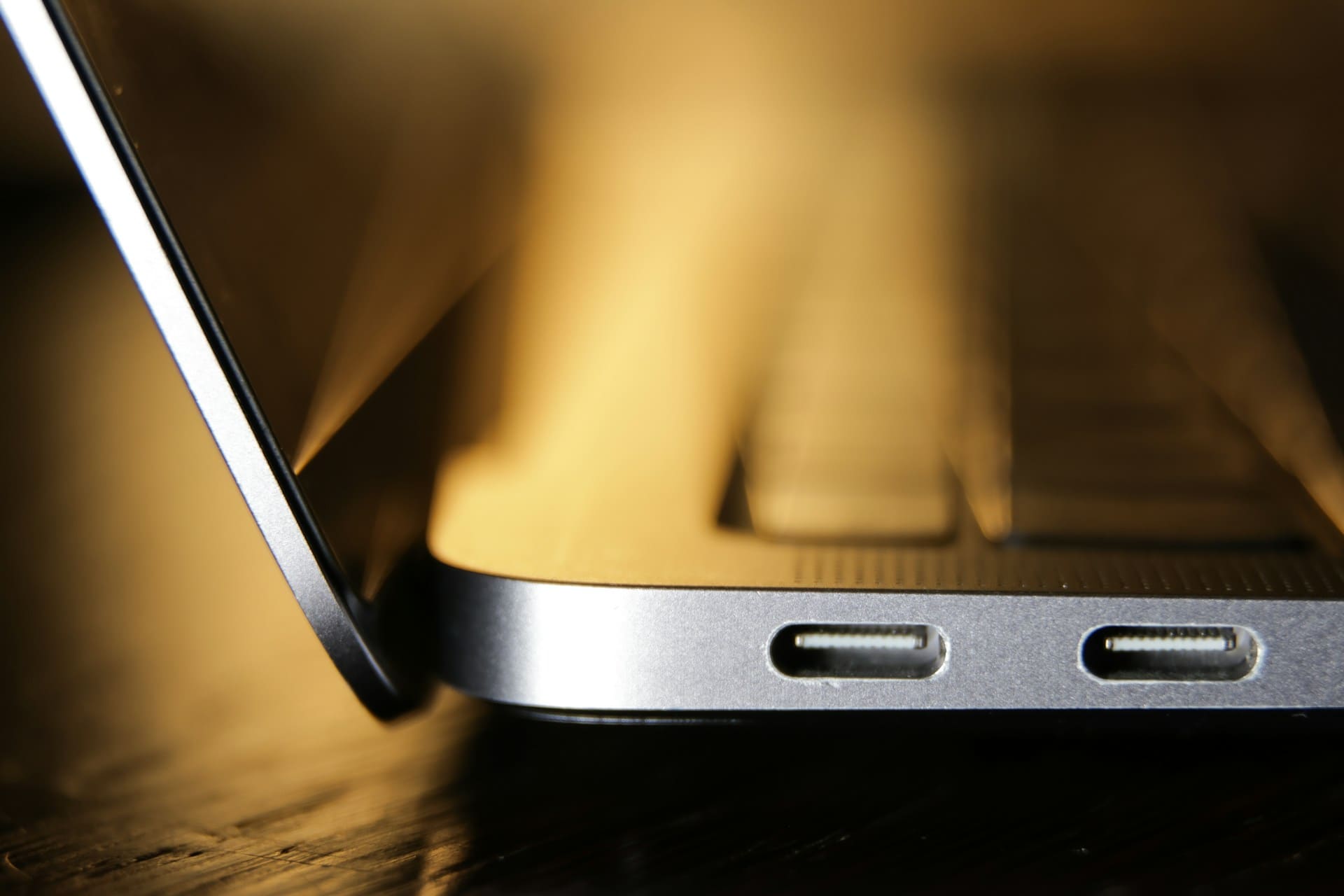
The European Union has taken its final major step in establishing a common charger regulation. Starting April 28, 2026, laptops sold in the European market must comply with USB-C charging rules, a requirement that has already applied since December 28, 2024, to mobile phones, tablets, digital cameras, headphones, portable speakers, handheld gaming consoles, e-readers, keyboards, mice, navigation systems, and other consumer electronic devices.
This measure changes a very routine part of the tech market. For years, buying a laptop meant accepting the charger chosen by each manufacturer: round connectors, proprietary pins, rectangular adapters, magnetic systems, or specific power supplies that are difficult to reuse with other devices. With the new phase of EU regulation, USB-C is becoming the standard port in laptops as well, aiming to reduce electronic waste, simplify user life, and limit dependence on proprietary chargers.
A common standard, but not a magic charger
The regulation does not mean that any USB-C charger can power any laptop in any situation. While the port will be standardized, power output still matters. A 30 W adapter can charge a phone or tablet, but it won’t be sufficient to properly power a laptop that requires 65 W, 100 W, or more. The same applies to cables: not all USB-C cables support the same power levels or guarantees.
The European obligation aims for devices covered by the regulation to be able to use USB-C for charging, and when fast charging is available, to use USB Power Delivery as the common standard. This prevents a well-known user frustration: devices with a USB-C port that only charge properly with the official adapter or that slow down when using seemingly compatible third-party chargers.
For most office, study, mobility, programming, browsing, video calls, or multimedia consumption laptops, the transition should be quite straightforward. Many models have been charging via USB-C for years, especially ultrabooks and professional models. The difference now is that it no longer depends on the commercial decision of the manufacturer but is now a regulatory requirement for new devices sold in Europe.
In high-end gaming laptops and mobile workstations, the situation is more nuanced. Some models require power sources of 200 W, 300 W, or even more to sustain full CPU and GPU performance. In those cases, manufacturers can still use high-powered, specific chargers for maximum performance, but the device must conform to the regulation’s requirements for a common port. Practically, many of these devices will be able to charge via USB-C for light uses, even if they still need their larger power supplies for gaming, rendering, or intensive workloads.
Fewer duplicate chargers and more info in the box
The European Commission advocates for a common charger mainly for two reasons: convenience and waste reduction. Data shows that discarded or unused chargers generate about 11,000 tons of electronic waste annually. It also estimates that allowing consumers to buy devices without chargers could save around 250 million euros per year in unnecessary adapters. The Commission’s information sheet also recalls that, before this harmonization, 38% of consumers complained about incompatible chargers, and only two out of three chargers owned were actually used.
The regulation also distinguishes between selling the device and selling the charger. Consumers should be able to buy a laptop without an adapter if they already have a compatible one. Additionally, manufacturers will be required to provide visual and written information about charging characteristics: whether the charger is included, what power the device needs, and if fast charging is supported. This will be key to avoiding confusion in online stores and technical specifications.
The environmental goal is reasonable, but its success will depend on how brands implement it. In the phone market, it’s been seen that removing the charger from the box doesn’t always result in a noticeable price decrease. Sometimes, consumers end up purchasing the adapter separately, with its own packaging and logistics. The regulation reduces the mandatory purchase of duplicate chargers but does not prevent manufacturers from trying to sell the accessory separately.
Still, in laptops, this could have a significant practical impact. Companies, universities, and users working with multiple devices will be able to more easily standardize chargers and docks. A single high-power USB-C adapter could serve various models, reducing different spare parts and simplifying shared workspaces, meeting rooms, or travel bags.
A change with effects on manufacturers and consumers
For laptop manufacturers, the deadline isn’t a surprise. Directive (EU) 2022/2380 was approved in 2022 and gave the industry a longer adaptation period compared to other devices. The reason was clear: laptops pose higher power, cooling, internal design, and compatibility challenges than headphones or phones.
Nevertheless, the transition will require reviewing product lines that still depend on proprietary connectors as the only charging option. It will also push for better technical documentation. A laptop shouldn’t just state “charging via USB-C,” but clearly specify the supported power, the USB Power Delivery profile, and whether it can maintain full performance with that charger.
For consumers, the advice is simple: check the charging label before purchasing. The key isn’t just that the laptop has a USB-C port, but how much power it needs. A compatible charger should provide at least the required power for the intended use. For light tasks, less may be enough, but for stable work, choosing an appropriate adapter is recommended.
Attention must also be paid to cables. USB-C has simplified the physical connector but created some confusion regarding capabilities: some cables are designed for basic charging, others support up to 100 W, and some are suitable for even higher powers. Using a high-power charger with an incompatible cable can limit charging speed or trigger system warnings.
The common charger doesn’t resolve all USB-C ecosystem problems but addresses a longstanding market fragmentation. Europe isn’t mandating a specific brand; it’s establishing a shared interoperability baseline. This should facilitate reuse, reduce the clutter of incompatible adapters, and make laptop purchasing more transparent.
The next frontier will involve external power supplies and wireless charging. The European Commission has already indicated that full interoperability requires action on both the device and the power source, and will continue assessing wireless charging technologies to prevent further fragmentation. The common charger is thus part of a broader technological policy aimed at organizing a market increasingly dependent on shared standards.
Frequently Asked Questions
When does the USB-C obligation apply to laptops in the EU?
Starting April 28, 2026, new laptops sold in the European Union will fall under the common charger regulation.
Will all laptops be charged with the same USB-C adapter?
Not exactly. The port will be standardized, but you need to check the power output of both the charger and cable. A 100 W laptop won’t work the same with a 30 W adapter.
Will gaming laptops lose their proprietary chargers?
High-performance models may still need specific power supplies to reach top performance. USB-C can handle basic charging or light use, but some devices will continue to use proprietary adapters for intensive loads.
Are manufacturers required to sell laptops without a charger?
The regulation aims to separate the device from the charger, so consumers can buy a laptop without a new adapter if they already have a compatible one. It also demands clear information through labels and pictograms.
