
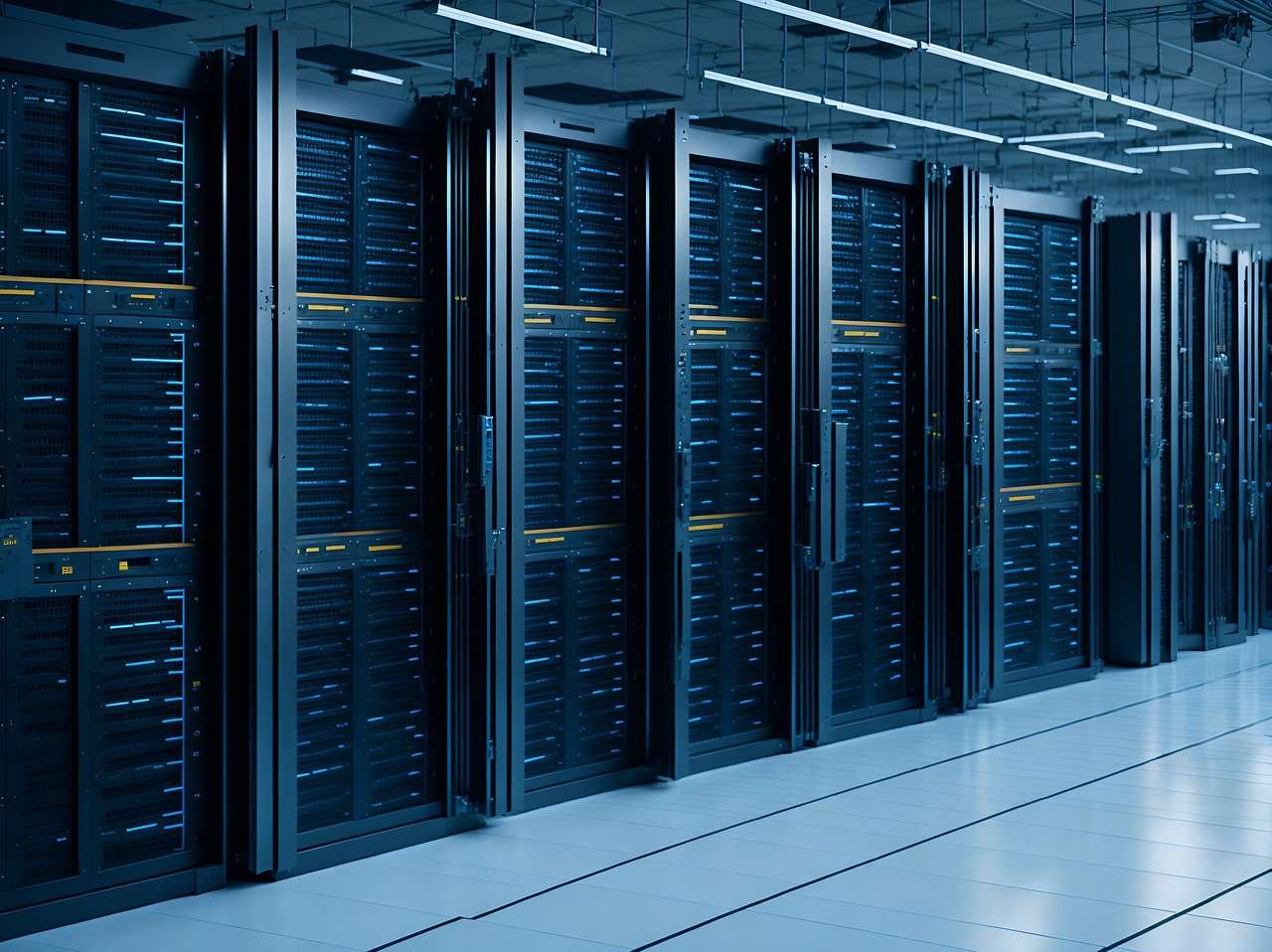
Data centers are no longer just buildings filled with servers. The growth of cloud computing, artificial intelligence, streaming video, online gaming, the Internet of Things, and critical enterprise applications has multiplied the ways to design, operate, and contract infrastructure. That’s why new terms keep emerging: edge, colocation, hyperscale, cloud, on-premise, bare metal, or proximity data centers.
The confusion is understandable. All are physical data centers: spaces prepared to house IT infrastructure with power, cooling, connectivity, security, and operations. The difference lies in where they are located, who manages them, what they’re used for, and how much control the customer retains.
Edge Data Center: Near the User to Reduce Latency
An edge data center is a facility located close to the end user, devices, or the data source. The concept originates from edge computing, which Red Hat defines as computing that occurs at the physical location of the user or data source, or nearby, to deliver faster and more reliable services.
The key factor is latency—the time it takes for a request to travel, be processed, and for a response to return. In many applications, just a few milliseconds can make a real difference. Online gaming, live streaming, connected vehicles, automated factories, augmented reality apps, or 5G networks cannot always rely on servers located hundreds or thousands of kilometers away.
Edge data centers tend to be smaller and more distributed than large cloud campuses. They aim not to concentrate all capacity in one place but to bring processing, storage, and caching closer to where consumption occurs. This makes them vital for IoT, telecommunications, retail, industry, healthcare, gaming, streaming, and AI applications that need near real-time responses.
The market is growing rapidly. Some reports estimate the global edge data center market at $11.2 billion in 2023, projecting $33.9 billion by 2030, with an average annual growth rate of 14.8%. More recent forecasts are even higher, confirming a clear growth trend despite varying estimates.
Colocation: Renting Space, Power, and Connectivity for Your Equipment
A colocation data center, also called colo, is a facility operated by a third party where a company rents space to install its own servers, storage cabinets, and network equipment. The provider supplies the building, power, cooling, physical security, connectivity, and often remote hands services. The customer retains control over their hardware and software.
Cisco summarizes it simply: in a colocation center, a company rents space in a data center owned by another operator; the center hosts the physical infrastructure while the client supplies and manages components such as servers, storage, and firewalls.
This model is common when an organization wants to avoid building its own data center but doesn’t want to move everything to the public cloud. They can rent a rack, several cabinets, a private cage, or even a dedicated room. In return, they get redundant power, professional cooling, connectivity with multiple providers, 24/7 security, and the ability to grow without constructing their own building.
Colocation fits well with companies that need control over their machines, regulatory compliance, direct connectivity with providers, a specific location, or hybrid environments combining private cloud, bare metal, backup, telecommunications, and cloud links.
Hyperscaler and Hyperscale Data Center: Scaling to the Extreme
The term hyperscaler refers to large companies capable of operating massive-scale cloud infrastructure. Amazon Web Services, Microsoft Azure, and Google Cloud are the most prominent examples. Alibaba Cloud, Oracle Cloud, IBM Cloud, and major digital platform operators with large internal needs, such as Meta or Apple, are also often included.
A hyperscale data center is the physical facility that supports such scale. While there’s no strict universal definition, it typically involves centers with thousands of servers, extensive technical spaces, advanced automation, high energy efficiency, and electrical capacity measuring tens or even hundreds of megawatts. Some industry definitions cite more than 5,000 servers and at least 930 square meters, though many hyperscale campuses greatly exceed those numbers.
The difference isn’t just size. These centers are designed for repeatable growth, automation, load distribution, high availability, and to handle peaks in demand for cloud services, AI, storage, databases, analytics, video, e-commerce, and global enterprise applications.
According to Synergy Research Group, worldwide spending on cloud infrastructure services reached $129 billion in the first quarter of 2026, with an annualized rate surpassing half a trillion dollars. This volume explains why hyperscalers continue building large campuses and signing long-term energy agreements.
On-Premise: Data Center Owned and Managed by the Organization
An on-premise data center is IT infrastructure owned and controlled by an organization within its facilities or under its direct management. HPE defines it as a set of servers that the company owns and manages privately, as opposed to traditional cloud where resources are rented from an external provider.
The on-premise model offers maximum control over hardware, data, physical security, network, customization, and internal policies. That’s why it remains important in regulated sectors, industry, defense, banking, healthcare, public administrations, or companies with critical, highly specific applications.
The main disadvantage is cost. Building and maintaining a private data center requires investment in buildings, energy, cooling, security, hardware, licensing, maintenance, technological renewal, and skilled staff. Additionally, scaling can be slower compared to cloud: if more servers, space, or power are needed, it’s not as simple as pressing a button.
Nonetheless, on-premise doesn’t mean outdated. Many organizations combine their own infrastructure with public cloud, colocation, private cloud, and edge solutions. This hybrid model allows them to keep sensitive data or critical applications close at hand, while leveraging cloud for more variable projects, development environments, analytics, or global services.
So, What’s the Real Difference?
The easiest way to distinguish them is by looking at their purpose.
An edge data center seeks proximity and low latency. A colocation data center offers professional space for customer equipment. A hyperscale data center supports cloud platforms and large-scale digital services. An on-premise data center is owned or directly managed by the organization using it.
There’s no one-size-fits-all model. A gaming company might need edge for latency reduction, hyperscale cloud for global scaling, and colocation for its own nodes. A financial institution might keep critical systems on-premise, use colocation for resilience, and sovereign cloud for new applications. A small or medium-sized enterprise might not need any private data center at all, relying solely on cloud and managed services.
Modern infrastructure is best understood as a combination of models. The key is determining where each workload should reside based on latency, cost, security, regulation, availability, control, and growth capacity.
Frequently Asked Questions
What’s the difference between edge and cloud?
Edge computing moves processing closer to the user or data source to reduce latency. Cloud concentrates resources in large remote platforms and offers scalable capacity on demand.
Is colocation the same as cloud?
No. In colocation, the customer typically supplies and manages their own servers. In cloud, the customer consumes virtual resources or managed services from the provider.
What is a hyperscaler?
It’s a company capable of operating massive-scale cloud infrastructure, with thousands or millions of servers across regions and large data centers.
Does it make sense to continue using on-premise?
Yes, especially when direct control, low local latency, regulatory compliance, customization, or protection of critical systems are required. Many companies combine on-premise with cloud and colocation approaches.
