
Enterprise artificial intelligence will not live solely in the cloud. Over the past two years, the conversation has focused on large clusters, H100 GPUs or Blackwell, hyperscalers, and pay-per-use APIs. But at the same time, a new category is emerging: compact systems capable of running, testing, and fine-tuning advanced models internally, without sending each prompt, document, or sensitive data to an external provider.
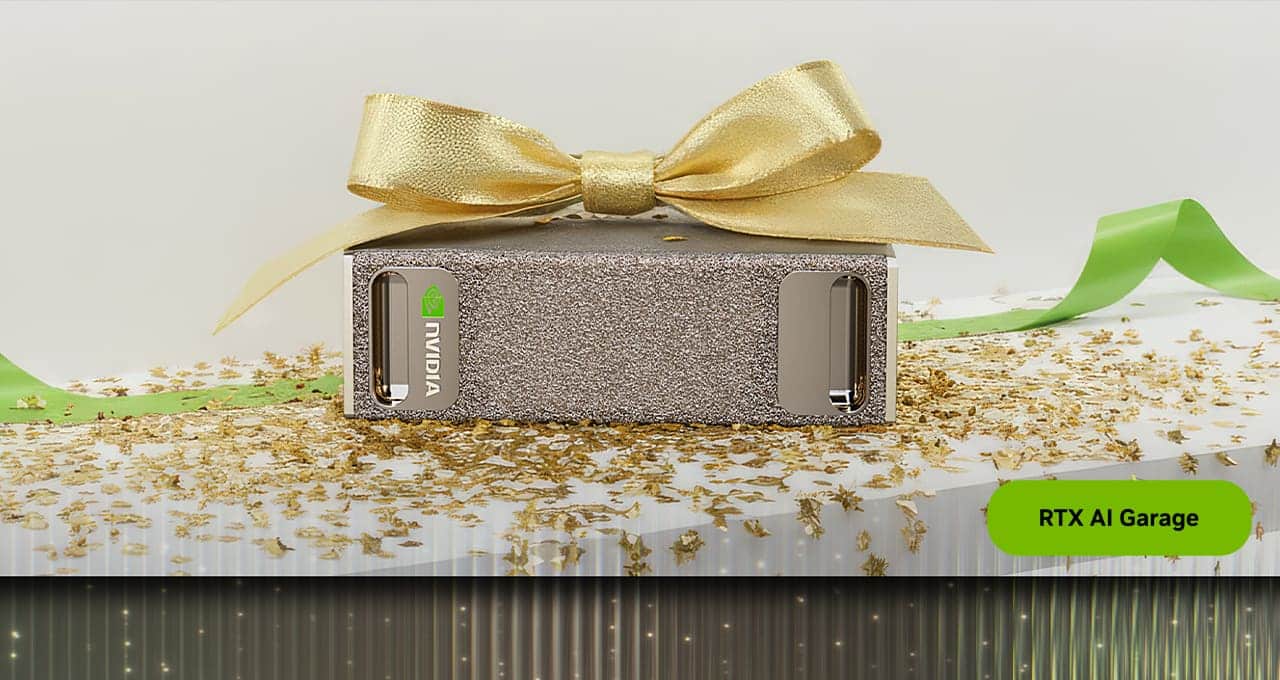
NVIDIA DGX Spark, Dell Pro Max with GB10, and ASUS Ascent GX10 represent this new family of “personal supercomputers” for AI. They are not traditional workstations with a high-powered GPU, nor do they replace large-scale training data centers. These are compact systems based on the NVIDIA GB10 Grace Blackwell superchip, with 128 GB of unified memory and up to 1 petaFLOP of FP4 performance, designed for development, inference, testing, agents, limited fine-tuning, and local work with large models.
This proposition appeals to companies wanting more control over their data, more predictable costs, and an alternative to always relying on external APIs. However, it’s important to distinguish marketing from technical reality. These systems do not turn an office into an AI hyperscale. Their value lies in bringing advanced capabilities close to the desk, laboratory, development team, or edge environment where decisions are made and data is handled that ideally should not leave the premises.
The common core: NVIDIA GB10 Grace Blackwell
All three systems share the same foundation: NVIDIA GB10 Grace Blackwell. This superchip combines a Blackwell GPU with fifth-generation Tensor Cores, FP4 support, and a 20-core Grace ARM CPU. The key element isn’t just brute performance but the unified memory: CPU and GPU access the same 128 GB space, enabling the handling of large models without the usual limitations of a desktop GPU with 24, 32, or 48 GB of VRAM.
This design shifts the scope of local work. Developers can test large open models, validate agents, run RAG pipelines, work with vision-language models, or prepare solutions before migrating to cloud infrastructure or a corporate cluster. It also allows working with sensitive data without exposing it to public APIs during the experimentation phase.
| Common features | NVIDIA DGX Spark / Dell Pro Max GB10 / ASUS Ascent GX10 |
|---|---|
| Platform | NVIDIA GB10 Grace Blackwell |
| CPU | 20-core NVIDIA Grace ARM |
| GPU | NVIDIA Blackwell with 5th-gen Tensor Cores |
| Memory | 128 GB unified coherent memory |
| AI performance | Up to 1 petaFLOP in FP4 |
| Supported models | Up to 200 billion parameters for development and inference |
| Software | NVIDIA DGX OS / NVIDIA AI stack |
| Networking | NVIDIA ConnectX-7 for linking two systems |
| Scaling | Two systems can handle larger models (~405 billion parameters) |
The 1 petaFLOP figure should be interpreted carefully. It refers to FP4 precision, useful for specific AI workloads, not a general performance metric directly comparable to FP16, FP32, or traditional HPC loads. Similarly, supporting models of up to 200 billion parameters does not mean training from scratch locally; its true strength is in inference, validation, experimentation, fine-tuning, and prototyping.
NVIDIA DGX Spark: The manufacturer’s flagship
DGX Spark is NVIDIA’s reference version. Its main advantage is seamless integration with the company’s ecosystem: DGX OS, tools, frameworks, libraries, NIM, Blueprints, and workflows tailored for AI teams to develop locally and then migrate to larger NVIDIA infrastructures.
It’s the best choice for those seeking the official NVIDIA path. Researchers, data science teams, AI startups, and internal departments already working with CUDA, PyTorch, Jupyter, NIM, or Ollama will find DGX Spark a compact environment for creation and validation before scaling up.
| System | Strength | Recommended profile |
| NVIDIA DGX Spark | Official reference, NVIDIA stack, DGX experience | |
| Dell Pro Max with GB10 | Enterprise purchase, Dell support, corporate IT lifecycle | |
| ASUS Ascent GX10 | Compact design, focus on agents and local development |
DGX Spark also influences the wider market. Dell, ASUS, Acer, Lenovo, HP, and other manufacturers have launched variants based on this same platform. Much like NVIDIA GPUs, there’s a common foundation, but each vendor offers differences in design, support, channels, availability, warranty, cooling, and commercial focus.
Dell Pro Max with GB10: Local AI with enterprise readiness
Dell Pro Max with GB10 uses the same NVIDIA GB10 foundation, featuring 128 GB of unified LPDDR5x memory, up to 1 petaFLOP FP4, support for models up to 200 billion parameters, ConnectX-7 SmartNIC, and NVIDIA DGX OS. Its distinction isn’t just silicon — it’s how it integrates into corporate environments.
Many companies don’t just buy hardware. They also purchase procurement processes, financing options, support, warranties, channel relationships, internal policy integration, and the ability to deploy within an existing IT infrastructure. This layer can be decisive when the buyer is a company with procurement, security, support, inventory controls, and compliance requirements — not an isolated lab.
Dell positions this system within a broader family of Pro Max AI PCs, including options like Pro Max with GB300 for more demanding workloads. This approach makes sense for organizations wanting to start with compact GB10 units for local development and scale towards more powerful systems as needed.
The message to CIOs is clear: Dell Pro Max GB10 offers a familiar way to introduce local AI capabilities. It doesn’t require changing infrastructure vendors or professional workstations. It brings AI development to the desktop within a framework recognized by corporate IT.
ASUS Ascent GX10: compact, local, and agent-focused
ASUS Ascent GX10 also builds on the GB10 Grace Blackwell architecture, supporting up to 1 petaFLOP FP4, 128 GB of unified memory, and models up to 200 billion parameters. ASUS emphasizes its suitability for AI agents, local development, labs, education, and edge environments. Its size, 150 x 150 x 51 mm, makes it a compact solution suitable for desks, classrooms, labs, or small technical rooms.
A key advantage highlighted by ASUS is the ability to connect two units via ConnectX-7, doubling capacity to up to 2 petaFLOPS, 256 GB of unified memory, and 8 TB of storage in a dual configuration. While not a training cluster, this setup enables experimentation with larger models and more demanding workloads.
ASUS also focuses on local agent development, secure containers, and sandboxes. This approach aligns with a growing trend: companies wanting to test agents operating on internal documentation, corporate tools, or sensitive data, without relying on external APIs from day one.
Local AI: privacy, costs, and latency
The main argument for these systems isn’t that they surpass cloud power. They don’t. Their strength is enabling part of the AI cycle to be performed near the data and the user’s equipment.
In terms of privacy, they allow testing with internal information without sharing documents externally. This can be valuable in legal, healthcare, industrial, banking, government, defense, or companies with sensitive intellectual property. Cost-wise, they reduce dependence on variable token fees during intensive experimentation, agent testing, or prototyping. In latency, local inference provides quick responses where scaling to thousands of simultaneous users isn’t necessary.
| Why choose local AI | Benefits |
| Privacy | Data remains within the company perimeter |
| Predictable costs | Reduces exposure to variable token charges |
| Latency | Local inference avoids trips to external APIs |
| Development | Teams can test models without waiting for cloud resources |
| Sovereignty | More control over software, models, data, and deployment |
| Edge deployment | Useful in labs, factories, classrooms, offices, or remote sites |
There are limitations, of course. The 128 GB unified memory is valuable but not equivalent to the high bandwidth HBM found in data center accelerators. Bandwidth, cooling, scalability, multi-user operation, and fault tolerance aren’t on par with DGX racks or Blackwell clusters. These are development and local deployment layers, not complete replacements for cloud or data centers in mass production scenarios.
Choosing the right model for your business type
A company already working intensively with NVIDIA and seeking a close-to-official experience will likely prioritize DGX Spark. It’s the reference option, positioned for a seamless path toward DGX Cloud, data centers, and NVIDIA’s tools ecosystem.
A large organization that prefers to buy through corporate channels, with enterprise support and lifecycle management, may favor Dell Pro Max with GB10. The technical specs are similar, but vendor support, procurement, and lifecycle management might weigh more than small design differences.
A research lab, university, product team, integrator, or small company wanting a compact system for agents, local prototyping, or deployment in tight spaces might find ASUS Ascent GX10 very appealing. Its focus on local development, agents, and scaling with dual units suits rapid experimentation.
| Need | Best equipment match |
| Follow official NVIDIA stack | NVIDIA DGX Spark |
| Traditional enterprise purchase/support | Dell Pro Max with GB10 |
| Compact lab or educational environment | ASUS Ascent GX10 |
| Local agents and rapid prototyping | ASUS Ascent GX10 or DGX Spark |
| Managed corporate park | Dell Pro Max with GB10 |
| Path to larger NVIDIA infrastructure | DGX Spark or Dell Pro Max |
Final decision shouldn’t rely solely on technical specs. Because all three systems share the GB10 core, their base performance is similar. Differences in availability, local pricing, support, warranty, included software, noise, cooling, integration, and vendor trust are often the decisive factors.
Local AI isn’t replacing the cloud; it’s adding a new layer
Local AI systems do not necessarily compete with the cloud—they complement it. A developer can work with DGX Spark, Dell Pro Max GB10, or ASUS Ascent GX10 for creation and validation, then deploy the model or application on a larger cluster for production. They can also keep sensitive workloads local and use external APIs for less critical tasks. The most realistic approach is hybrid.
This category of systems can accelerate work for teams that depend on GPU queues, variable cloud budgets, or security restrictions for testing. It can also democratize advanced experimentation for universities, startups, and technical departments without immediate access to large clusters.
Calling them “the cloud in a box” would be misleading—they’re not. Their role is different: providing serious AI capability right at the desk of those building, testing, and making decisions with sensitive data. In this way, their arrival can influence how many companies start projects involving agents, RAG, vision, simulation, or fine-tuning.
AI autonomy isn’t about disconnecting from the world. It’s about choosing where each workload runs, what data leaves the environment, what costs are acceptable, and what level of control the company needs. DGX Spark, Dell Pro Max GB10, and ASUS Ascent GX10 don’t do everything, but they open an important door: bringing advanced AI closer to the business operations.
Frequently Asked Questions
What do DGX Spark, Dell Pro Max GB10, and ASUS Ascent GX10 have in common?
All three are based on NVIDIA GB10 Grace Blackwell, with 128 GB of unified memory, up to 1 petaFLOP FP4, and support for models up to 200 billion parameters for development and inference.
Can they replace the cloud for AI?
Not entirely. They’re very useful for development, testing, local inference, agents, and limited fine-tuning, but large-scale training or production still require data center or cloud infrastructure.
What’s the main advantage of running AI locally?
It enables keeping sensitive data in-house, reducing reliance on external APIs, lowering costs during intensive testing phases, and achieving lower latency in specific cases.
Which system should I choose?
DGX Spark is ideal if you want the official NVIDIA experience. Dell Pro Max GB10 is attractive for organizations valuing support and enterprise procurement. ASUS Ascent GX10 is best for compact local development, agents, and quick prototyping.
