
Las Vegas has once again become the showcase where brands demonstrate their strength, but this CES 2026 had a special twist for Dell Technologies: the company chose the event to showcase a strategic pivot with a clear goal—regain prominence in consumer and gaming segments without abandoning the professional market. The message was summarized by Jeff Clarke, Vice President and COO, who stated that Dell is “returning to its roots,” with a renewed focus on iconic products, complete redesigns, and an expanded catalog aimed at reaching more users, including more affordable options.
XPS “is back” with a complete redesign and promises of battery life
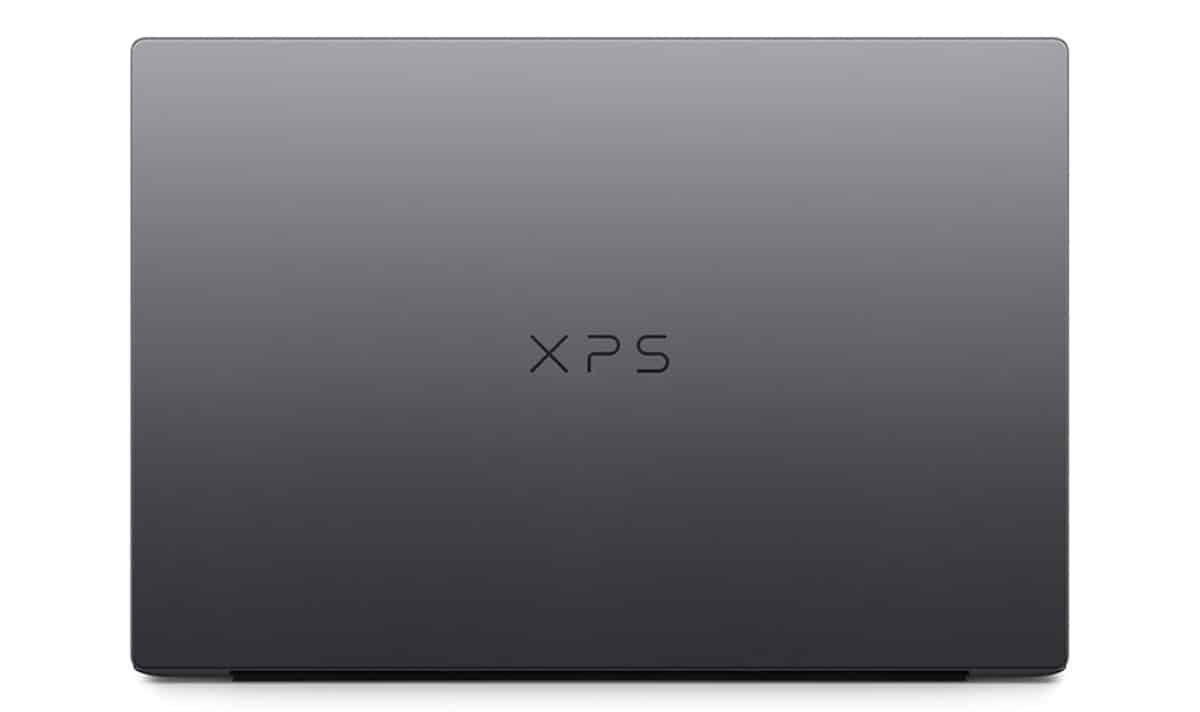
The return of XPS is more than a mere update. Dell has undertaken a full redesign of its new XPS 14 and XPS 16, featuring CNC-machined aluminum chassis, a cleaner aesthetic, and a symbolic detail: for the first time, the XPS logo appears on the lid, signaling a “homecoming” for a lineup that had long lacked such a clear focus.
On the table, Dell has played two cards that often steer daily conversations: portability and battery life. The new models are presented as the thinnest in their category within the brand, measuring just 14.6 mm thick. In weight, the XPS 14 weighs around 3 pounds (approximately 1.36 kg), and the XPS 16 weighs 3.6 pounds (approximately 1.63 kg), with reductions of over half a pound and nearly a pound compared to the previous generation.
Battery life has become a central selling point. Dell claims these XPS models offer “the best battery in the industry,” supported by real-world usage figures: up to 27 hours of Netflix streaming or over 40 hours of local video playback, always under specific test conditions. The company also provided details on the “how”: a 2K LCD display with variable refresh rate from 1 to 120 Hz (dropping to 1 Hz when content is static), and a thermal redesign that not only ensures sustained performance but also aims to reduce power consumption by running cooler.
Premium display options include OLED screens, with a nod to high-end segments, as well as the possibility of tandem OLED panels on the XPS 14 and XPS 16. Platform-wise, Dell is supporting it with Intel Core Ultra Series 3 processors with integrated Intel Arc graphics (featuring 12 Xe-cores depending on the configuration) to balance portability and power.
Additionally, Dell hinted at the comeback of the XPS 13 during 2026. It’s described as the thinnest and lightest XPS ever, aiming to be under 13 mm in thickness. It’s also positioned as the “most affordable” model in the series, broadening the audience without diluting the flagship status. Parallel to this, Dell announced that the XPS 14 will later offer an Ubuntu 24.04 option, catering to technical professionals and developers seeking premium Linux-compatible hardware.
Pricing details so far are limited to the U.S. market: XPS 14 starting at $2,049.99 and XPS 16 at $2,199.99, with additional configurations coming in February and entry-level models below $2,000.
Alienware broadens its range: anti-reflective OLED and two new “types” of laptops
If XPS represents the return of “premium productivity” to consumers, Alienware’s reveal made a bold statement for gamers. The brand announced it will double its laptop lineup with two new classes: an ultra-slim model about 17 mm thick—designed to combine mobility with gaming—and an entry-level model to attract those seeking their “first” gaming laptop without jumping straight into the high-end range.
The centerpiece of the announcement is the move to anti-reflective OLED panels in gaming laptops, responding to a frequent demand: Alienware 16 Area-51 and 16X Aurora now feature these screens, reducing specular reflections by 32% based on internal testing. The specifications cater to demanding gamers: 0.2 ms response time, HDR True Black 500 certification, peak HDR brightness of 620 nits, and 120% DCI-P3 color coverage. The panels also include “health” features like pixel protection via software and durability tests such as 20,000 hinge cycles.
In terms of performance, Alienware aligns its offerings with new Intel Core Ultra 200HX processors and NVIDIA GeForce RTX Series 50 GPUs on its 16- and 18-inch models announced in the Area-51 family. For desktops, the company highlighted the upcoming Area-51 Desktop, arriving in February 2026 with an AMD Ryzen 7 9850X3D and 3D V-Cache technology, targeting maximum gaming performance with high FPS and stability in AAA titles.
UltraSharp aims to “kill” the multimonitor setup: 52-inch 6K with Thunderbolt and a QD-OLED for critical color
In monitors, Dell is targeting two professional profiles that demand productivity: those needing extensive workspace—trading, data science, engineering—and those requiring color accuracy—creators, editors, post-production.
The most notable announcement is the Dell UltraSharp 52 Thunderbolt Hub Monitor (U5226KW), claimed to be the first 52-inch 6K resolution monitor. Dell promotes it as a replacement for multiple screens: a 52-inch IPS Black curved panel (51.5 inches according to technical spec), with a 21:9 aspect ratio, 129 PPI, and 120 Hz refresh rate. The concept is simple: fewer cables, fewer bezels, and seamless visual continuity.

The “hub” approach isn’t just a feature; it’s central to the monitor’s design. This UltraSharp integrates Thunderbolt 4 with up to 140 W power delivery through a single cable, quick-access ports (including USB-C), and 2.5 GbE Ethernet. It also supports connecting up to four PCs simultaneously, with Picture-by-Picture and KVM functions to control multiple devices with a single keyboard and mouse. Dell emphasizes ergonomic comfort with TÜV Rheinland certifications and a reduction of blue light emission (up to 60% less than competitors, according to company data), supported by an ambient light sensor.
For creative professionals, Dell proposes the UltraSharp 32 4K QD-OLED (U3226Q), featuring 4K UHD resolution with QD-OLED technology, “infinite” contrast (1.5 million to 1), DisplayHDR True Black 500, and Dolby Vision HDR. Dell highlights its color precision: factory-calibrated Delta E < 1, 99% DCI-P3 coverage, Display P3, and an integrated colorimeter that stores calibration profiles directly in the monitor to ensure consistency and support remote work. The panel also features a low-reflectance AG coating, which Dell claims as a “first” in professional-use QD-OLED panels.
Pricing (in USD) places the UltraSharp 52 6K at $2,899.99 with stand and $2,799.99 without, available globally from January 6, 2026. The UltraSharp 32 4K QD-OLED will cost $2,599.99 and ship from February 24, 2026.
As an additional note, Dell emphasized its use of recycled materials in packaging and components—such as post-consumer plastics, recycled aluminum, and glass—to align with increasing environmental responsibility in hardware that remains powered on for many hours.
Frequently Asked Questions
What exactly improves in the new XPS 14 for someone seeking a lightweight laptop with long battery life?
Dell focused on thermal redesign, weight reduction, and a 2K panel with variable refresh rate from 1 to 120 Hz to save power during static content, plus battery life figures aimed at all-day use without a charger.
Who benefits from a 52-inch 6K monitor with Thunderbolt and integrated KVM?
Designed for roles managing multiple windows and sources—trading, data analysis, engineering, management—wanting to replace a cluttered desk of screens with a single large panel controlling multiple PCs from one keyboard and mouse.
What does anti-reflective OLED bring to gaming laptops compared to traditional OLED?
It promises less glare and gloss in bright environments while maintaining the deep contrast and blacks OLED is known for—a common Achilles’ heel when exposed to direct light.
When will these products be available, and what are the announced US prices?
Dell announced initial prices of $2,049.99 for the XPS 14, $2,199.99 for the XPS 16, $2,899.99 with stand for the UltraSharp 52 6K, and $2,599.99 for the UltraSharp 32 4K QD-OLED. Availability is staggered between January and February 2026.
via: dell