
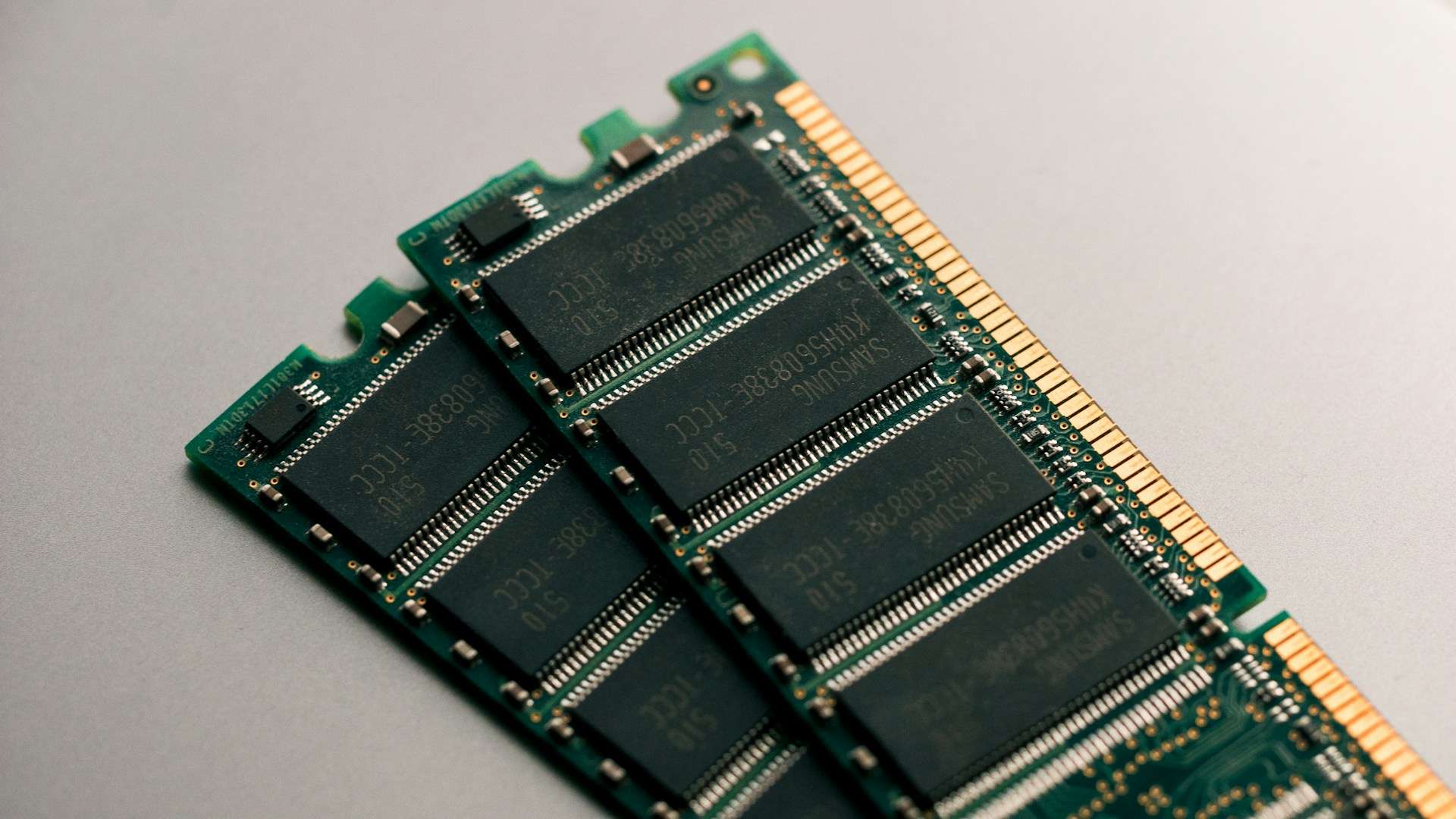
The memory crisis is creating a paradox: DDR4 is aging, but that no longer means it will be cheaper. Morgan Stanley forecasts that prices for this generation of DRAM will increase another 50% during Q3 2026 and an additional 10% in Q4, as manufacturers shift capacity toward HBM and DDR5. The situation could be even more extreme for SLC NAND memory, with the bank projecting increases of 50% in both of the last two quarters of the year.
The key points of the new DDR4 price hike in 20 seconds
- Morgan Stanley predicts DDR4 will rise 50% in Q3 and another 10% in Q4.
- The pressure mainly comes from supply: manufacturers are reallocating capacity toward HBM, DDR5, and multi-layered NAND.
- SLC NAND could become 50% more expensive in both Q3 and Q4.
- DDR5 also provides no relief: certain chips are experiencing year-over-year increases close to 483%.
This forecast comes at a time when the memory market is experiencing an unusual situation. Demand driven by artificial intelligence is boosting the need for HBM (High Bandwidth Memory), but manufacturers cannot indefinitely increase their production. Part of the response involves reallocating resources previously used for mature technologies.
This can cause DDR4 shortages even as industry shifts toward DDR5. The issue is no longer necessarily an extraordinary demand for older memory; rather, there’s decreasing interest in dedicating industrial capacity to manufacturing it.
HBM is changing priorities for Samsung, SK hynix, and Micron
The race to supply memory for AI accelerators has altered the economics of the DRAM industry.
HBM offers enormous bandwidth by stacking multiple memory dies vertically. It’s an essential technology in many of today’s Nvidia, AMD, and other manufacturers’ accelerators.
However, it is also significantly more demanding to manufacture than conventional DRAM.
Morgan Stanley points to wafer migration toward HBM and DDR5 as a key reason for the reduction in available DDR4 supply. Similarly, in NAND, manufacturers prioritize higher-density memories over mature products like SLC.
The bank projects this evolution:
| Memory Type | Q3 2026 | Q4 2026 | Main Pressure |
|---|---|---|---|
| DDR4 | +50% | +10% | Reduction in available capacity |
| SLC NAND | +50% | +50% | Migration toward higher-layer NAND |
| DDR5 | Prices still high | No clear signs of normalization | Servers and AI |
| HBM | Strong demand | Strong demand | GPUs and AI accelerators |
These figures are Morgan Stanley’s forecasts, not guaranteed increases. Final prices will also depend on memory type, contracts, inventories, region, and distribution channel.
This phenomenon coincides with other signals from the industry in 2026: memory for servers and AI is gaining priority in the investments of major manufacturers.
HBM requires much more capacity than conventional DRAM
There’s a second factor helping to explain why growth in HBM might impact products seemingly unrelated to AI.
Industry estimates suggest producing HBM can require approximately three times more wafer surface area than conventional DRAM for equivalent capacity, though the exact ratio depends on the generation and process used.
It’s not just about stacking multiple dies in HBM.
TSVs (Through-Silicon Vias), the vertical connections through silicon to communicate between layers, introduce additional design and manufacturing constraints. The areas reserved around these structures reduce the efficiency of silicon utilization.
Manufacturing performance, stacking, and packaging processes also play roles.
The economic conclusion is straightforward: each bit allocated to HBM can consume more production resources than a bit of conventional DRAM.
When AI accelerator demand grows alongside long-term supply contracts with key clients, dedicating more capacity to HBM can be far more attractive than maintaining large volumes of DDR4.
Nvidia could become a massive HBM consumer on its own
The expected magnitude of demand helps explain manufacturer decisions.
An estimate attributed to UBS suggests Nvidia could consume around 25.1 billion gigabits of HBM in 2027, out of an estimated total market of approximately 61.5 billion gigabits.
If that forecast is accurate, a single accelerator designer would account for about 41% of the estimated volume.
This figure is a projection but illustrates the industry’s shifting scale.
Major AI clusters are no longer built solely around thousands of GPUs. Each accelerator integrates substantial amounts of HBM, with newer generations increasing both capacity and bandwidth.
For Samsung, SK hynix, and Micron, there’s a clear incentive to invest in this market and expand production lines.
DDR4 remains at the other end: it still has millions of users but belongs to an older technological generation with limited growth opportunities.
DDR5 is also not getting cheaper
Switching to a modern platform doesn’t easily escape the price increases either.
According to data cited by Bank of America, spot prices for certain DDR5-5600 and DDR5-6400 24 Gb chips increased about 8% just in August.
The year-over-year comparison is even more striking.
A 24 Gb chip, which was around $8 in mid-2025, is now approaching $47, representing an increase of nearly 483%.
It’s important not to confuse these component prices with the cost of a full consumer DIMM module. Modules incorporate multiple DRAM chips, PCBs, power management, and other components, plus margins for manufacturers and distributors.
But the evolution of the basic component eventually impacts modules.
Retail markets are already reflecting this. Data published in August by PCPartPicker show increases of approximately 372% to 485% in certain DDR5 configurations over the past twelve months.
Europe is not immune. A study by ComputerBase tracking a module basket indicates that RAM saw an average increase of 345% compared to September 2025 in August.
The problem with DDR4 differs from DDR5
Although both are rising, their causes are not exactly the same.
DDR5 is directly driven by strong demand from new server and data center platforms. DDR4, on the other hand, is in a more mature phase of its technological cycle.
This can create an apparently contradictory situation.
Typically, older technology becomes cheaper as demand wanes. But there’s a point when manufacturers reduce production faster than their customers disappear.
That’s when the so-called end-of-cycle scarcity appears.
Millions of servers, computers, industrial systems, telecom equipment, and embedded devices still use DDR4. Replacing all those systems solely because memory prices rise is usually not economically feasible.
Demand continues while available capacity declines.
For system administrators and companies with large DDR4 server fleets, this situation can be more problematic than a PC component price increase. Upgrading hundreds of machines with high-capacity ECC modules can turn a routine update into a significant investment.
SLC NAND may face an even more extreme situation
Morgan Stanley’s forecast for SLC NAND is even more aggressive.
The bank expects increases of 50% in Q3 and another 50% in Q4.
If these increases are applied consecutively on the same base, the cumulative effect would be 125%, not 100%, though actual prices could evolve differently.
SLC (Single-Level Cell) stores one bit per cell and is especially used where endurance, reliability, and consistency are crucial. Although less common in large-capacity consumer SSDs, it remains prevalent in industrial, telecommunications, networking, and embedded applications.
The same problem applies here: maintaining capacity with mature technologies becomes less attractive when other categories are experiencing growing demand and better economic prospects.
AI adds winners and losers beyond GPUs
The memory shortage reveals how the expansion of AI infrastructure impacts the rest of the industry.
The most visible effect is on GPUs. But behind every accelerator there is HBM, system memory, storage, networking gear, passive components, PCBs, and an extensive manufacturing chain.
When factories operate near capacity, increasing one category inevitably involves decisions about where to invest the next unit of capacity.
For memory makers, HBM is now among the top priorities. DDR5 is also essential for new server platforms. DDR4 and some mature NAND technologies are gradually being relegated.
This means that waiting for older technologies to become cheaper can have the opposite effect.
DDR4 is a prime example. After years when upgrading old servers or PCs became increasingly affordable, 2026 shows that the end of a technological generation can also bring scarcity and rising prices.
Frequently Asked Questions
How much could DDR4 increase in 2026?
Morgan Stanley foresees a 50% increase in Q3 and an additional 10% in Q4. This is a forecast and does not guarantee that all DDR4 modules will experience these exact rises.
Why is DDR4 rising if it’s an older technology?
Manufacturers are gradually reducing capacity dedicated to mature technologies and prioritizing products like HBM and DDR5. The supply of DDR4 may decline more quickly than demand.
Is DDR5 getting cheaper?
Available data in August indicate the opposite. Bank of America reports an 8% monthly increase in spot prices for certain DDR5-5600 and DDR5-6400 24 Gb chips, with a year-over-year rise close to 483%.
How does AI relate to RAM shortages?
AI accelerators use large quantities of HBM, and associated servers require DDR5 and storage. Manufacturers are allocating more resources to these categories, reducing capacity for some older products.
via: wccftech
