
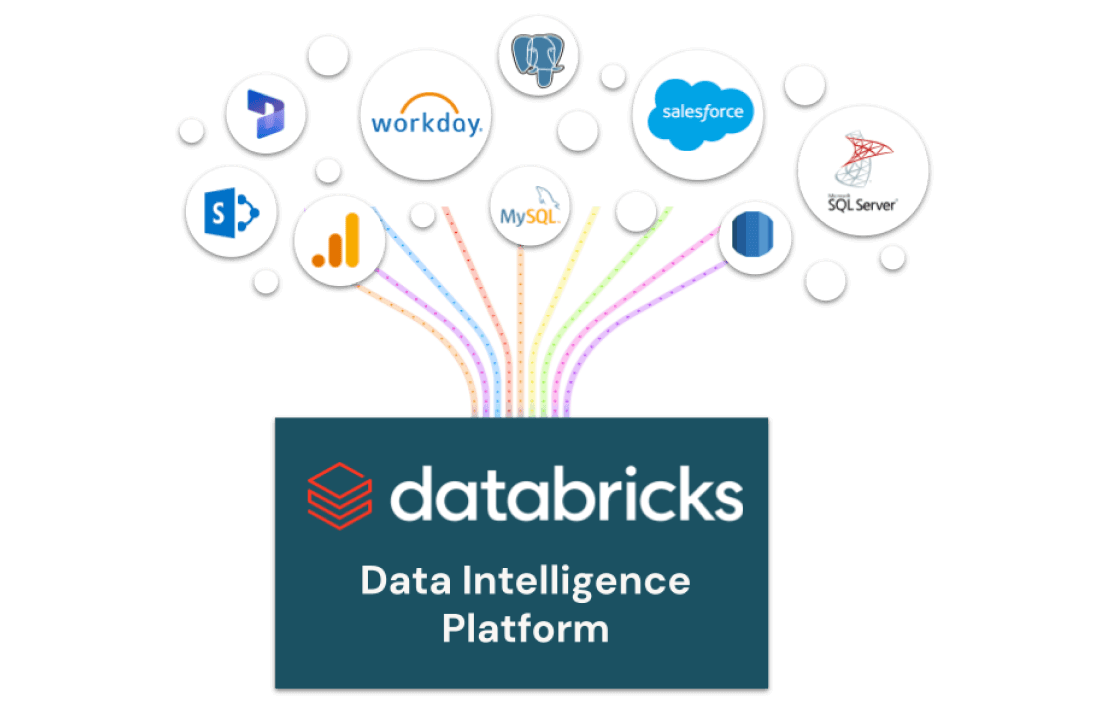
Databricks has acquired Row Zero, a spreadsheet platform designed to work directly with large-scale enterprise data, with the goal of bringing it into Genie, its artificial intelligence assistant for business teams. The deal will let the company combine the familiar interface of a spreadsheet with security, audit, and data governance controls inside the Databricks Data + AI platform.
Databricks and Row Zero’s key facts in 20 seconds
- Databricks has bought Row Zero, founded by former AWS and Tableau engineers.
- Row Zero will come to Genie with spreadsheets connected to governed, up-to-date data.
- The product keeps the formulas, pivot tables, and shortcuts users already know from spreadsheets.
- Permissions, queries, exports, and agent actions remain subject to governance and audit controls.
- Row Zero’s engine is designed to work with billions of rows at interactive speeds.
The deal stems from a reality Databricks says it sees inside companies: spreadsheets remain a go-to tool for analyzing information, building financial models, preparing scenarios, and sharing results. The problem arises when those files turn into independent copies of corporate data.
A downloaded spreadsheet can fall outside the original access controls, rely on information that is no longer current, or circulate between departments with no clear traceability. Databricks says this problem takes on a different scale once AI agents start querying and modifying enterprise data on their own.
The Row Zero acquisition aims to bring both worlds together. The spreadsheet keeps a familiar interface for users, but connects directly to governed data sources.
A spreadsheet connected directly to the data
Row Zero is pitched as a spreadsheet built for people and agents who need to work with large volumes of information. Its design keeps familiar elements from Excel and Google Sheets, such as formulas, pivot tables, and keyboard shortcuts.
The difference lies in where the data comes from.
According to Databricks, Row Zero can connect directly to enterprise data sources while respecting each user’s permissions. Data can be refreshed from the original sources without relying on manually downloaded copies.
It also allows exports to be controlled and results to be written back into connected systems. Every interaction is logged to make it easier to audit.
The company intends this architecture to reduce one of the common problems with enterprise spreadsheets: creating a local copy of the data just to work with it.
| Feature | Conventional spreadsheet | Row Zero inside Databricks |
|---|---|---|
| Data | Copies or connections depending on the tool | Connection to governed data |
| Updates | May require manual processes | Refreshed from authorized sources |
| Permissions | Depend on the file and its location | Inherits access controls |
| Auditability | Limited depending on the system | Auditable interactions |
| Exports | Usually easy to share | Can be restricted |
| AI agents | Variable integration | Purpose-built tools for agents |
| Scale | Depends on the tool | Built for billions of rows |
Databricks says Row Zero’s processing engine can work with billions of rows while keeping interactive response times. The announcement does not include a specific performance figure that would allow a direct comparison with Excel, Google Sheets, or other tools.
Genie gets an interface closer to everyday work
The acquisition is directly tied to Genie, Databricks’ AI assistant aimed at business teams.
Genie can answer questions about enterprise data and help generate outputs related to areas such as sales, operations, or finance. With Row Zero, Databricks wants users to be able to move from a conversation with the assistant to a spreadsheet where they can modify data, build models, create pivot tables, or visualize information.
The company frames this as a continuous flow between the two modes of work.
A user could start, for example, by asking Genie why certain margins have changed, then move to a spreadsheet to analyze the data, adjust assumptions, or build scenarios. The information comes from the same business context Genie already uses.
That context relies on Genie Ontology, while Unity Catalog and Unity Gateway provide the governance, permissions, and access-control layers within the Databricks platform.
The integration is planned for Genie on the web as well as its desktop and mobile apps.
For finance, operations, sales, and marketing teams, the goal is to shrink the distance between an AI-generated answer and the follow-up work that usually ends up happening in a spreadsheet anyway.
Agents move into the spreadsheet too
One of the more notable aspects of the deal is the relationship between Row Zero and AI agents.
Databricks says agents can work with the spreadsheet through Row Zero’s agent tools. Their actions are represented using the spreadsheet’s own syntax and processing model, which lets business teams interpret and audit what the agent has done.
The difference from handing a file over to an agent lies in data access. In the model Databricks describes, the agent works on information connected to governed sources, rather than necessarily receiving an independent copy of the data.
This also keeps permission controls in place during the interaction. A query from a user or an agent must still respect the permissions assigned over the corresponding data.
The approach fits a trend spreading across enterprise data platforms: agents are no longer limited to answering questions and are starting to carry out actions on corporate information. In that scenario, the traceability of every operation becomes part of the data architecture itself.
Databricks also wants to avoid turning Row Zero into a tool exclusive to its own data. The company says it will continue supporting data sources outside Databricks and that Row Zero will be available to its customers across major clouds.
A deal that brings Databricks closer to business users
Row Zero was founded by former AWS and Tableau engineers, according to Databricks. The team will join the company and continue working on Genie’s development.
The deal also expands Databricks’ role within departments that have traditionally relied on spreadsheet tools as their main analysis interface. Rather than forcing those users to move entirely to a data platform, the company wants to bring part of that infrastructure to a tool they already know.
It’s also the latest example of Databricks pushing beyond its core data platform into adjacent enterprise tools, a pattern already visible in its move into marketing technology with a built-in customer data platform.
The approach has two sides. For users, the goal is preserving a way of working built around formulas, pivot tables, and custom models. For data and security teams, the difference lies in keeping those processes tied to data with permissions, traceability, and centralized controls.
The question will be how that combination performs in complex enterprise scenarios, especially when spreadsheet models depend on multiple sources, custom formulas, or processes built up over years. Databricks’ announcement describes the planned architecture and capabilities, but does not yet provide independent metrics on adoption or performance compared with leading spreadsheet tools on the market.
The acquisition also reflects the role Databricks wants Genie to play. The assistant is no longer positioned solely as a conversational interface for querying data; it is now integrated with a tool where users can manipulate, model, and present that information.
The company says more than 20,000 organizations use its Data + AI platform and that 70% of the Fortune 500 are among its customers. Those figures come from Databricks and are part of the company’s own announcement.
Frequently asked questions
What has Databricks acquired?
Databricks has acquired Row Zero, a spreadsheet platform built to work with connected, governed enterprise data. The Row Zero team will join Databricks.
What will change in Genie with Row Zero?
Genie will gain a spreadsheet experience that lets users move from conversational queries to manual analysis, pivot tables, modeling, and data visualization.
What sets Row Zero apart from a traditional spreadsheet?
Row Zero is designed to connect directly to governed data, respect permissions, refresh information from authorized sources, and log interactions. It is also built to work with billions of rows.
Will AI agents be able to use Row Zero?
Yes. Databricks says Row Zero includes tools that let agents work directly with the spreadsheet, keeping their actions interpretable and auditable through the platform’s own syntax and processing model.
