
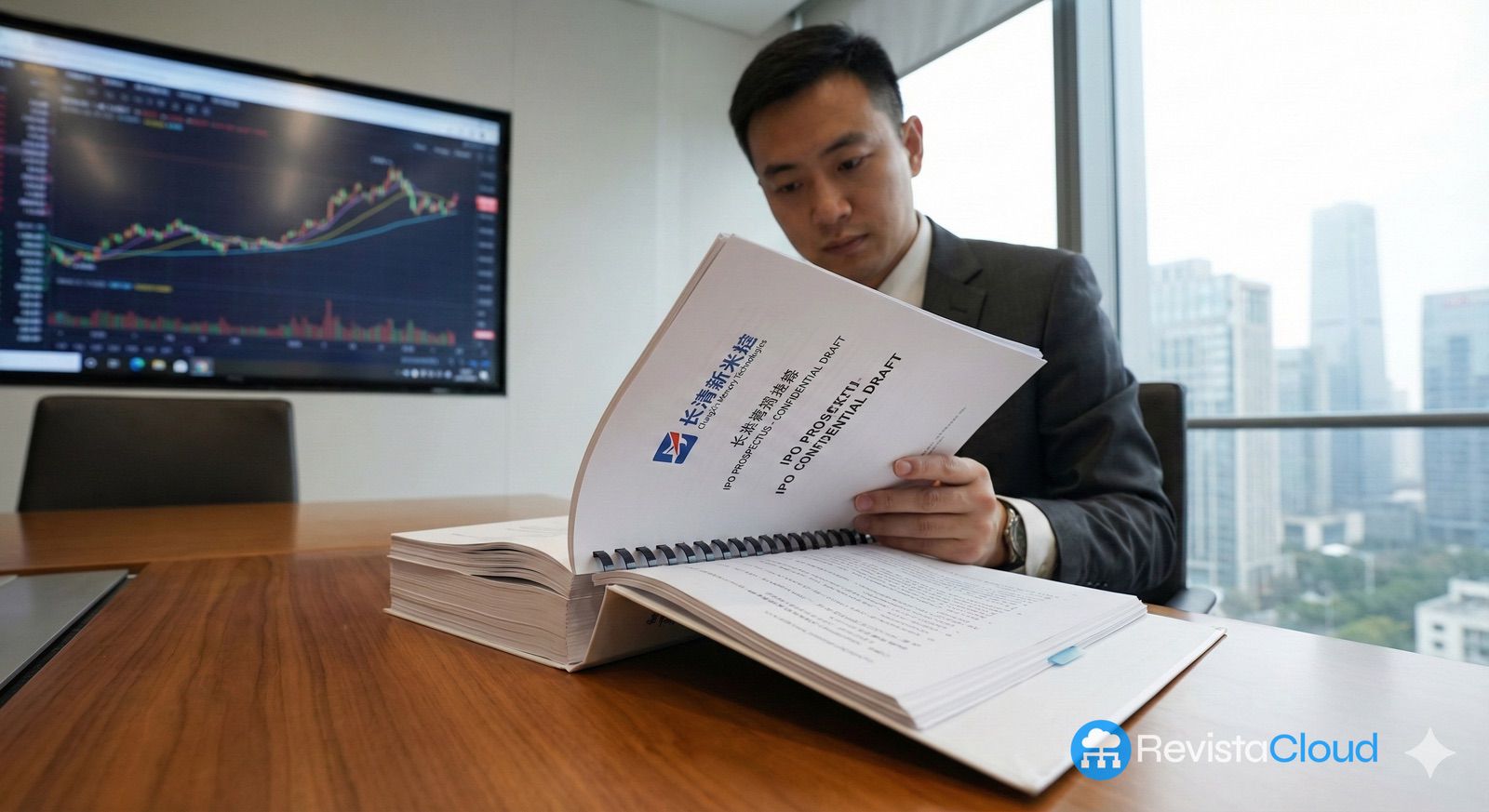
In the semiconductor industry, there’s an unspoken rule: when the “memory cycle” shifts direction, it does so with a violence that is felt throughout the entire supply chain—from chip manufacturers to the prices paid by data centers, PC brands, and ultimately consumers. And, if industry rumors are correct, 2025 has left a particularly symbolic mark: ChangXin Memory Technologies (CXMT), one of China’s major DRAM players, reportedly achieved its first full year of net profit, buoyed by a rebound in prices and inventory revaluation.
The news alone is noteworthy. But in the current context—AI accelerating demand, HBM making headlines, new factories, geopolitical pressures, and a market oscillating between shortages and surpluses—CXMT’s potential turnaround acts as a thermometer: China isn’t just aiming to manufacture memory; it wants this to be a sustainable business.
What is known (and unknown) about the “first positive year”
CXMT is not a publicly traded company, so it doesn’t publish detailed financial statements like giants such as Samsung, SK hynix, or Micron. This complicates public verification: as a best case, most information tends to come from supply chain sources, customers, analysts, or specialized media.
In this context, the prevailing narrative is relatively clear: DRAM price improvements during 2025 likely boosted margins, and additionally, the value of inventory—chips already produced or wafers in process—had increased enough to bolster the bottom line. This last point matters more than it seems: in memory, a price rise not only improves next quarter’s sales but also revalues existing stock.
Nonetheless, two asterisks are important to understand this story:
- Profit does not equate to “long-term victory”: it might be a temporary milestone within the cycle.
- Without audited figures, it’s impossible to specify exactly how much profit, what product mix, or what margins are really involved.
Why DRAM prices have risen: it’s not just “more demand,” but a change in priorities
The DRAM market does not operate in isolation. Over the past two years, AI’s explosion has transformed industrial decisions that were previously more linear: manufacturing capacity, wafer allocation, packaging investments, and fierce competition for each point of energy efficiency.
Simultaneously, focus has shifted toward higher-value memory per bit in AI environments (especially HBM). And, although it may seem contradictory, this can also strain “classic” segments: if part of the supply chain reorients toward premium products or strategic contracts, the rest of the market feels this shift.
Recent industry analyses suggest that server DRAM prices rose at the end of 2025, and that the market might experience adjustments as supply catches up, with HBM following its own pricing and availability trends (sourceability.com).
In other words: the rebound exists, but it’s not a straight path. The key debate is whether CXMT’s profitability reflects a temporary cycle or indicates it now has a cost structure capable of enduring the next downturn.
The role of inventory: the “accounting” detail that makes headlines
When people hear about profits from “inventory revaluation,” they often think it’s a trick. Not necessarily. In industries with very volatile prices, inventory can be a crucial factor:
- If you produce DRAM during a downturn and prices then rise, you can sell something made cheaper at a higher price.
- Furthermore, depending on accounting methods and supply chain management, there can be impacts on valuation and recognized costs.
This doesn’t guarantee a year of profitability, but it explains why the memory sector can flip from pessimism to optimism over just a few quarters.
What does this mean for 2026? Three possible insights
1) Increased competitive pressure in “commodity” DRAM
If China consolidates a profitable DRAM player, the landscape will tighten—not just due to prices, but also supply agreements and the potential to prioritize domestic markets during tensions.
2) Domino effect on investment and capacity
The message to investors and suppliers is strong: “This is no longer just a geopolitical gamble.” In semiconductors, this perception influences credit, alliances, and future capacity.
3) AI as a resource “vacuum”
Memory for AI—and its surrounding ecosystem—moves enormous figures. For example, reports suggest the HBM market could reach $50–60 billion in 2026 according to forecasts and sector insights.
Although CXMT is more associated with mainstream DRAM, the “AI effect” affects everything: investment, pricing, priorities, and availability.
EUR to RMB: how to convert figures without confusion
If you encounter Chinese company figures in RMB (CNY) and want to convert to euros, the simplest method is:
Euros = RMB ÷ (RMB per 1 €)
Example:
- If the exchange rate is 7.80 RMB per € and a figure is 1,000,000,000 RMB, then:
1,000,000,000 ÷ 7.80 ≈ 128,205,128 €
When dealing with specific articles, always specify the date of the exchange rate (since it varies) and, if possible, reference official sources (like a central bank).
Frequently Asked Questions
What is CXMT and why does it matter in the DRAM market?
CXMT (ChangXin Memory Technologies) is one of China’s leading DRAM manufacturers. Its development is significant because DRAM is critical in servers, PCs, and mobile devices—and China aims to reduce reliance on foreign components in strategic sectors.
Why do DRAM prices fluctuate so dramatically?
Because it’s a highly cyclical market: small shifts in supply and demand are amplified, and industrial capacity adjusts slowly. Additionally, AI and advanced memory types like HBM are altering investment priorities.
Does a profitable year mean a company is “profitable forever”?
No. In memory, a good year can result from price rebounds or inventory effects. The key question is whether the company maintains margins when the cycle turns.
How will this impact PC or server prices in 2026?
If server DRAM becomes more expensive, the costs will transfer to manufacturers and, in part, end-users (especially in servers and high-RAM systems). In consumer products, the effect depends on stock levels, promotions, and competition.
Sources:
- Sourceability — 2026 Semiconductor Industry Market Outlook (sourceability.com)
- Blocks and Files — Micron rides AI-fueled DRAM wave to record revenue (Blocks and Files)
Image generated with AI.