
The battle for control over Nexperia has escalated once again, transforming from a corporate conflict into a broader geopolitical issue. Beijing issued a warning on March 7th that a new global semiconductor supply crisis could be triggered if the ongoing clash between the Dutch headquarters and its Chinese subsidiary continues. The Chinese Ministry of Commerce was particularly firm: it stated that if this dispute further destabilizes the global semiconductor supply chain, full responsibility will lie with the Dutch side.
The immediate trigger was the public denúncia of Nexperia’s Chinese unit, which accused its parent company in the Netherlands of collectively deactivating internal employee accounts in China on March 3rd. According to the subsidiary, this measure hampered access to corporate software and disrupted some production processes, including SAP flows linked to wafers supplied by customers. The Dutch headquarters did not deny system interference but rejected claims that this had halted the Guangdong plant.
A corporate dispute that has already impacted the automotive industry
What makes this case especially sensitive is that Nexperia does not produce “star” chips for artificial intelligence or cutting-edge processors. Instead, it manufactures basic and power semiconductors essential for the automotive industry and much of industrial and consumer electronics. The Dutch government justified its extraordinary intervention in September 2025 due to the company’s strategic importance in Europe and the risk of losing critical technological and manufacturing capabilities.
The timeline explains why the conflict has now become a major industrial issue. On September 30, 2025, the Dutch Ministry of Economic Affairs activated the Goods Availability Act for the first time since 1952 to intervene with Nexperia. The measure cited “serious deficiencies in corporate governance” and signs of improper transfer of assets, funds, technology, and knowledge to a foreign entity, according to the Dutch government’s official explanation. Soon after, on October 7th, the Amsterdam Enterprise Chamber suspended Zhang Xuezheng and placed voting rights of the company’s shares under the control of an independent manager. The Dutch government emphasizes that this judicial action was separate from its own administrative order.
China responded swiftly. In October, Beijing blocked exports of finished Nexperia products made or processed in China, causing immediate tensions in automotive chip supply. Reuters reported that European manufacturers and suppliers observed the worsening situation with concern, and companies like Bosch and BMW stated it was too soon to consider the issue resolved, even as both sides attempted to de-escalate tensions in November.
The real bottleneck was between Europe and Dongguan
The key industrial issue lies in Nexperia’s manufacturing structure. While most wafers are produced in Europe, a significant portion of the flow depended on China for encapsulation, testing, and distribution phases. Reuters detailed that around 70% of Nexperia’s chips were encapsulated and sold to distributors in China, while the remaining 30% relied on other Asian bases such as Malaysia and the Philippines. This dependency meant that the rupture between the two branches was not merely a corporate dispute but a direct threat to supply continuity.
The situation became even more tense after the Dutch intervention and the operational independence declaration of the Chinese subsidiary. The European side ceased wafer shipments to the Dongguan facility. Nexperia stated publicly that it did not completely halt wafer flow and tried to maintain alternative solutions for its clients, including direct sales to certain buyers. At the same time, it accused its Chinese entities of operating outside established corporate governance frameworks and ignoring directives from global management.
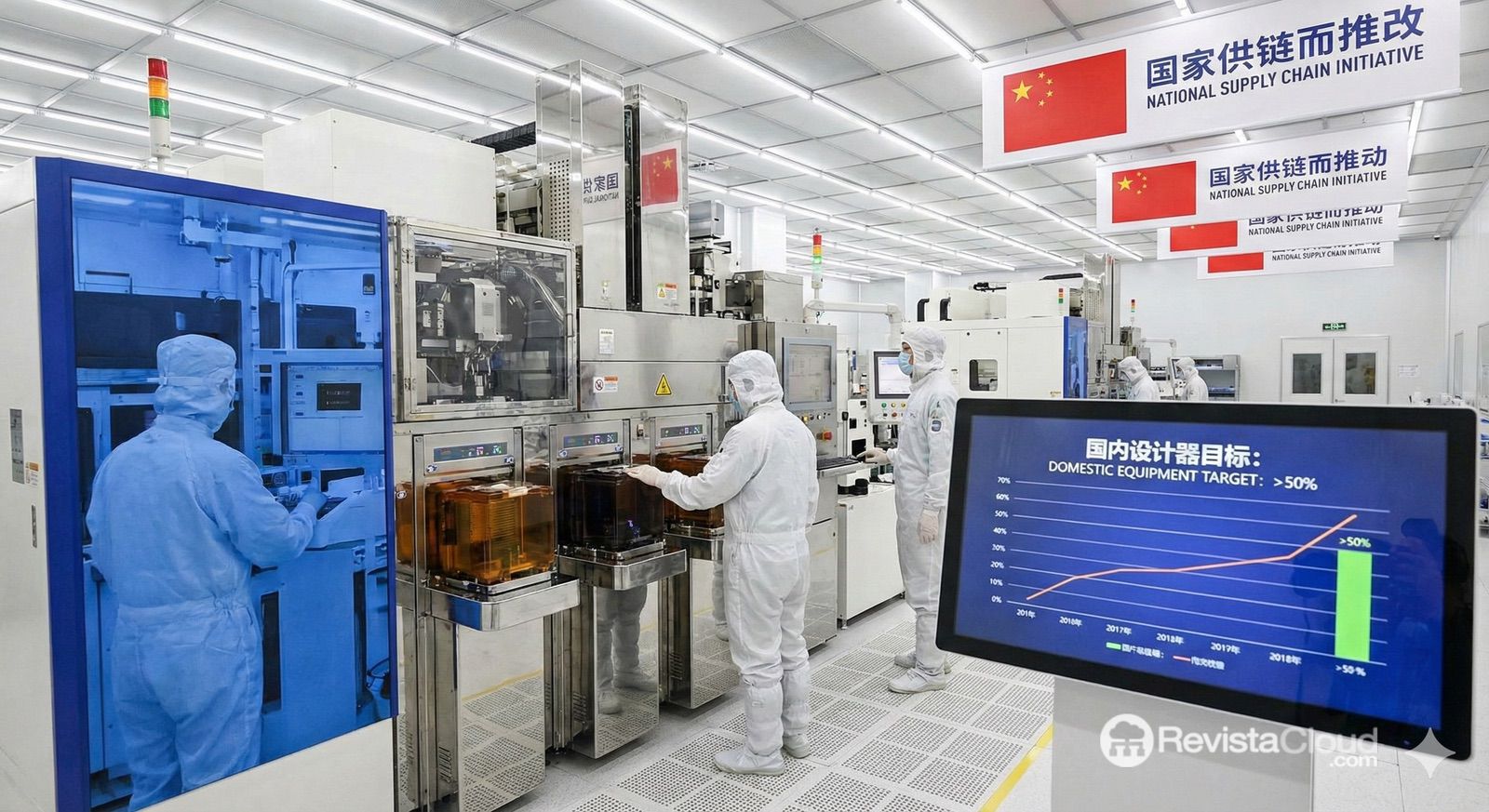
This partial shutdown forced the Chinese side to seek local suppliers. By December 2025, Nexperia’s Chinese unit had secured wafer fabrication capacity with domestic companies to meet all its 2026 production needs in a particular family of IGBTs, components heavily used in electric vehicles and industrial equipment. Later, Wingtech confirmed it was still selecting domestic suppliers and expanding local encapsulation capacity, signaling that the industrial split between the European and Chinese blocks goes far beyond a mere legal dispute.
A corporate conflict with geopolitical implications
In November 2025, The Hague temporarily suspended its administrative order as a gesture of goodwill following talks with Chinese authorities, but the litigation never fully disappeared. Dutch justice continued investigating the company’s management, and in February 2026, a court ordered a formal inquiry into alleged mismanagement, maintaining precautionary measures that removed Zhang from control and limited Wingtech’s power. From China’s perspective, this judicial process remains a significant obstacle to restoring normalcy.
Therefore, Beijing’s warning should not be interpreted solely as a diplomatic gesture. China is increasing pressure on an issue involving corporate control, economic security, industrial policy, and mutual dependence in “legacy” chips — the very components that support thousands of assembly lines in automotive, electronics, and industrial equipment. Nexperia is not a minor player: the company describes itself as a manufacturer of essential semiconductors with industrial presence in Europe and Asia, playing a central role in automotive and industrial applications.
In the short term, the market is not facing an automatic repeat of the severe chip shortage of 2021. However, the warning signs are worrying. When a company with strong European-China integration becomes embroiled in a simultaneous political, judicial, and operational conflict, the risk extends beyond shareholders. It raises questions about how much geopolitical distrust could break supply chains that have operated as a single system for years. In Nexperia’s case, this fracture has already moved from hypothetical to tangible.
Frequently Asked Questions
What does Nexperia manufacture and why is its crisis so significant?
Nexperia produces essential semiconductors, many of which are used in automotive, industrial, and consumer electronics. They are not cutting-edge AI chips but critical components for basic and power functions in millions of products.
Why did the Dutch Government intervene in Nexperia?
On September 30, 2025, The Hague activated the Goods Availability Act due to concerns over corporate governance and the potential improper transfer of assets, funds, technology, and knowledge outside Europe, which could impact Dutch and European supply security.
What role does China play in Nexperia’s supply chain?
China was a key node in the encapsulation, testing, and distribution of Nexperia’s products. Reuters noted that around 70% of its chips were encapsulated and distributed from China, mainly through Dongguan, explaining the significant impact of any operational disruption.
Could this dispute cause another global chip shortage?
While certainty is lacking, China has officially warned about this risk. Given that the conflict has already affected automotive supply and led to reconfigurations in wafer and chip provisioning, there is a real threat to the global chain if the escalation continues.
via: elchapuzasinformatico and reuters