
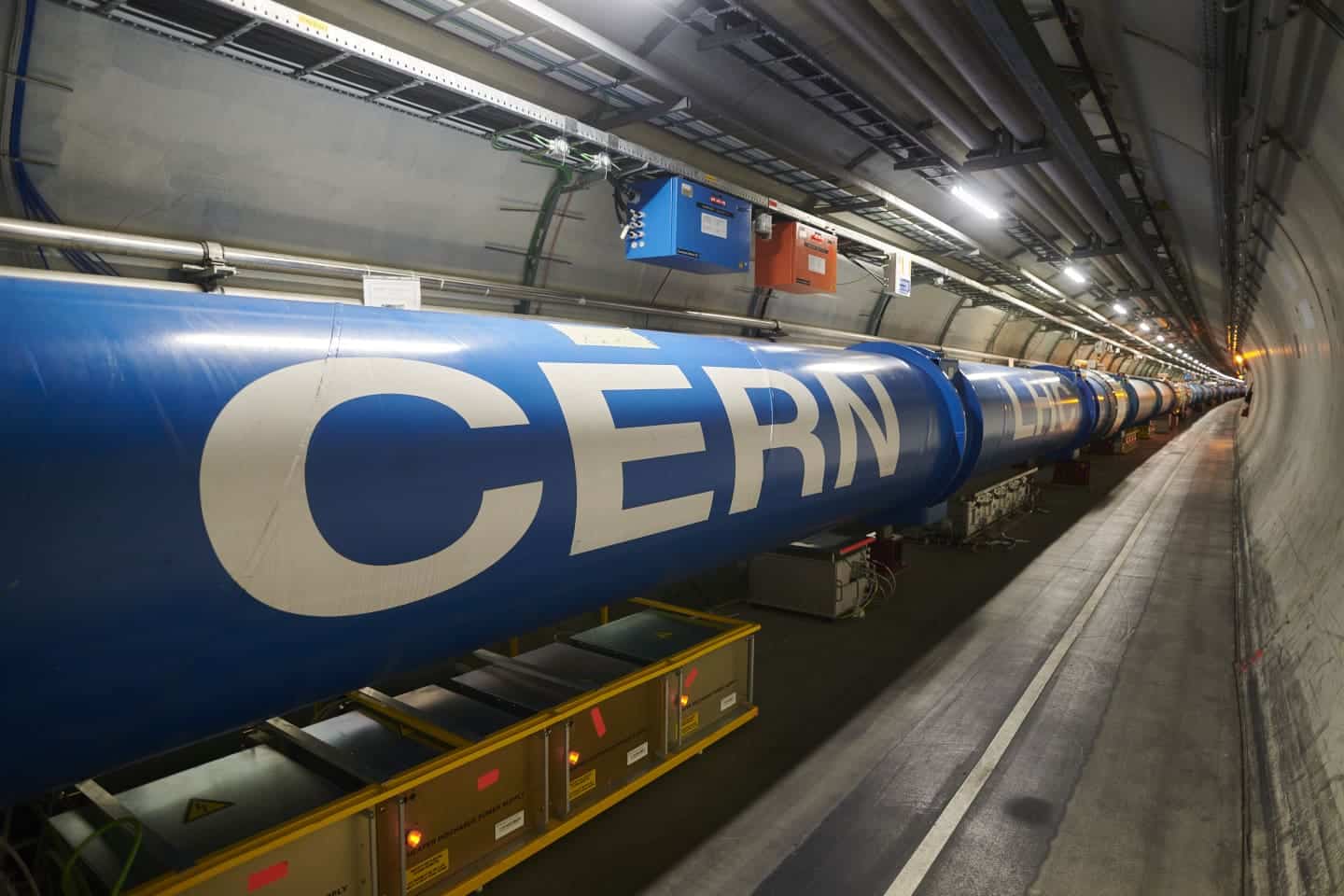
CERN is preparing an unusual technology migration — unusual both in scale and, above all, in the environment where it will take place. More than 2,200 industrial computers and embedded systems tied to controlling its accelerators will need to run Debian 13 “Trixie” before the end of 2026. The decision also matters for the free software world: a high-demand scientific infrastructure has chosen to reduce its dependence on a specific family of distributions and bet on Debian to avoid costly hardware changes.
Key facts on CERN’s choice of Debian 13, in 30 seconds
- CERN plans to migrate more than 2,200 industrial and embedded systems to Debian 13 during 2026.
- These systems are part of an infrastructure connected to about 17,000 devices.
- The lab had historically used systems tied to Red Hat, such as Scientific Linux and CentOS.
- Staying on that path could have required hardware redesigns estimated at around 5.4 million Swiss francs.
- The choice highlights the value of reducing dependencies and keeping open alternatives in infrastructure with very long lifecycles.
The change doesn’t simply affect servers hosting web pages, databases, or corporate applications. Many of the systems involved sit close to the machinery and communicate with specialized electronics spread across the accelerator complex.
That makes the choice of operating system considerably more serious than a preference between Linux distributions.
CERN engineers Federico Vaga and Nikos Tsipinakis presented the project at MiniDebConf Winterthur 2026. One of the most interesting parts of their talk was precisely how a decision about the operating system could end up forcing changes to hardware that was still working fine.
From Scientific Linux and CentOS to seeking more independence
CERN has used Linux for decades. Its history is closely tied to Scientific Linux, a distribution originally developed by Fermilab and CERN itself, based on Red Hat Enterprise Linux (RHEL).
Over time, CentOS and its corresponding generations tied to the RHEL ecosystem also arrived.
The problem appeared when CentOS’s model changed. The project dropped traditional CentOS Linux to focus its development on CentOS Stream, altering a relationship that many organizations had maintained with the Red Hat ecosystem for years.
CERN didn’t immediately decide to migrate to Debian.
Among the options studied were validating CentOS Stream 9, later moving to Stream 10, and keeping open the possibility of adopting later generations.
But the team responsible for accelerator controls began, in parallel, preparing a second option.
The approach had a particularly interesting technical consequence: the infrastructure needed to depend less on any single distribution.
Debian started out as that alternative.
As the analysis progressed, using it became a much more attractive option.
When sticking with the same family could cost 5.4 million
The financial dimension helps explain the decision.
A risk analysis carried out during the second quarter of 2023 estimated that staying on the Red Hat-based path could cost around 5.4 million Swiss francs.
It wasn’t fundamentally a licensing issue.
The difficulty lay in compatibility between upcoming generations of software and part of the specialized electronics used in the control systems.
According to the data presented by the engineers, continuing down that path could have required redesigning around 11 hardware boards, bringing in more electronics and software engineers, adding technicians, and reorganizing and rewiring racks.
All of that would also have to happen under significant time constraints.
The systems needed to be ready by the fourth quarter of 2026. Even assuming flawless replacements, CERN’s analysis estimated roughly a 20% probability of success in an optimistic scenario.
The alternative was conceptually much simpler: solve a software problem with software.
Debian made it possible to keep a substantial part of the existing hardware and avoid having the evolution of a given platform force unnecessary physical changes.
What this decision says about open source
This is where one of the project’s most interesting takeaways comes in.
It would be overly simplistic to frame the migration as a victory of “free software over proprietary software.” Red Hat Enterprise Linux is also built on open-source software, just like CentOS Stream, and Red Hat is one of the largest contributors to the Linux kernel and to numerous open projects.
The difference lies elsewhere.
Debian is a distribution developed by an international community and isn’t commercially tied to a single vendor. Its social contract, its development model, and its extensive repository make it possible to build infrastructure with a high degree of control over the software being used.
For an organization like CERN, that trait can be quite valuable.
An accelerator, a scientific facility, or an industrial system can stay operational for far longer than the typical commercial lifecycle of a computing platform.
In these environments, the ability to adapt the software, maintain in-house components, and avoid unnecessary dependence on external commercial decisions can matter more than having the latest feature.
That doesn’t mean Debian is automatically the better choice for every company.
A commercial distribution like Red Hat Enterprise Linux brings support contracts, hardware and software certifications, enterprise tooling, defined maintenance cycles, and an organization that can be held to specific service levels. For many companies, those traits fully justify using it.
CERN’s case shows a different scenario.
When an organization has technical teams capable of maintaining their own integration layer, drivers, and tools, a community distribution can provide a particularly interesting level of autonomy.
Open source doesn’t just mean saving on licenses
There’s also a recurring idea that CERN’s project helps dismantle: automatically linking free software with licensing savings.
The 5.4 million Swiss francs considered in the analysis don’t simply represent a bill CERN would have avoided by using Debian for free.
The estimate was tied to the technical consequences of staying on the previous path: redesigning electronics, reorganizing facilities, and dedicating additional staff to keeping the infrastructure running.
The potential savings therefore come from an architectural decision.
That nuance matters because the real value of open source in a complex infrastructure doesn’t always show up in the operating system’s initial price.
It can show up years later.
If an application depends entirely on a vendor’s proprietary components, closed formats, or hard-to-replace tools, switching platforms can turn into a costly project.
When components are based on open standards and the design reduces specific dependencies, there are more chances of replacing a single piece without rebuilding everything around it.
That’s exactly what CERN has been trying to achieve with its integration layer.
Debian will have to prove itself alongside the accelerators
The choice doesn’t make the migration a simple job, either.
The more than 2,200 affected systems are connected to roughly 17,000 devices and operate across an infrastructure spread over about 43 square kilometers.
There are specific controllers, embedded systems, front-end equipment boot mechanisms, and electronics developed for very specific needs.
CERN is also reviewing how those controllers integrate with Linux to avoid excessive dependence on the quirks of any one distribution.
That work may end up being one of the most valuable results of the entire migration.
Debian 13 is the distribution chosen now, but a truly independent infrastructure should make it possible, a few years down the line, to evaluate another alternative without running into the same problem again.
Free software provides the tools to do that. The architecture is what determines whether that freedom can actually be put to use.
An operating system that has to adapt to the calendar of physics
CERN also has a constraint few organizations share.
It can’t update certain systems just because Patch Tuesday has arrived or because a new version is available.
The accelerators run on carefully scheduled periods of operation, startup, maintenance, and major technical shutdowns.
IT infrastructure updates have to fit within that calendar.
The engineers summed up the problem in a phrase that’s hard to improve on: they want to avoid having to “hotpatch a running particle accelerator.”
That’s why Debian 13’s lifecycle and the timing chosen for the migration matter just as much as its technical features.
The project also shows that Linux sits much closer to scientific machinery than it might appear from the outside. These systems don’t just process experiment data afterward. Some of them are part of the IT infrastructure that keeps the accelerators running.
By the end of 2026, Debian 13 will have one of its most singular industrial deployments: thousands of systems working around one of the largest scientific complexes in the world.
CERN’s choice doesn’t prove that every organization should abandon commercial distributions. It does offer a particularly clear example of why keeping open alternatives, controlling dependencies, and avoiding being locked into a single platform can carry very concrete economic and operational value.
In this case, that was enough for an alternative initially prepared as a backup to end up becoming the chosen platform.
Frequently asked questions
Why did CERN choose Debian 13?
Among the factors cited are hardware compatibility, the maintenance calendar, and the intention to reduce dependence on a specific distribution. Staying on the previous path could have required major physical changes and additional resources.
How many CERN systems will migrate to Debian 13?
The goal is to have more than 2,200 industrial computers and embedded systems running Debian 13 before the end of 2026. The infrastructure communicates with roughly 17,000 devices.
Is Debian more open source than Red Hat Enterprise Linux?
That’s not the right way to frame it. RHEL is also extensively based on open-source software. The relevant difference here lies in the distribution, support, and governance model, and in the degree of dependence an organization chooses to keep on a specific vendor.
Does this decision mean CERN will abandon all Red Hat software?
No. The migration described applies specifically to the IT infrastructure related to accelerator controls. It doesn’t mean every server, system, and platform at CERN will switch to Debian.
