
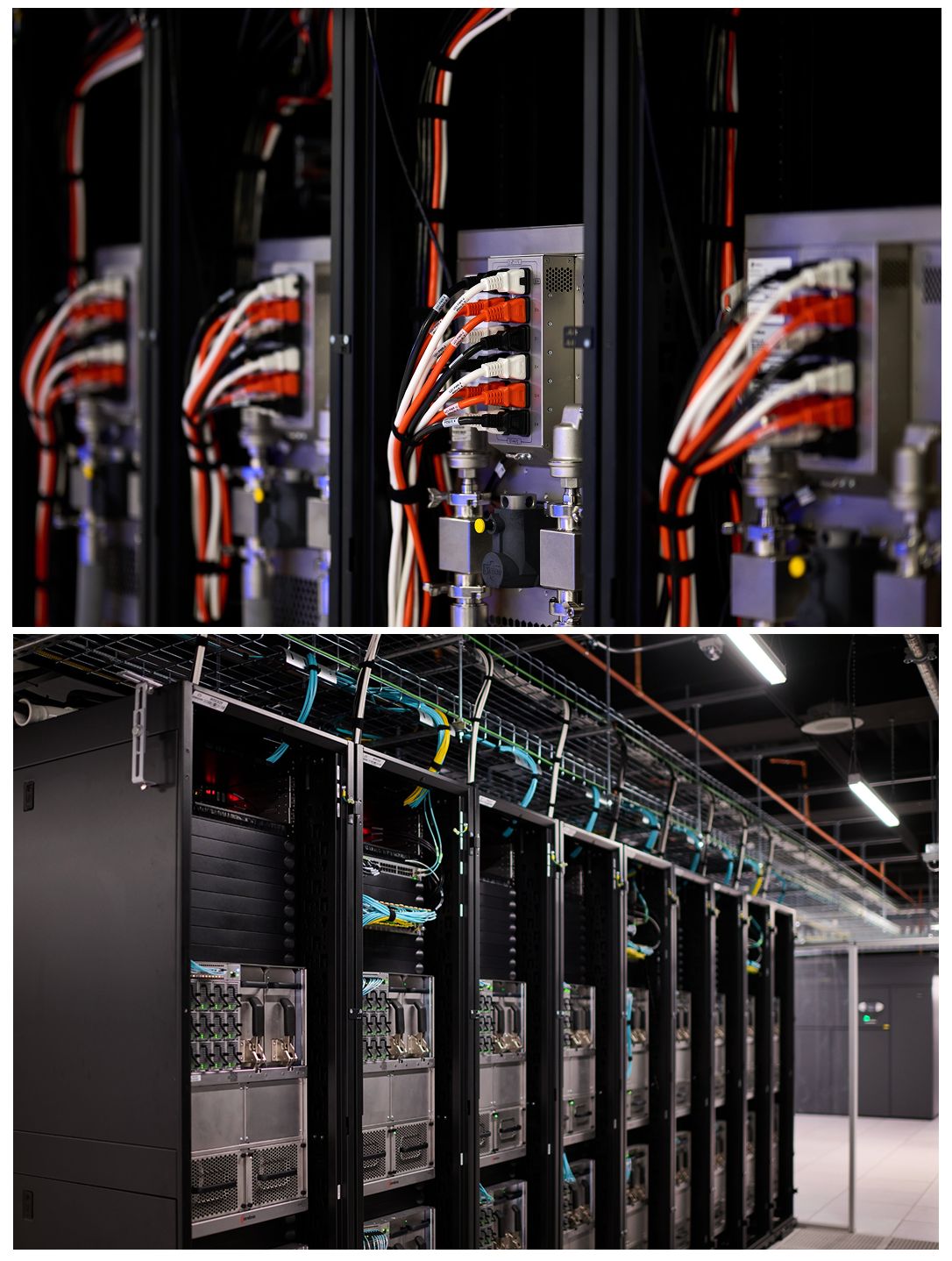
Cerebras Systems has taken a step far beyond expanding its international presence. The American company, known for developing some of the largest artificial intelligence accelerators on the market, has announced plans to deploy 200 MW of AI computing capacity in Europe before the end of 2027. The goal is not just to open new data centers but to bring inference capabilities closer to European companies, governments, and research centers at a time when response speed and technological sovereignty have become strategic factors.
The key points of Cerebras’ expansion in Europe in 20 seconds
- Cerebras will deploy 200 MW of AI capacity in Europe before the end of 2027.
- The first European infrastructure will be operational before the end of 2026.
- France, Norway, and Finland will be the first countries to host these deployments.
- Part of the capacity will support OpenAI under the strategic agreement between both companies.
- This move confirms that the AI race is no longer solely about chip manufacturing but about controlling entire inference infrastructure.
The announcement was made during the RAISE Summit in Paris, where Cerebras CEO and co-founder Andrew Feldman explained that demand for localized AI capacity in Europe is rapidly increasing. According to the company, more and more organizations are seeking to run workloads close to where data is generated to reduce latency and have alternatives to capacity concentrated in the US and Asia.
The race is no longer just about making chips
In recent years, Cerebras has differentiated itself from other manufacturers by developing processors based on a full wafer-scale architecture (wafer-scale), designed to accelerate the training and inference of AI models.
However, the European announcement makes it clear that the business no longer revolves solely around hardware.
Leading companies in the new generation of AI infrastructure aim to control increasing elements of the value chain:
- Electrical power capacity;
- Data centers;
- Cooling systems;
- High-speed interconnection;
- Software managing workloads;
- And the infrastructure where models are ultimately executed.
In other words, selling chips alone is becoming insufficient. The market demands complete platforms capable of providing low-latency inference services with immediate availability.
This is the same evolution seen with other industry players, where differentiation comes from offering integrated infrastructure rather than isolated components.
Europe becomes a strategic market
One of the most striking aspects of the announcement is the selection of the first countries.
Cerebras has confirmed deployments in France, Norway, and Finland, while continuing negotiations for additional capacity in other European markets.
The choice does not seem arbitrary.
The Nordic countries offer some of the best conditions for hosting large data centers thanks to renewable energy availability, relatively competitive electricity costs, and favorable climate conditions for cooling.
France, on its part, combines significant energy capacity with a growing national strategy to attract projects related to artificial intelligence.
It’s noteworthy that, for now, Cerebras has not announced deployments in other major European markets like Germany, the UK, or Spain.
Inference is gaining prominence over training
Cerebras’ announcement emphasizes a concept that is shaping the sector’s evolution: AI inference.
In recent years, much of the investment has focused on training ever larger models.
Now, the priority is shifting.
With millions of users employing conversational assistants, intelligent agents, and large language models, the ability to respond rapidly has become a competitive factor.
Reducing latency means delivering answers faster, enhancing user experience, and decreasing the time required to execute complex tasks.
Therefore, physically bringing inference infrastructure closer to European users offers a competitive advantage over facilities located exclusively on other continents.
OpenAI is part of the strategy
Another important detail is that a portion of these 200 MW will support OpenAI workloads, furthering the existing strategic partnership between the two companies.
The announcement comes weeks after Cerebras disclosed a multi-year agreement valued at over $20 billion, related to deploying up to 750 MW of infrastructure for OpenAI. In their Q1 2026 results, the company also confirmed agreements to bring its fast inference services to Amazon Web Services (AWS) and to strengthen its growth capability following its IPO on Nasdaq.
The European expansion fits within this global strategy.
It’s not just about increasing installed capacity but about deploying it geographically where new clients are concentrated and where demand for AI services continues to grow.
Infrastructure returns to the forefront of the debate
Artificial intelligence has also changed how data centers are understood.
For years, the focus was on the number of servers or storage capacity.
Today, the decisive factors are different: energy availability, access to GPUs and specialized accelerators, efficient cooling, and the ability to scale rapidly.
That’s why it’s increasingly common for tech companies to invest directly in physical infrastructure alongside developing hardware and software.
Cerebras’ announced expansion confirms this trend.
The competition is no longer just about manufacturing the fastest processor.
It’s about building a complete infrastructure capable of running AI models wherever clients need them.
Europe aims to reduce its dependence
The decision to deploy capacity in Europe aligns with a moment when institutions, companies, and governments are seeking to strengthen the continent’s technological autonomy.
The growing demand for localized infrastructure responds to both performance reasons and issues related to digital sovereignty, data residency, and the availability of computing capacity within Europe.
Although Cerebras is a U.S.-based company, its move indicates that Europe is consolidating as one of the priority markets for the next generation of AI infrastructure.
More than just geographic expansion, the announcement reflects a paradigm shift.
Artificial intelligence is no longer solely developed in labs designing new chips or models.
It’s also decided in who controls the energy, data centers, and inference networks that will make global-scale deployment of these models possible.
Frequently Asked Questions
What exactly has Cerebras announced for Europe?
The company plans to deploy 200 MW of AI computing capacity before the end of 2027, starting with operational infrastructure in 2026 in France and the Nordic countries.
Why does Cerebras focus on inference and not training?
The company aims to bring AI model execution closer to European users to reduce latency and improve the performance of AI-based applications. This is an increasingly important need as the use of agents and generative models continues to grow.
What is OpenAI’s role in this expansion?
Cerebras has confirmed that part of the new European capacity will be allocated to supporting OpenAI workloads, strengthening their strategic partnership.
Why were France, Norway, and Finland chosen?
Although Cerebras has not disclosed all reasons, these countries offer favorable conditions for large data centers, such as energy availability, expansion capacity, and suitable locations for AI infrastructure.
