
Cato Networks has introduced SMB FlexPool, a new model aimed at managed service providers (MSPs) and operators that want to sell SASE services to small and medium-sized businesses. The main change is in the licensing itself: instead of completing a separate transaction with Cato for every new customer, the provider purchases a shared pool of capacity that it can then distribute and reassign among the SMBs it brings onto its service.
Cato SMB FlexPool in 30 seconds
- SMB FlexPool lets MSPs purchase a shared pool of licenses and gradually distribute it across different customers.
- The provider can create accounts and activate services through self-service without a new licensing transaction for each deployment.
- Capacity can be reassigned between eligible customers as needs change.
- The MSP keeps control of its own pricing, packages, support, and business relationship.
- Management is integrated into Cato Networks’ MSASE platform.
The proposal doesn’t introduce a new SASE architecture, but rather a different way to buy, allocate, and manage capacity on Cato’s existing platform. That distinction matters: much of the announcement is aimed at solving a commercial and operational problem for providers managing dozens or hundreds of small customers.
SASE, short for Secure Access Service Edge, brings together connectivity and security functions in a distributed architecture that could traditionally be purchased and managed as separate products. For an MSP, offering it as a managed service means adding another layer: it has to turn that technology into a repeatable product it can sell, activate, bill, and maintain for numerous customers.
A license pool to serve multiple customers
SMB FlexPool works based on a capacity commitment purchased at the provider level.
From there, the MSP can distribute the available licenses among different small and medium-sized customers. When it onboards a new company, it can create its account, fill in the necessary information, allocate part of that capacity to it, and activate services through a self-service process.
The difference from a strictly individual model is that there’s no need to process a separate license purchase for every new SMB.
The purchased capacity is also portable between eligible customers. A provider can reassign it as its customer base changes, which should make better use of the available licenses.
Cato also proposes progressive consumption of the purchased capacity. The MSP can increase its usage as it onboards customers, rather than having to deploy all of it from day one.
The company hasn’t published specific pricing, minimum purchase amounts, or all the commercial requirements needed to take part in SMB FlexPool in the announcement. So it’s not possible to determine, from the information published so far, how much this saves compared with other licensing schemes.
The benefit Cato highlights is mainly about cutting administrative work and speeding up customer onboarding.
The company goes as far as talking about turning a sales opportunity into a customer-ready service “in seconds.” That claim refers to the provisioning process within the platform and shouldn’t be read as the time needed to complete an actual SASE project, which can require network configuration, security policies, identities, devices, and migrations.
The MSP keeps its own commercial offering
There’s another notable feature of the model: Cato supplies the platform and the capacity, but the MSP keeps the relationship with the end customer.
Providers can define their own packages, commercial terms, support, and managed services. In this way, SMB FlexPool works as infrastructure on top of which each partner can build its own offering for SMBs.
This matters especially in a market where a small business may need managed connectivity and security but doesn’t have specialized staff to directly administer different tools.
The MSP can handle that technical and commercial layer.
The proposal also aims to solve a scale problem. Managing five customers with independent contracts and configurations is relatively manageable. Doing the same with hundreds of small businesses requires automating processes that could be handled individually for a single large enterprise account.
That’s why the shared-capacity concept makes the most sense precisely in the SMB segment.
It doesn’t mean several companies necessarily share the same security policies or a single account. What’s pooled at the provider level is the purchased commercial capacity, which is then allocated to the corresponding accounts.
That distinction keeps FlexPool from being confused with an environment where different organizations use the same security configuration.
A dashboard to track customers, licenses, orders, and invoices
SMB FlexPool is built on the Cato MSASE Partner Platform, the platform the company uses for its managed SASE model.
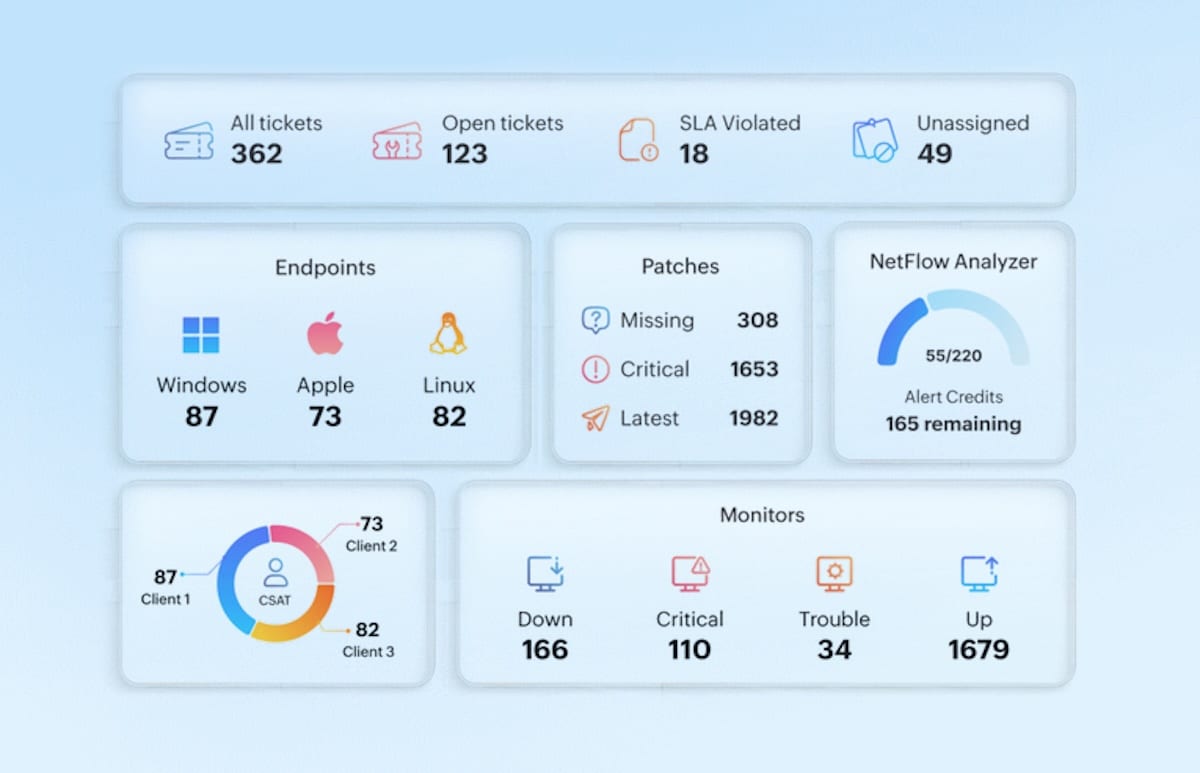
Cato has also added a new MSASE dashboard within its Business Center. From there, providers get a combined view of their customer base and can check accounts, orders, license usage, invoices, and activity tied to their customers’ lifecycle.
The goal is for the MSP to be able to manage both small and medium-sized businesses and larger accounts from the same environment.
This centralization matters beyond licensing itself. As a service provider grows, the complexity doesn’t come only from managing each customer’s technology. The workload tied to onboarding, offboarding, upgrades, renewals, billing, and usage tracking also grows.
Cato is trying to move part of those operations into the same environment its partners already use to manage services.
The launch also shows how SASE is trying to move down from large enterprise projects toward smaller organizations.
The architecture first drew particular interest from companies with multiple offices, remote users, cloud applications, and complex security and connectivity needs. An SMB may need many of those same capabilities but is unlikely to take on the same purchasing and administrative processes as a multinational.
To reach that market, vendors need to lean more on operators and managed providers capable of aggregating customers and turning the technology into services with pricing and support suited to them.
SMB FlexPool is an attempt to make that intermediary layer easier.
The program’s success will depend on aspects the announcement doesn’t yet let anyone evaluate, particularly minimum capacity commitments, the effective price per customer, and the conditions for reassigning licenses.
It will also be worth watching how the model works when an MSP grows from a few dozen customers to much larger portfolios, and how much automation it offers for integrating a partner’s own sales and operational systems.
What does change with this launch is how Cato’s partners can provision small businesses. The provider can hold previously purchased capacity, distribute it as new customers arrive, and reclaim it for other deployments when appropriate, without starting a licensing transaction from scratch every time.
For an MSP, that administrative difference can matter as much as some of the service’s own technical features.
Frequently asked questions
What is Cato SMB FlexPool?
It’s a licensing model for MSPs and service providers that lets them purchase a pool of Cato capacity and gradually allocate it among different eligible SMB customers.
Do an MSP’s customers share the same SASE configuration?
The announcement doesn’t involve unifying different companies’ security policies. What FlexPool lets providers share and reassign at their level is the purchased license capacity.
Can the MSP set its own pricing?
Yes. Cato says partners keep control of the commercial packages, the customer relationship, the support model, and the managed services they offer on top of the platform.
How much does Cato SMB FlexPool cost?
Cato hasn’t detailed pricing, minimum capacity commitments, or a per-customer rate in the announcement, so the program’s cost can’t be calculated from the information published so far.
