
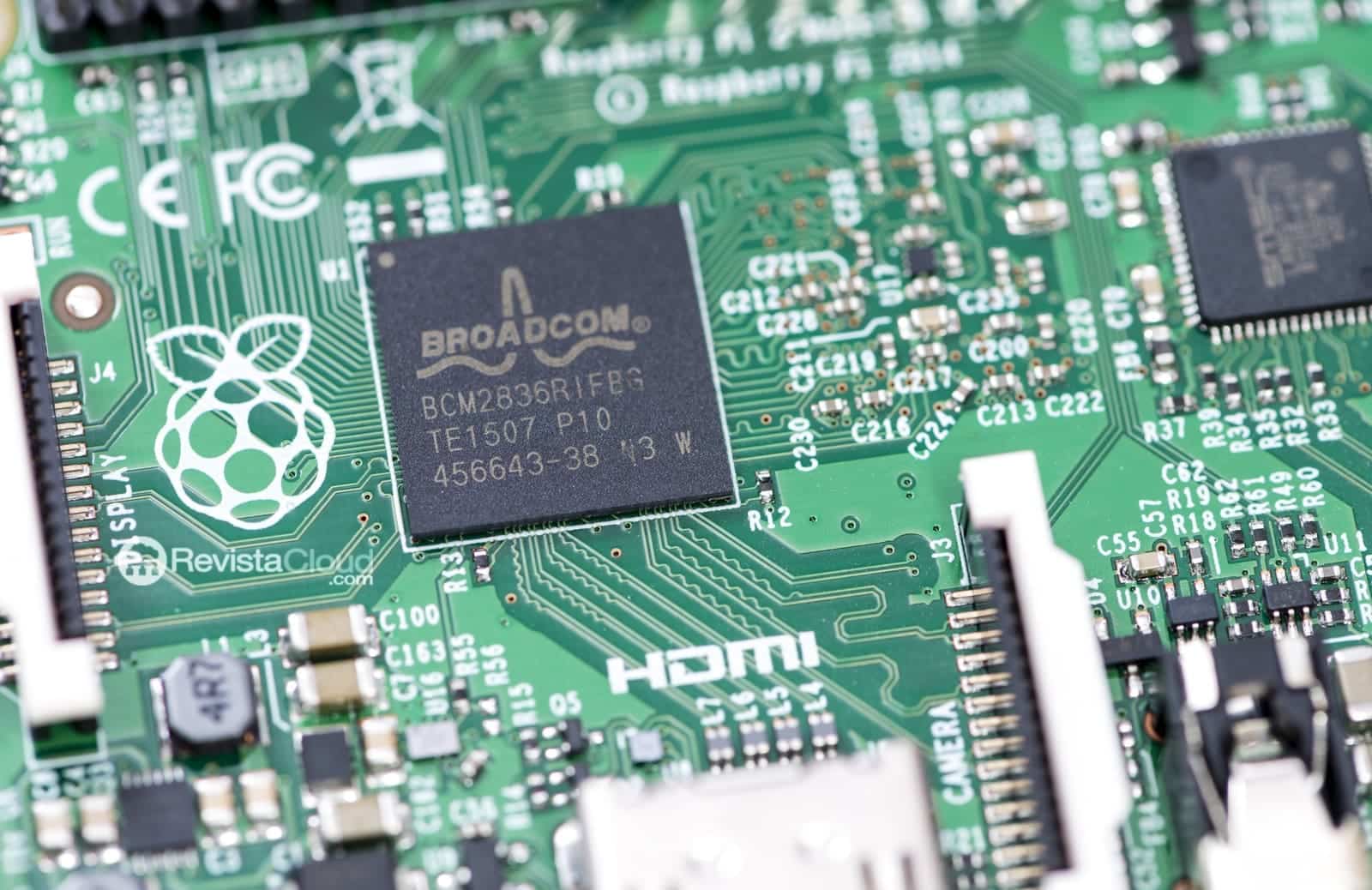
Broadcom has announced the launch of BroadPeak™ (BCM85021), a digital front-end (DFE) SoC that the company presents as the industry’s first ready for 6G in Massive MIMO infrastructure and remote radio head (RRH). The announcement, dated February 19, 2026, is not just a technical milestone: it comes at a time when operators are seeking greater capacity and efficiency to support ever-growing mobile traffic, driven by data-intensive applications and increasingly personalized experiences.
Broadcom’s proposal relies on two fundamental arguments for any radio roadmap: more usable spectrum and less power consumption. BroadPeak extends the operating range from 400 MHz to 8.5 GHz (0.4–8.5 GHz) and integrates advanced DFE blocks along with ADC/DAC into a single chip, which, according to the company, results in up to 40% power reduction compared to current solutions for Massive MIMO and RRH. All of this is manufactured on 5 nm CMOS, a figure typically associated in this segment with higher integration and improved efficiency metrics per operation.
Why the DFE has become the “brain” of modern radio
To understand the significance of the announcement, it’s useful to clarify the concept: the digital front-end (DFE) is the component that digitally conditions the radio signal before analog-to-digital conversion and actual transmission/reception. In practice, it hosts critical functions for efficient operation in complex scenarios: non-linearity correction, filtering, gain control, digital frequency conversions, and carrier coordination.
In Massive MIMO networks, where a base station manages multiple antennas and parallel streams to increase capacity and coverage, this digital “brain” becomes especially demanding. Not only must more data be moved; it must be done while maintaining signal quality (linearity), controlling interference, and supporting architectures that allow adding carriers and handling larger bandwidths.
Broadcom claims that BroadPeak aligns with the technical requirements expected of 5G Advanced in the n104 (6.425–7.125 GHz) band and, looking further ahead, with the 7–8.5 GHz range of the so-called “upper mid-band,” associated with future 6G. The industry interpretation is clear: if radios are to operate at higher frequencies to gain capacity, the silicon controlling them must leap forward in advance.
The figures aimed at convincing operators and manufacturers
BroadPeak is not just a headline. Broadcom supports it with a package of specifications that serve as an introduction to OEMs and validation labs in telecom:
- Configurations: BCM85021 supports 32T32R8FB, along with variants for 8T8R2FB and 16T16R4FB.
- RF frequency range: scalable, from 400 MHz to 8.5 GHz.
- Integrated processing: digital pre-distortion (DPD), carrier aggregation, crest factor reduction, antenna chain, and functions like digital up/down conversion, gain control, and filtering.
- Bandwidth: up to 860 MHz of instantaneous bandwidth (iBW) and 800 MHz of output bandwidth (oBW).
- Signal quality: ACL R with DPD better than -50 dBc (according to the company’s datasheet).
- DPD learning speed: up to 100 times faster than typical reference designs.
- Data conversion: sampling rates of ADC/DAC up to 19.6 GS/s.
Beyond the list, the implicit message is one of integration: consolidating what previously required multiple chips and complex designs into a single SoC. For radio manufacturers, this can mean less space, lower overall power consumption, and potentially fewer hurdles when scaling designs to new bands.
5G Advanced and 6G: spectrum leap and the influence of AI
Broadcom frames the launch as part of a phase shift: 5G New Radio expanding into the 6 GHz spectrum and above to support growing data demands driven by “data-heavy” applications. Vijay Janapaty, Vice President and General Manager of the physical layer product division, argues that infrastructure must evolve to support this leap and that their Massive MIMO SoCs are designed to deliver the “linearity” and energy efficiency future base stations will need.
The company emphasizes that BroadPeak allows operators and manufacturers to start designing next-generation platforms for high-capacity, high-throughput networks, which is especially crucial as the deployment of new bands often comes with new radio requirements and a race to optimize cost and power per transmitted bit.
Ecosystem: Altera and Hitachi GlobalLogic join the scene
The announcement also highlights an aspect as important as the chip itself in RAN: the ecosystem. Broadcom emphasizes collaboration with Altera, which claims to have completed interoperability tests between Agilex™ 7 FPGAs and BroadPeak, validating — according to them — a scalable foundation for next-generation radio platforms.
Complementing this hardware layer is software. Hitachi GlobalLogic participates in co-developing the BroadPeak SDK, aiming to simplify hardware complexity and unlock advanced DFE capabilities. In their public statement, they underline that in RAN evolution, “production-grade” software is now as vital as silicon, especially for architectures like Open RAN to be deployable at scale.
Availability: initial samples already on their way
Broadcom indicates that it has already begun shipping samples of the BCM85021 to early access customers and partners. Full commercial availability will depend, as usual, on validation processes, integration into radio designs, and certification cycles. Nonetheless, the existence of samples marks the transition from “concept” to “platform” for those designing hardware for the next phase of 5G and the gradual arrival of 6G.
Frequently Asked Questions (FAQ)
What is a radio DFE SoC and why is it important for Massive MIMO and RRH?
A digital front-end (DFE) combines key digital signal processing functions: pre-distortion, filtering, gain control, and digital conversion, among others. In Massive MIMO and RRH, it’s critical because it manages multiple radio chains and larger bandwidths with strict linearity and efficiency requirements.
What bands does BroadPeak BCM85021 cover for 5G Advanced and 6G?
According to Broadcom, the chip covers from 0.4 to 8.5 GHz and is prepared for 5G Advanced in n104 (6.425–7.125 GHz) as well as the 7–8.5 GHz range associated with 6G’s upper mid-band.
What does “up to 40% power reduction” in a base station SoC mean?
It’s the comparative figure Broadcom reports relative to existing solutions for Massive MIMO and RRH. In radio deployments, efficiency improvements are key to reducing energy pressure and enabling more capacity without significantly increasing operating costs.
What roles do Altera Agilex 7 and Hitachi GlobalLogic’s SDK play in this platform?
Altera mentions interoperability tests with BroadPeak to build scalable radio platforms, while Hitachi GlobalLogic co-develops the SDK to simplify integration and expose advanced DFE features, focusing on production-ready deployments including Open RAN.
via: Broadcom