
NVIDIA faces 2026 with an increasingly visible paradox in its AI accelerators business: demand remains sky-high, but the next-generation transition isn’t progressing as smoothly as its roadmap suggested. According to TrendForce, the Blackwell series will account for over 70% of NVIDIA’s high-end GPU shipments next year, while Rubin loses relative weight due to delays related to HBM4 memory, networking, power consumption, and liquid cooling.
The new estimate from the Taiwanese analyst also revises the internal distribution of NVIDIA’s chip families in 2026. Blackwell shifts from the previously anticipated 61% to 71%, Rubin drops from 29% to 22%, and Hopper decreases from 10% to 7%. This adjustment does not change the overall market outlook — NVIDIA will continue to grow strongly in high-end AI chips — but it does alter which architecture will truly support that growth. TrendForce has also slightly lowered its forecast for the annual expansion of high-end GPU shipments, from 26.8% previously estimated to around 26%.
Blackwell becomes the true foundation of the business
The most significant aspect of the report is not just that Blackwell gains weight, but why it does. TrendForce attributes this progress to the platform’s increased maturity and the push of integrated GB/VR configurations in rack format, which raise the chip content per system. Within this family, prominence centers on GB300 and B300, while GB200 and B200 are expected to continue during the second half of 2026 thanks to already signed orders and demand from cost-sensitive customers.
This diagnosis aligns with NVIDIA’s own narrative. At GTC 2026, the company emphasized Blackwell Ultra GB300 as the foundation of its new system generation and showcased a desktop version of DGX Station with 748 GB of coherent memory and up to 20 petaflops of FP4 performance for advanced AI workloads. Although not exactly the same market as data center rack solutions, it confirms Blackwell Ultra is the architecture NVIDIA is building the bridge between local development, advanced inference, and large-scale deployment.
Viewed in this way, Blackwell isn’t just a transitional generation. It’s becoming the architecture that will support much of the business while Rubin clears its bottlenecks. For NVIDIA, this isn’t necessarily bad news in the short term, since demand remains strong and the platform is more established. However, it does delay — at least partially — the moment Rubin can claim the protagonism the company expected for its next growth wave.
Rubin faces the reality of HBM4, networking, and power challenges
TrendForce highlights supply chain and system integration as Rubin’s main issues. The firm points out four specific fronts: the time needed to validate HBM4, the transition from CX8 to CX9 interconnects, a significantly higher power consumption, and the need to optimize performance with more advanced liquid cooling solutions. All these factors explain the reduced forecasted share of Rubin in high-end GPU shipments for 2026.
This reasoning is plausible when cross-referenced with the official timeline and other market data. TrendForce already warned in February that the three major memory manufacturers — Samsung, SK Hynix, and Micron — were in the final validation phase of HBM4, with completion not expected before Q2 2026. Simultaneously, NVIDIA clarified in Rubin’s official announcement that this platform features ConnectX-9 SuperNIC, HBM4, and a new system architecture quite different from Blackwell’s, adding to deployment complexity.
It’s important to note that Rubin isn’t disappearing or becoming a failure. NVIDIA continues to promote it as the next major platform for its AI factories, promising up to 10 times lower inference cost per token compared to Blackwell, and a large customer ecosystem aligned with the new generation. The strategic value of Rubin remains intact, but the pace at which it will gain actual market share in 2026 has been affected.
Hopper’s reduced role and geopolitical factors shaping the timeline
The third piece of the puzzle is Hopper. TrendForce reduces its forecasted share from 10% to 7%, citing ongoing geopolitical uncertainty, particularly affecting H200. The firm explicitly notes that delivery timelines will depend on the future evolution of US-China relations. This observation underscores that NVIDIA’s business isn’t solely dependent on engineering or manufacturing but also on a regulatory environment that continues to influence which chips can be sold, to whom, and on what schedules.
This explains why NVIDIA’s product mix in 2026 is shifting more due to practical restrictions than purely commercial desire. Blackwell is gaining weight because it’s more ready for large-scale production and deployment. Rubin remains the key technological bet but faces more complex integration challenges. Hopper, which could have supported some markets, now faces geopolitical volatility. As a result, the share distribution is more concentrated on Blackwell than it was just a few months ago.
Inference, mid-range, and edge: NVIDIA’s other battleground
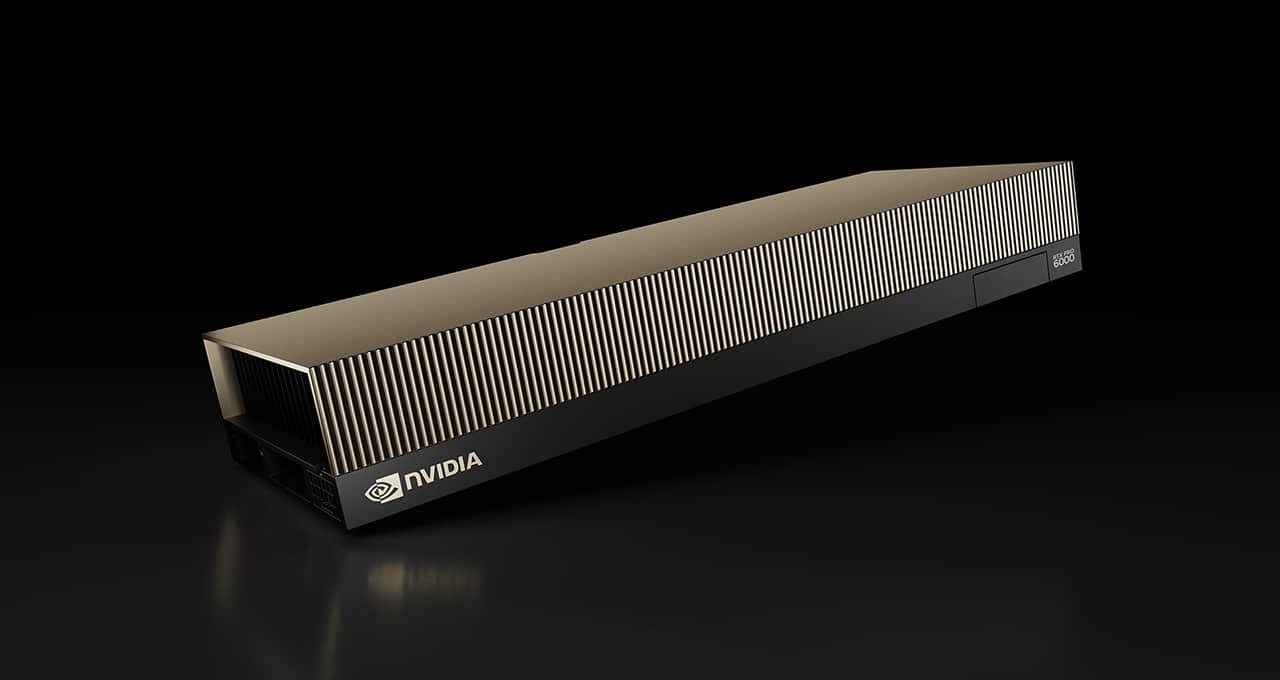
TrendForce offers another interesting insight: NVIDIA is not only reinforcing its leadership in training but is also increasingly pushing into inference. The analyst suggests that demand for its new LPU solutions could reach hundreds of thousands of units in 2026, aiming to double by 2027. Simultaneously, NVIDIA is expanding its presence in mid-range, entry-level, and edge markets with families such as RTX PRO 4500 and 6000, increasing the share of mid- and low-end products to over 32% of total shipments by 2026.
This indicates that NVIDIA’s strategy is no longer solely about selling the most expensive accelerators. While maintaining dominance at the high end of training remains critical, capturing a larger share of inference and distributed deployment markets is becoming equally essential. In this context, allowing Blackwell more time and weight could even benefit NVIDIA by enabling it to build a broader foundation before Rubin gains full momentum.
Ultimately, TrendForce’s report doesn’t challenge NVIDIA’s leadership in AI but suggests a more uncomfortable reality: the company will keep growing in 2026, likely relying more on a mature platform than initially anticipated, while its next big leap faces hurdles. In a market where each architectural transition involves new HBM, faster networks, advanced cooling, and increased electrical power, such adjustments are becoming part of the normal game.
Frequently Asked Questions
What GPU high-end shipment share will Blackwell have in 2026 according to TrendForce?
TrendForce estimates Blackwell will account for 71% of NVIDIA’s high-end GPU shipments in 2026, up from their previous forecast of 61%.
Why does Rubin’s forecasted share for 2026 decrease?
TrendForce cites delays related to HBM4 validation, the CX8 to CX9 interconnect transition, increased power consumption, and the need for more advanced liquid cooling to optimize the platform.
Is Hopper also affected in TrendForce’s revision?
Yes. The firm lowers its forecast from 10% to 7% and ties this to geopolitical uncertainty impacting H200 delivery timelines, especially concerning US-China relations.
Is NVIDIA still only focusing on AI training?
No. TrendForce notes that NVIDIA is also accelerating its expansion into inference and mid-range, entry-level, and edge segments, with the expectation that mid- and low-end products will exceed 32% of total shipments in 2026.
via: trendforce