
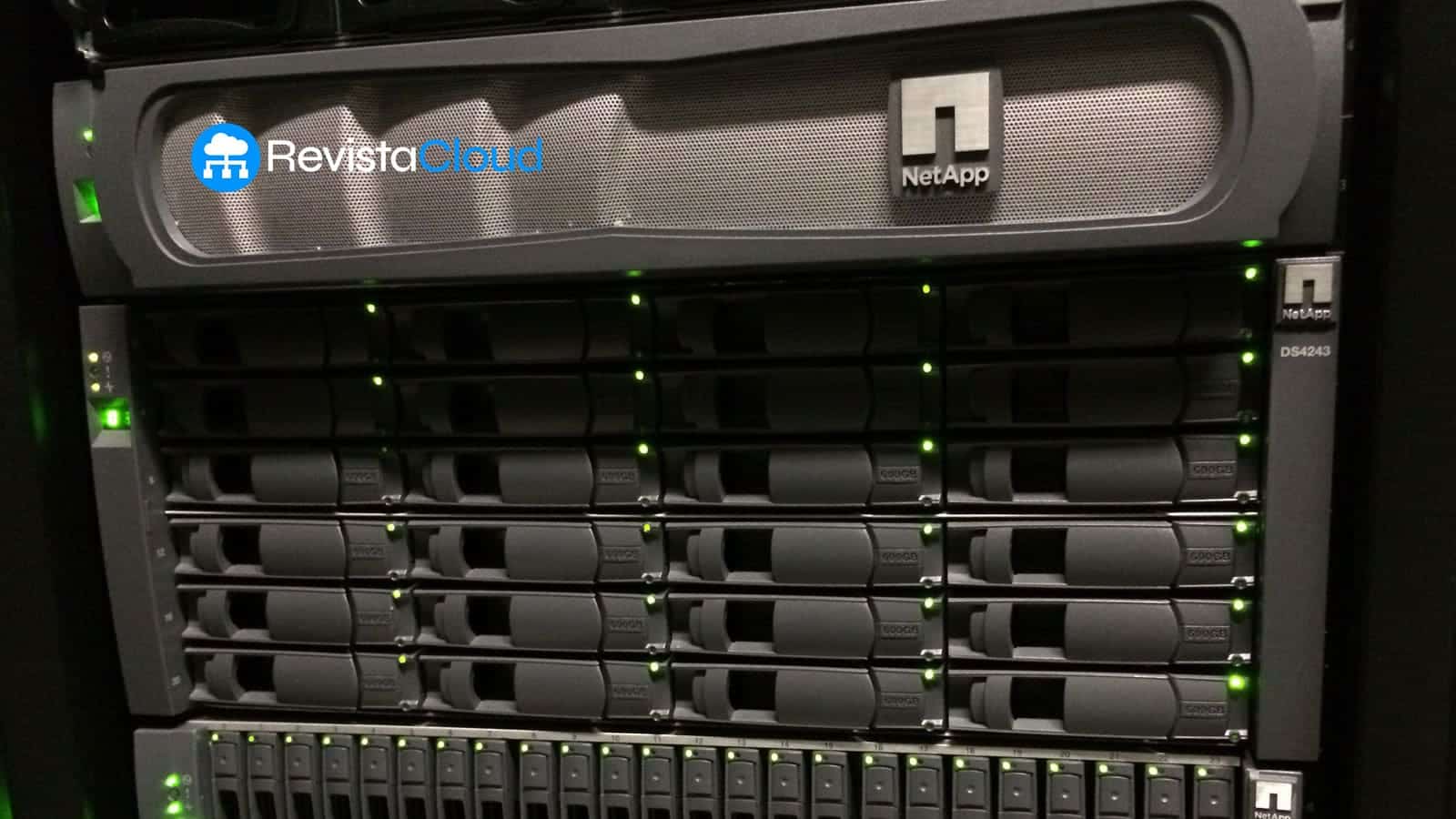
AWS Transform can now use Amazon FSx for NetApp ONTAP as a storage destination in automated migrations to AWS, an integration through which Amazon Web Services and NetApp aim to simplify one of the most complex parts of these projects: coordinating the move of applications, servers, network, and data. The new capability is generally available in regions where both services overlap.
AWS Transform and NetApp ONTAP in 20 seconds
- AWS Transform now supports Amazon FSx for NetApp ONTAP as a migration target.
- The service uses agentic AI to discover, plan, and automate workload moves to AWS.
- Block storage can migrate in the same wave as compute and networking.
- The migration isn’t limited to sources already running NetApp ONTAP.
- The integration targets virtual machines, databases, and enterprise applications.
The update is especially relevant for organizations running applications tightly coupled to their storage. Migrating a virtual machine or a database isn’t just about moving compute capacity: it also means moving its volumes, preserving dependencies, and making sure the application works correctly again at the destination.
Until now, handling those two processes separately could require dedicated storage tools or intermediate platforms. The integration, announced on September 3, 2026, aims to fold that part of the project into AWS Transform’s automated workflow.
AWS Transform’s agentic AI now reaches storage too
AWS Transform is an AWS service focused on automating modernization and migration processes through agentic artificial intelligence. For migrations, it analyzes the environment, helps discover existing workloads, generates plans, and automates various phases of the move.
Adding Amazon FSx for NetApp ONTAP extends that automation to the data tied to those applications.
The difference can be summed up like this:
| Process | Separate migration | AWS Transform + FSx for ONTAP |
|---|---|---|
| Workload discovery | Independent tools/processes | Built into AWS Transform |
| Planning | Manual coordination between components | Automated workflow |
| Compute | Migrated independently | Same wave |
| Network | Migrated independently | Same wave |
| Block storage | Dedicated tool or process | FSx for ONTAP as a direct target |
| Temporary storage platform | May be required | Can be avoided |
| Destination | Varies | Managed FSx for ONTAP service |
NetApp argues this approach can cut down on the number of tools and intermediate steps needed. The company says one reason cloud migrations tend to run long or over budget is precisely the need to handle servers, applications, networking, and storage separately.
The new integration lets connected storage be included in the same migration wave that handles compute and networking.
There’s also an important nuance: the source doesn’t necessarily have to be a NetApp array.
According to both companies, AWS Transform can use FSx for ONTAP as a target when migrating block storage from either NetApp ONTAP or other on-premises storage platforms.
That considerably broadens the integration’s potential market.
What Amazon FSx for NetApp ONTAP adds after migration
Amazon FSx for NetApp ONTAP is a managed AWS storage service built on NetApp’s ONTAP software. It lets companies already familiar with NetApp infrastructure use several of the same capabilities they rely on in their own data centers, now inside AWS.
The integration aims to have the migration land directly on a platform ready to run production workloads, without needing temporary storage to later move data to its final destination.
Once the process is complete, AWS and NetApp highlight features such as data protection, fast cloning for development and testing, and storage efficiency mechanisms.
This approach can be especially appealing for organizations already working with ONTAP, since it reduces the operational shift between the source and destination environments.
But the ability to migrate from other vendors’ storage also turns the integration into an entry point to ONTAP for customers who weren’t previously using NetApp technology.
The companies identify three main scenarios.
The first is virtualized environments. AWS Transform can coordinate moving virtual machines along with their associated storage without requiring a separate migration design for the volumes.
The second is enterprise databases, where storage and application are especially intertwined and factors like performance, protection, and operational consistency carry more weight.
The third covers business-critical applications paired with large data volumes. In these cases, reducing the number of intermediate moves can simplify both planning and migration windows.
| Use case | Goal of the integration |
|---|---|
| Virtualized environments | Move VMs and storage together |
| Databases | Keep data and workloads within the same migration plan |
| Critical applications | Simplify moving the application and its associated data |
| Development and testing | Take advantage of cloning after migration |
| Cloud consolidation | Centralize storage on FSx for ONTAP |
That said, AWS Transform doesn’t eliminate the need to plan an enterprise migration properly. Dependencies between applications, performance requirements, network addressing, maintenance windows, and recovery strategies still require analysis.
The automation aims to reduce manual work and coordinate tasks, not turn every complex migration into a fully autonomous operation.
AI is starting to move into infrastructure migration itself
The addition of FSx for ONTAP points to another interesting shift: generative AI is starting to be used not just inside applications deployed in the cloud, but also to automate the transformation of the underlying technology infrastructure.
AWS built Transform precisely around this idea. Specialized agents can analyze existing environments and take on repetitive parts of projects that traditionally required extensive manual work.
Storage was a necessary piece to extend that approach.
Moving servers without coordinating their data can introduce extra steps, temporary costs, and risks. By making FSx for ONTAP a directly supported target, AWS can fold that layer into its transformation process.
For NetApp, the integration also reinforces its strategy of offering ONTAP beyond traditional physical arrays. The company has spent years extending its software and data services to major cloud providers, and FSx for ONTAP is its managed integration inside AWS.
It’s not the company’s first push to deepen ties with AWS: NetApp has also partnered with AWS to bring enterprise data directly into cloud AI services, another step in extending ONTAP’s reach across the AWS ecosystem.
Pravjit Tiwana, senior vice president and general manager of Cloud Storage and Services at NetApp, argues that moving applications, servers, networking, and storage separately is one of the reasons certain cloud projects end up needing more time and money than planned.
The claim that the new integration will reduce those costs or risks should be understood as NetApp’s stated goal. The announcement doesn’t provide comparative metrics to quantify how much a given organization might save.
It also doesn’t change a question companies should weigh before starting any migration: automating a move to AWS doesn’t by itself determine whether public cloud is the economically right architecture for every workload.
Storage costs, data ingress and egress operations, required performance, expected growth, and continuity requirements remain part of that decision.
Where the new integration does make a practical difference is in the mechanics of the move itself. An organization that has already decided to migrate certain workloads to AWS now has an automated path for its data to land directly on Amazon FSx for NetApp ONTAP alongside the rest of the infrastructure transformation.
The feature is available in all AWS regions where AWS Transform and Amazon FSx for NetApp ONTAP are both available.
Frequently asked questions
What has NetApp announced with AWS Transform?
Amazon FSx for NetApp ONTAP has been added as a storage destination supported by AWS Transform, letting connected storage be included in the automated process of migrating workloads to AWS.
Do I need to be running NetApp ONTAP at the source data center?
No. NetApp says the migration can start from either ONTAP or other on-premises block storage platforms and land on Amazon FSx for NetApp ONTAP.
What kinds of workloads can benefit?
AWS and NetApp highlight virtualized environments, enterprise databases, and business-critical applications along with their storage.
Does AWS Transform use artificial intelligence?
Yes. AWS describes Transform as a service built on agentic AI to automate discovery, planning, and migration or modernization tasks for workloads.
via: netapp
