
AWS has decided to hit the accelerator in the agentic AI era. During re:Invent 2025, the company unveiled its “frontier agents”, a new class of AI agents designed to work as a direct extension of development, security, and operations teams.
The first three to arrive are:
- Kiro Autonomous Agent: a “virtual developer” that maintains context and executes end-to-end development tasks.
- AWS Security Agent: a “security engineer” that acts as a continuous advisor and on-demand pen tester.
- AWS DevOps Agent: a “virtual operator” that handles incidents and suggests reliability and performance improvements.
AWS’s promise is clear: moving from assistants that help with specific actions to agents that complete complex projects almost as team members.
What AWS understands by “frontier agents”
In their announcement, AWS defines this new agent category with three key traits:
- Autonomous
They are not meant to have users dictate every step but to be given a goal (“improve test coverage of this service,” “perform a pentest on this API,” “diagnose this critical incident”) and have the agent generate and execute a plan. - Scalable
They can perform multiple tasks in parallel, coordinating subtasks and collaborating with other agents. The idea is to eliminate the bottleneck of “how many things a person can monitor at once.” - Persistent
Designed to work for hours or days without constant intervention, maintaining context across sessions and learning from human decisions and corrections.
Behind these agents are Amazon’s internal lessons: the more they could delegate “background” work to agents, the more time their teams regained for design, architecture, and truly strategic decisions.
Kiro Autonomous Agent: the “virtual developer” living in your repository
The first frontier agent focuses purely on development. Kiro autonomous agent presents itself as a shared virtual developer across the entire team, capable of understanding code, backlog, and internal standards.
Some notable capabilities:
- Maintains persistent context of repositories, branches, tickets, PRs, and prior conversations.
- Can handle tasks such as:
- Bug triage.
- Refactoring services.
- Improving test coverage.
- Applying coordinated changes across multiple repositories.
- Integrates with tools like GitHub, Jira, Slack, or CI/CD pipelines.
- Proposes changes as edits and pull requests, leaving final decisions to developers.
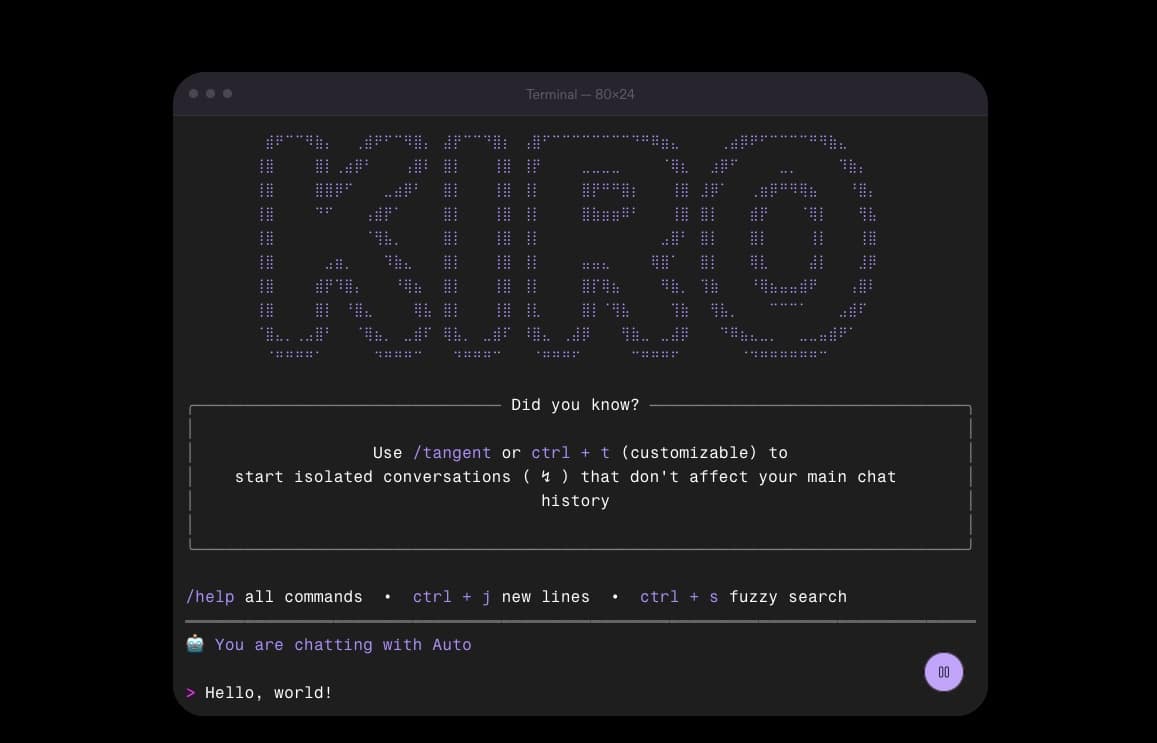
Simultaneously, Kiro exists as a IDE and CLI agent-based environment: a development experience centered on structured specifications and context, beyond simple “copy-paste prompts.” Its philosophy of spec-driven development includes:
- Transforming natural developer language into clear requirements and acceptance criteria.
- Designing architecture and implementation plans.
- Breaking down work into specific tasks, with tests and documentation.
- Executing these tasks with agents, showing diffs and allowing humans to accept or modify.
The goal is to move away from chaotic “coding vibe” towards a flow where AI structures first and programs second, always with traceability of decision rationale.
AWS Security Agent: tireless pen tester integrated into the development cycle
The second frontier agent addresses one of the biggest bottlenecks: security. AWS Security Agent aims to act as a virtual security engineer accompanying applications from design through production.
Its functions span three areas:
- Secure design from the start
- Reviews architecture documents and technical proposals.
- Contrasts decisions with the organization’s internal security policies.
- Highlights design risks (data exposure, segmentation gaps, authentication issues, etc.).
- Continuous security in development
- Analyzes pull requests for vulnerabilities, bad practices, or policy violations.
- Applies both corporate requirements and knowledge bases on common vulnerabilities (OWASP, misconfigurations, etc.).
- On-demand penetration testing at scale
- Transforms penetration tests from costly, one-off processes into a recurring capability.
- Launches automated testing campaigns across multiple applications.
- Returns validated findings with remediation proposals and even code snippets to fix issues.
An example cited is SmugMug, which integrated AWS Security Agent into its testing strategy. The company reports that the agent detected a business logic flaw that had gone unnoticed by other automated tools and would likely only have been caught by a human pentester.
The takeaway for the AI ecosystem is clear: agents with deep access to business context, code, and APIs can go beyond traditional security scanners, reasoning over flows and consequences, not just patterns.
AWS DevOps Agent: from firefighting to resilience improvement with data
The third agent operates in the realm of operations and observability. AWS DevOps Agent acts as a seasoned DevOps engineer always on call.
Its approach covers two scenarios:
- Real-time incidents
- Responds immediately to alerts.
- Connects signals from:
- Observability tools (CloudWatch, Datadog, New Relic, Dynatrace, Splunk…)
- Runbooks and internal documentation.
- Code repositories.
- Deployment pipelines.
- Builds a dependency and correlation map to identify root causes.
- Within AWS, the agent has managed thousands of escalations with an estimated root cause identification rate exceeding 86%, according to the company.
- Continuous platform improvement
- Analyzes incident history to spot recurring patterns.
- Proposes improvements across four areas:
- Observability.
- Infrastructure optimization.
- Pipeline quality.
- Application resilience.
In testing with Commonwealth Bank of Australia, AWS highlights that the agent was able to locate the root cause of a complex network and identity issue in less than 15 minutes—something that would normally take hours for a senior engineer.
A step further in the journey toward agentic AI
For the AI news ecosystem, these frontier agents fit into a broader trend: the shift from interface-centered copilots (chat, IDE, console) toward autonomous agents embedded within systems.
Key aspects of this movement include:
- Context persistence: agents no longer “forget” between sessions; they accumulate knowledge about code, internal standards, and failure patterns.
- Task orchestration: an agent doesn’t just respond to a question but plans, executes, retries, and coordinates subtasks, delivering results ready for review.
- Deep integration with the stack: repositories, CI/CD, observability, incident managers, security tools… everything becomes part of the “world” that AI can access.
Additionally, tools like Kiro focus on the developer experience, offering an agent-oriented environment with specifications and hooks triggered by events (saving a file, opening a PR, etc.).
Challenges: trust, governance, and platform dependence
The deployment of such powerful agents raises questions, especially in a corporate AI context:
- Trust and oversight
How much can we allow an agent to make autonomous changes? AWS’s approach leans toward a model where the agent proposes and humans approve, but the push for greater automation remains constant. - Security and access to sensitive data
These agents require broad permissions across repositories, pipelines, metrics, and sometimes production environments. The line between “useful assistant” and “risk if something goes wrong” is very thin. - Ecosystem dependency on AWS
While AWS emphasizes that Security and DevOps Agents work in multi-cloud and hybrid environments, the trend reinforces increasing centralization of critical capabilities (development, security, operations) within the cloud provider itself. - Impact on roles and skills
In the medium term, the advent of specialized agents will force a redefinition of developers’, SREs’, and security teams’ work: fewer mechanical tasks, more supervision, design, advanced prompting, and technical governance.
It’s clear that AWS is not just presenting smarter “prompts,” but envisioning a end-to-end integrated agentic AI approach across the entire software lifecycle.
If this promise materializes in daily operations — not just demos at re:Invent — frontier agents could mark a turning point in how engineering teams collaborate with AI: less “chat assistant” and more tireless colleague capable of working hours in the background.
And that’s probably the real frontier that the AI industry is beginning to cross.