
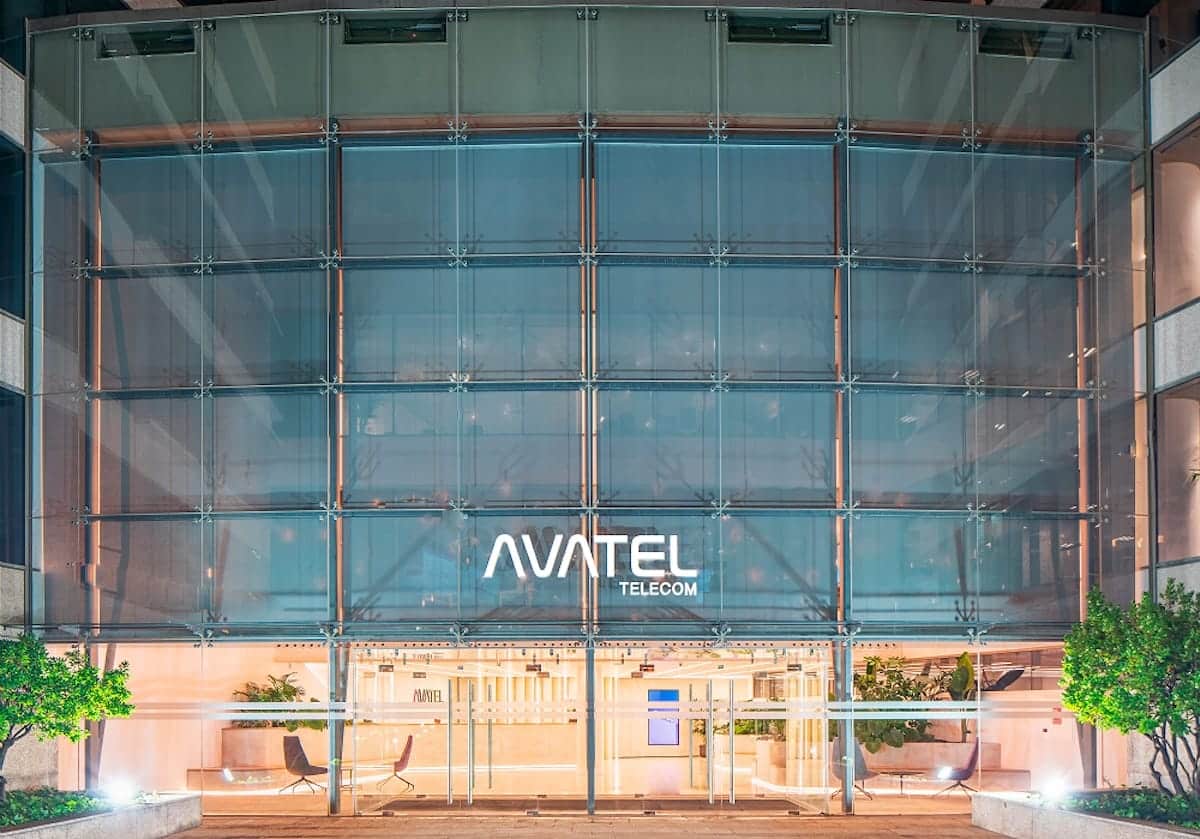
Avatel has closed an intragroup deal handing Everest Connections — a company tied to its shareholder Inveready — the right to use a fiber-optic network covering nearly 550,000 homes for 20 years, in exchange for €45 million. The operator is not selling the passive network, which remains its property, according to a report published by elEconomista on 04/11/2026.
Avatel’s fiber handover to Inveready in 20 seconds
- Everest Connections pays €45 million to use the network for 20 years, with possible extensions.
- Avatel keeps ownership, operates the network, and charges €1.50 a month per active customer.
- Combined with the €82.5 million from Avatel Infra, the cash raised totals €127.5 million.
- MasOrange, Movistar, Digi, and Vodafone together hold 93.9% of fixed broadband, according to the CNMC.
The deal stays within the family. elEconomista refers to Inveready as the operator’s parent, even though Avatel’s capital has been split since 2025 between the fund run by Josep Maria Echarri and Víctor Rodríguez, the company’s CEO and one of its founders. That’s why the cash flows into the telco, while the asset ends up being operated by a company within the same shareholder perimeter rather than an outside third party. The financial newspaper does not specify which document the information comes from, nor whether the payment has already been received in full.
How the €45 million breaks down, and who operates the network
The amount splits into two very unequal parts. Almost all of it corresponds to the right to use the passive infrastructure (fiber, ducting, and elements that require no electronics), while a smaller amount pays for the active equipment, which does change hands.
| Item | Amount | What it means |
|---|---|---|
| Right to use the passive network | €42.14 million | Avatel keeps ownership and leases out use for 20 years, with two possible 15-year extensions at Everest’s choice |
| Active elements and equipment | €2.86 million | Sale of the equipment associated with the network |
| Total deal value | €45 million | Network covering nearly 550,000 residential units |
| Operation and maintenance fee | €1.50 a month per active customer | Charged by Avatel; updated each year with the CPI (consumer price index), capped at 3% |
With the maximum extensions, the leased use could run for up to 50 years. This type of arrangement resembles what the sector calls an IRU (irrevocable right of use), although the published report does not use that term. Doing the math, the price works out to around €82 per residential unit covered — a rough estimate that does not account for the network’s condition or how many of those homes are actual customers.
The division of roles is the most striking part. Avatel will fund the investments needed to adapt the network for shared use and will keep operating, maintaining, renewing, and upgrading it. Everest, in turn, will provide wholesale access services to Avatel and its subsidiaries so they can keep serving their end customers. In practice, the telco collects payment upfront, starts paying for wholesale access, and receives a fee for maintaining the same network it used to run on its own. The published report does not specify how much Avatel will pay Everest for that access — the figure that would show the real cost of the liquidity obtained.
Avatel strings together deals to raise cash
This €45 million adds to the €82.5 million Inveready Infraco put into Avatel Infra, the group’s infrastructure subsidiary, signed last spring through a capital increase in exchange for 49.99% of that company. Between the two deals, Avatel has brought in €127.5 million, according to elEconomista. El Español, in a report dated 18/06/2026, put the fund linked to Inveready’s investment in Avatel Infra at around €80 million, a somewhat lower figure.
This isn’t the first time Avatel has monetized usage rights to its network. In June 2024, before Inveready entered its shareholder base, the company sold the same fund 75% of the usage rights to the networks of more than 20 acquired operators, for €61 million, according to DPL News. In addition, in 2025 it settled its stake in the UTE (joint venture) with Xfera, which had received €28.3 million in subsidies to bring 5G to 482 rural sites: it transferred 45% and sold the remaining 5% for €1.5 million.
Avatel was formed from the integration of around 150 local operators and agreed in 2022 to buy Lyntia Access, a deal worth around €1 billion according to Bloomberg. In June 2025, Pangea Telecom, owned by Vaiia Kapital (Víctor Rodríguez’s vehicle) and Inveready-linked funds, took full control of the operator, with a 50.1%/49.9% split, according to elEconomista. The same outlet put 2023 revenue at €316 million and the customer base at more than 760,000 broadband and 670,000 mobile lines by the end of that year. Revista Cloud covered this too when it reported on Avatel’s new shareholding structure.
The company’s finances help explain these moves. El Español reported in June that the operator has racked up net losses of €22.1 million in 2023, €42.9 million in 2024, and €35.3 million in 2025, that it has close to 700,000 customers, and that it set aside €164 million against the possible clawback of Next Generation EU funds. The same newspaper noted that MasOrange has replaced Telefónica as Avatel’s main network supplier, while elEconomista mentions an agreement with Orange as the wholesale provider for its 5G.
Acquisitions continue, though at a slower pace. In November 2025, Avatel acquired Iberwix Telecomunicaciones Clientes, with more than 25,000 fiber customers in Almería and Granada, for €8.2 million. In April 2026 it closed the purchase of Albacete Fibra for almost €2 million. The company has also invested in bringing the stores that still carried the branding of the local operators it absorbed under the single Avatel brand.
A fiber market dominated by four groups, increasingly separated from the network
Avatel competes in a highly concentrated market. According to the CNMC (Spain’s National Commission for Markets and Competition), Spain closed August 2026 with 20.1 million fixed broadband lines, of which 18.4 million were FTTH (fiber to the home). By June, 91.4% of lines were already fiber. The four major operators together held 93.9% of lines at the end of the second quarter, with the rest — where Avatel and regional operators sit — splitting the remaining 6.1%.
| Operator | Fixed broadband share (Q2 2025) | Fixed broadband share (Q2 2026) |
|---|---|---|
| MasOrange | 36.8% | 35.3% |
| Movistar | 31.2% | 30.8% |
| Digi | 11.7% | 14.4% |
| Vodafone | 13.7% | 13.4% |
| Other operators | 6.6% | 6.1% |
The trend is clear in the official data. Digi has gained 2.7 points in a year and now surpasses Vodafone, while the group of smaller operators has lost half a point. In retail revenue, the CNMC recorded a 14.4% year-on-year increase for Digi in the second quarter of 2026, a 2.4% decline for Movistar, a 1.1% rise for Vodafone, and flat revenue for MasOrange.
The split between network and retail arm — the model the industry calls netco/servco — is advancing at the same time. MasOrange, Vodafone Spain, and Singapore’s sovereign wealth fund GIC launched their fiber joint venture on 04/12/2025, covering around 12 million premises with a 58%/25%/17% split respectively, as Revista Cloud already reported in the creation of Spain’s largest fiber optic company. Telefónica and Vodafone agreed on another joint venture, Fiberpass, in November 2024, covering 3.6 million premises with a 63% stake for Telefónica and 37% for Vodafone at the time of the announcement.
In the neutral wholesale segment, Onivia — owned by funds including Macquarie Capital, Arjun, and abrdn, according to El Español — integrated in 2025 the network it bought from Digi, adding five million more homes, according to DPL News. Against those figures, the 550,000-unit network now passing to Everest is small, but it follows the same logic: separating the infrastructure asset, which attracts investors with a long time horizon, from the business of selling services to end customers. The difference here is that, in Avatel’s case, the buyer of the usage rights belongs to the same shareholder circle.
Frequently asked questions
Has Avatel sold its fiber network to Inveready?
No. Avatel keeps ownership of the passive network and hands over its use for 20 years to Everest Connections, tied to Inveready. It is only selling the active elements and equipment, for €2.86 million.
How much money does Avatel bring in from this deal?
It brings in €45 million: €42.14 million for the usage rights and €2.86 million for the equipment. Added to the €82.5 million from Inveready Infraco’s entry into Avatel Infra, the cash raised reaches €127.5 million, according to elEconomista.
Does the deal affect Avatel’s customers?
The published report does not point to any changes for end customers. Everest will provide wholesale access to Avatel and its subsidiaries so they can keep serving their customers, and Avatel will continue operating and maintaining the network.
What market share does Avatel hold in fixed broadband?
The CNMC does not publish its share separately. Avatel is grouped within “other operators,” which together held 6.1% of fixed broadband lines in June 2026.
This article is also available in Spanish: «Avatel cede a Inveready el uso, no la propiedad, de su fibra por 45 millones», on revistacloud.com.
Sources:
- elEconomista: Avatel ingresa 45 millones por la venta de la fibra óptica de 550.000 edificios a su matriz Inveready (04/11/2026)
- elEconomista: así queda el reparto accionarial de la nueva Avatel (junio de 2025)
- elEconomista: Inveready levanta más de 500 millones con su segundo fondo de private equity y se estrena con Avatel (junio de 2025)
- elEconomista: Avatel Telecom compra Lyntia Access por mil millones (2022)
- El Español: Echarri plantea elevar su participación en Avatel (18/06/2026)
- DPL News: Avatel vende a Inveready los derechos de uso de parte de su red de fibra por 61 millones (17/06/2024)
- CNMC: estadística trimestral de telecomunicaciones, segundo trimestre de 2026 (14/10/2026)
- CNMC: datos mensuales de telecomunicaciones de agosto de 2026 (21/10/2026)
- Forbes España: cierre de la sociedad de fibra de MasOrange, Vodafone y GIC (04/12/2025)
- DPL News: Telefónica y Vodafone cierran acuerdo para su FibreCo en España (07/11/2024)
- Reason Why: Telefónica y Vodafone presentan Fiberpass (11/02/2025)
- DPL News: Onivia amplía su cobertura con la red adquirida a Digi (25/03/2025)
