
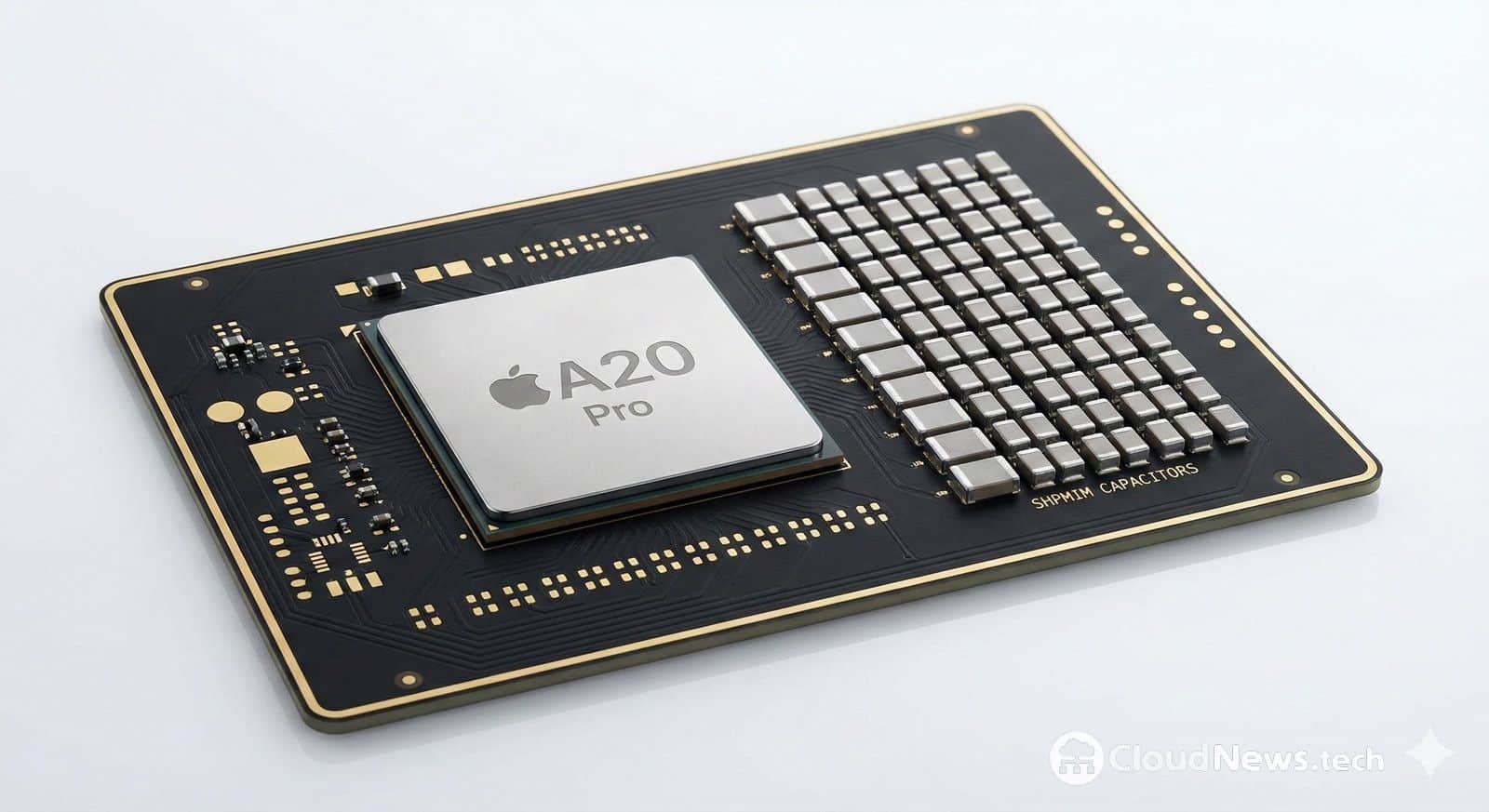
Apple has been building one of the most sophisticated chip supply chains in the world around TSMC for over a decade. The formula has worked: proprietary designs, advanced manufacturing nodes, and very precise control over performance per watt in iPhone, iPad, and Mac. But the surge in AI demand is straining the capacity for advanced manufacturing so much that even Apple is starting to look at alternatives.
According to Bloomberg, Apple has held preliminary talks with Intel to use their manufacturing services, and some executives have visited an advanced Samsung plant under construction in Texas. No orders are finalized, and the discussions are still in the early stages, but the key detail is another: Apple is exploring options for its main processors, not just secondary chips or lower-volume components.
TSMC Can No Longer Accommodate All Demand Smoothly
Apple’s reliance on TSMC has become both a technical advantage and a strategic risk. The latest iPhones and Macs use chips fabricated in 3-nanometer processes, a technology where TSMC is the dominant supplier. The problem is that this same capacity is also desired by NVIDIA, AMD, Intel, major hyperscalers, and AI accelerators manufacturers.
Apple closed its second quarter of fiscal year 2026 with revenues of $111.2 billion, a 17% increase year-over-year, and diluted earnings per share of $2.01, up 22%. The quarter was very strong commercially, with March setting records in total revenue, iPhone sales, and EPS, but the strength of demand does not address the underlying issue: the capacity for manufacturing advanced chips has become a scarce resource.
During the earnings call, Apple acknowledged supply constraints in Macs, especially in Mac mini, Mac Studio, and MacBook Neo. Media following the call suggest that Tim Cook attributed some of this pressure to higher-than-expected demand and a less flexible supply chain, with particular tension in SoCs fabricated with advanced nodes.
The situation is better understood when looking at TSMC. TrendForce reported that TSMC’s monthly capacity for 3 nm could increase to around 180,000 wafers by the end of 2026, up from approximately 120,000 to 130,000 at the end of 2025. Nonetheless, the firm notes that AI demand is rapidly consuming capacity, and TSMC is also accelerating the rollout of 2 nm technology, which could reach nearly 100,000 wafers per month by the end of this year.
The message for Apple is uncomfortable. While TSMC is expanding capacity, the AI market is growing even faster. And when major accelerator clients are willing to pay premiums to secure production, Apple ceases to be the only privileged customer in the room.
Intel and Samsung as Plan B, But Not Immediate Substitutes
That Apple is exploring Intel and Samsung doesn’t mean it will abandon TSMC. The technical barrier is huge. Manufacturing an Apple Silicon chip involves more than just delivering a design and receiving wafers. Each node has its own design rules, libraries, tools, performance, power, density, cost, defects, packaging, and validation requirements. Moving a chip from TSMC to Intel or Samsung requires deep engineering work and significant time.
Intel is considered a candidate due to its 18A process and efforts to relaunch its foundry business. DigiTimes previously reported that Apple might consider Intel’s 18A for entry-level M chips starting in 2027, assuming the process matures within the next 18 to 24 months.
Securing Apple’s business would be a huge boost for Intel. The company needs to prove it can attract top-tier external clients, not just manufacture chips for itself. For Apple, Intel could provide an additional advantage: more capacity in the U.S. and an industrial partnership aligned with political interests in strengthening domestic semiconductor manufacturing.
Samsung remains the second-largest player globally in advanced foundry services, though it trails behind TSMC in market share, perceived reliability, and leading-edge customer base. The visit of Apple executives to a Texas plant aligns with contingency planning but does not eliminate typical doubts about node performance, energy efficiency, volume capacity, costs, and production stability.
Apple already knows Samsung as a supplier of chips for earlier iPhone generations and maintains a complex relationship with the South Korean company as both partner and competitor. This doesn’t prevent industrial agreements but requires separating strategic interests from technical realities. A chip for iPhone or Mac cannot afford significant compromises on efficiency or autonomy.
Local AI Also Boosts Mac Demand
The paradox is that the same wave of AI pushing TSMC to its limits is also helping to sell more Macs. Mac mini and Mac Studio with Apple Silicon have become attractive machines for developers, technical teams, and users wanting to run AI models locally. Apple’s unified memory architecture allows working with models that benefit from large shared memory across CPU, GPU, and Neural Engine.
This doesn’t make the Mac a direct replacement for a GPU cluster, but it positions it well for local inference, prototyping, development agents, open-source models, and private tasks where data privacy rules out cloud sending. If demand exceeds expectations, Apple will need more chips just as 3 nm capacity becomes harder to attain.
The reduction of entry-level configurations or limited availability of certain models can be viewed in this context. When supply is constrained, Apple tends to prioritize configurations with higher margins or strategic importance. However, this can impact its promise of affordable entry points into the Mac ecosystem, especially if base models are discontinued or prices increase.
The Real Risk: Relying on a Single Bottleneck
Historically, Apple has been adept at diversifying suppliers for screens, memory, cameras, assembly, and other components. When it comes to main processors, however, dependence on TSMC has persisted because the technical advantages have been clear. Now, the question isn’t whether TSMC remains the best partner but whether Apple can afford to leave a single foundry handling such a critical part of its business.
Diversification won’t be easy. Intel and Samsung need to demonstrate they can produce Apple chips with the required levels of performance, efficiency, volume, and quality. Meanwhile, TSMC will continue as the natural partner for more advanced products, including future 2 nm designs. But Apple requires more flexibility if cutting-edge nodes remain caught between premium smartphones, Macs, AI accelerators, and hyperscale demands.
This situation reveals a profound transformation in the industry. For years, Apple was one of the earliest adopters of advanced nodes. Now, it shares that position with AI-heavy industries. NVIDIA, AMD, Google, Amazon, Microsoft, and others need advanced silicon to power data centers, and their orders are no longer peripheral—they directly compete for capacity once reserved mainly for high-end mobiles and computers.
For TSMC, this is the result of its own success. It has built the world’s most coveted manufacturing platform. For Apple, it’s a wake-up call. The advantage of designing its own chips also depends on guaranteed capacity to produce them. If that capacity becomes limited, even the best design can be constrained by wafer availability.
The move toward Intel and Samsung isn’t a sign of breaking ties but a strategic hedge. Apple doesn’t want to be left without a Plan B in a market where AI is shifting supply chain priorities. Even if it never produces large volumes of main chips outside TSMC, exploring alternatives sends a clear message: in the next phase of silicon, relying on a single supplier will become harder to justify.
Frequently Asked Questions
Will Apple stop manufacturing its chips at TSMC?
There’s no sign of a rupture. Discussions with Intel and Samsung are preliminary and haven’t resulted in orders. TSMC will remain Apple’s primary partner for advanced nodes.
Why is Apple exploring alternatives now?
Because advanced manufacturing capacity is under intense pressure from AI, data center accelerators, and high-performance chips. Apple needs more flexibility to avoid supply constraints.
What role could Intel play?
Intel might produce some Apple chips if its 18A process reaches the required maturity. This could be a major boost for its foundry business, but it remains a possibility without a confirmed commercial deal.
Can Samsung produce Apple’s main chips?
Technically, Samsung has the capacity for advanced manufacturing, but it would need to demonstrate performance, efficiency, volume, and quality levels that meet Apple’s standards. Currently, the reports refer to preliminary exploration, not awarded production.
via: wccftech
