
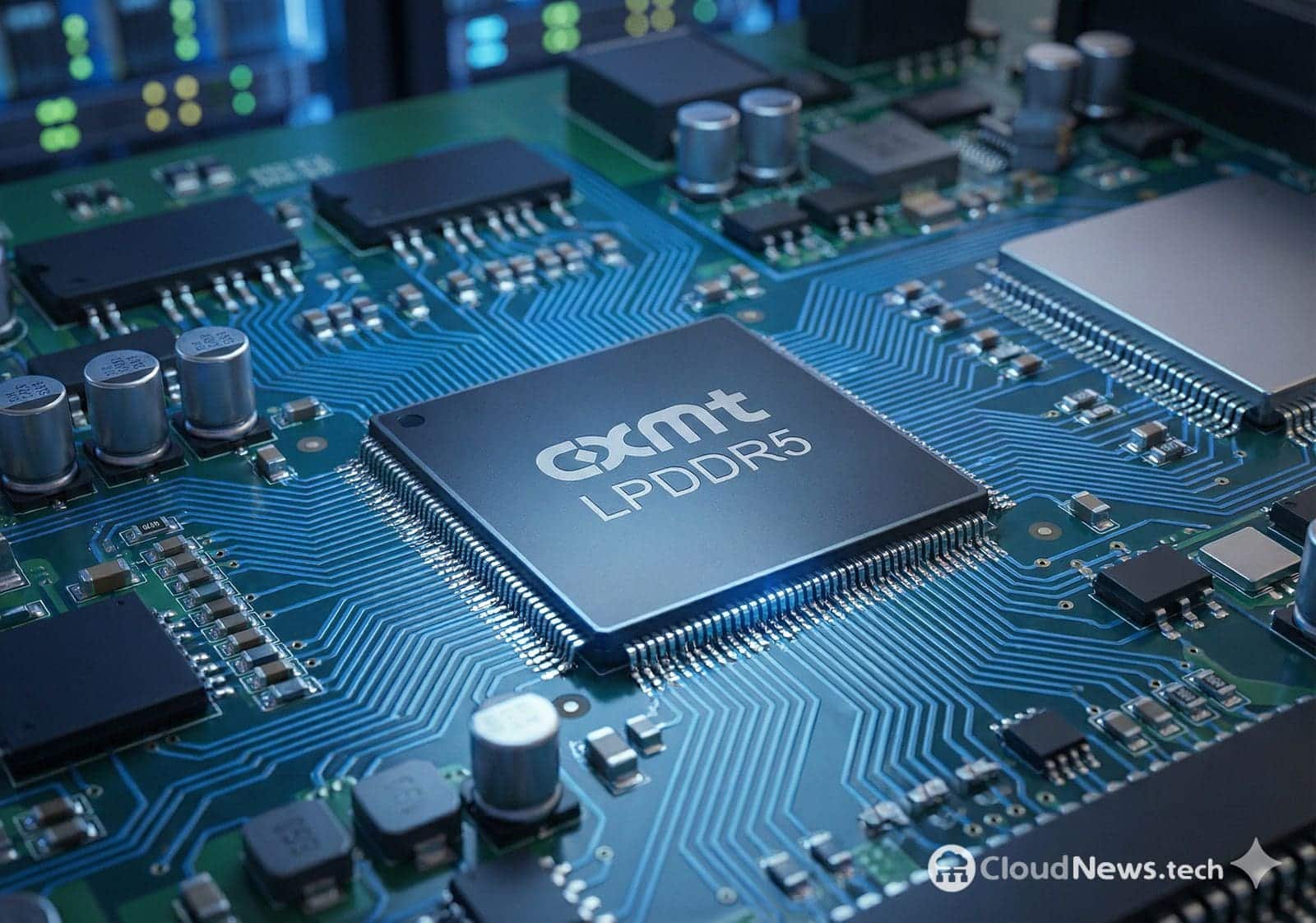
Apple is evaluating DRAM from ChangXin Memory Technologies (CXMT) for possible future iPhones and MacBooks, amid a global memory shortage and growing political pressure in the United States to keep the company from sourcing components from Chinese manufacturers Washington considers sensitive. What isn’t confirmed is whether Donald Trump will authorize a deal with CXMT or with Yangtze Memory Technologies (YMTC): that possibility comes from unofficial reports for now and should be treated as such.
Apple, CXMT, and YMTC in 20 seconds
- Apple is testing DRAM from CXMT for iPhone and MacBook, according to consistent industry reports.
- The initial talks reportedly focused on devices meant for the Chinese market.
- A bipartisan group of senators has asked Tim Cook to rule out both CXMT and YMTC.
- Washington considers both companies sensitive on national security grounds.
- The reported green light from Trump after a meeting with Xi Jinping hasn’t been officially confirmed.
Apple’s interest has a clear industrial logic. AI is eating up huge amounts of memory for servers and accelerators, while Samsung, SK Hynix, and Micron shift more capacity to higher-margin data center products. That’s pushing up costs and creating strain for both DRAM and NAND memory.
Adding another supplier would give Apple more flexibility in a supply chain where it has long tried to avoid relying on a single company.
Apple is already testing CXMT DRAM for iPhone and MacBook
The most solid piece is that Apple has been testing DRAM made by CXMT.
Specialized tech media say the tests involve products like the iPhone and MacBook, and that early talks explored using it in devices sold mainly in China.
That doesn’t mean CXMT is already an Apple supplier.
Before bringing on a new manufacturer, Apple runs qualification processes to check performance, power use, stability, compatibility, and industrial capacity. A memory chip can pass some tests and still not end up in production.
There’s also a specific issue tied to U.S. restrictions.
Apple can buy certain commercially available components, but sharing advanced specifications or asking for custom designs from a company under U.S. controls could raise regulatory problems. That matters because Apple usually works closely with suppliers to tailor components to its products.
Meanwhile, CXMT has become an increasingly important player. It’s now one of the world’s leading DRAM producers and has moved fast in recent years, narrowing the technology gap with Samsung, SK Hynix, and Micron.
YMTC is an even more complicated case
YMTC, which specializes in NAND Flash memory, faces bigger hurdles from the U.S. side.
Washington added the company to the Department of Commerce’s Entity List in 2022, which restricts the transfer of certain U.S. products, technologies, and know-how.
On top of that, the U.S. government links both CXMT and YMTC to China’s military-industrial complex. A bipartisan group of senators cited that in urging Apple to commit not to source memory from either.
The letter, sent to Tim Cook in late July, was signed by Democratic and Republican senators.
The lawmakers didn’t stop at a political statement. They also asked which memories Apple is evaluating, for which products, what technical data has been shared during qualification, and what supply chain risks it has assessed.
The letter also draws a distinction between making devices for China and creating technological dependence.
Apple initially planned to use Chinese memory mainly in products sold in that country, which would free up components from Samsung, SK Hynix, or Micron for other markets.
But the senators reject the idea that this separation is enough. They argue that approving CXMT or YMTC as Apple suppliers would boost their international legitimacy and make future expansion into other markets easier.
The reported Trump intervention is still a rumor
The newer claim circulating now is that the Trump administration might eventually let Apple proceed with these suppliers after an upcoming meeting between Donald Trump and Xi Jinping.
According to leaks from the Chinese source Mobile Chip Expert, Washington would be preparing some form of approval or agreement letting Apple use DRAM from CXMT and NAND from YMTC.
For now, there’s no official confirmation from the White House, the Department of Commerce, or Apple backing that claim.
The White House has confirmed that Trump and Xi agreed to hold further meetings after the U.S. president’s visit to China in May, and that Xi would be received in Washington in the fall.
But tying that future meeting to an explicit authorization for Apple goes beyond confirmed facts.
It would also sit awkwardly with the current political pressure in Washington.
Opposition to Apple sourcing Chinese memory doesn’t come only from part of Congress. Broader U.S. policy aims to cut dependence on China in strategic semiconductors and promote domestic manufacturing.
So any policy change here would carry far more weight than a simple commercial negotiation with a supplier.
Memory shortages are shifting the balance among manufacturers
Apple’s interest doesn’t necessarily mean CXMT will offer cheaper memory.
That’s one of the paradoxes of the current moment.
For years, a new Chinese manufacturer appealed mainly on price. By 2026 it’s different: memory is scarce, and manufacturers have far more bargaining power.
CXMT is expanding fast and already supplies strong domestic demand from Chinese tech firms. Some specialized sources say its capacity for this year is heavily stretched, and its prices may match or even top international competitors in some cases.
U.S. senators acknowledge in their letter that CXMT has raised prices and that its products aren’t necessarily a cheaper option.
That changes the logic for Apple.
The main potential benefit is no longer just buying low-cost DRAM, but widening the pool of available suppliers.
Apple buys enormous quantities of memory. Adding a fourth major DRAM source would let it spread orders, cut the risk of supply disruptions, and gain flexibility when Samsung, SK Hynix, and Micron prioritize other products.
For a company selling hundreds of millions of devices, securing supply may matter more than saving a few dollars per component.
AI is part of the problem
Artificial intelligence sits at the center of this story again.
Large data centers demand ever more DRAM, HBM, and NAND storage. High-bandwidth memory, or HBM, has become one of the most sought-after components for AI accelerators.
Major manufacturers are investing in and expanding capacity for these high-margin memories.
That has knock-on effects on the rest of the memory market.
Memory production can’t ramp up overnight. New factories cost billions and take years, so the explosive growth of one category can leave less flexibility for computers, smartphones, and other devices.
Even YMTC is benefiting. The Chinese company has grown fast and is now among the biggest NAND makers worldwide, lifted by high demand and elevated storage prices.
As a result, Chinese manufacturers that had little international presence a few years ago are turning into serious industrial alternatives.
That puts Apple between two opposing forces.
On one side, it needs more supply capacity.
On the other, Washington is trying to keep U.S. companies from helping strengthen Chinese manufacturers it deems strategic.
Apple may need CXMT more than CXMT needs Apple
The situation also changes a historic relationship between Apple and its suppliers.
Thanks to the sheer volume it orders, Apple usually holds significant bargaining power. Becoming an iPhone supplier can justify big discounts in exchange for volume and prestige.
Memory scarcity weakens that advantage.
CXMT already has large Chinese customers, and its capacity isn’t limitless. If it can sell almost all its production without heavy discounts, it has little reason to accept the terms Apple usually offers other manufacturers.
So Chinese memory entering the iPhone or MacBook shouldn’t automatically be read as a way to lower device costs.
It could simply be a supply-security strategy.
The real change would be if the U.S. accepted a stable integration of CXMT or YMTC into its supply chain through one of its most important tech companies.
That hasn’t happened yet.
Apple is testing alternatives. Congress is pushing the other way. Washington keeps restrictions on certain Chinese companies, and reports of a personal intervention by Trump remain unconfirmed.
What comes next will depend both on global memory availability and on a technology negotiation between the U.S. and China that reaches far beyond the next iPhones.
Frequently Asked Questions
Is Apple already using CXMT memory in its iPhones?
There’s no confirmation of widespread commercial use. Apple is evaluating CXMT DRAM for products like the iPhone and MacBook, but qualification tests don’t necessarily mean it will reach production.
What do CXMT and YMTC make?
CXMT mainly specializes in DRAM memory, while YMTC produces NAND Flash memory used for storage.
Has Trump authorized Apple to buy Chinese memory?
There’s no official confirmation at this time. The possible authorization after a meeting with Xi Jinping is based on unofficial reports and remains a rumor.
Why is Apple looking for new memory suppliers?
Strong demand from data centers and AI is pressuring the global memory market. More suppliers would help Apple diversify risk and secure more supply capacity.
