
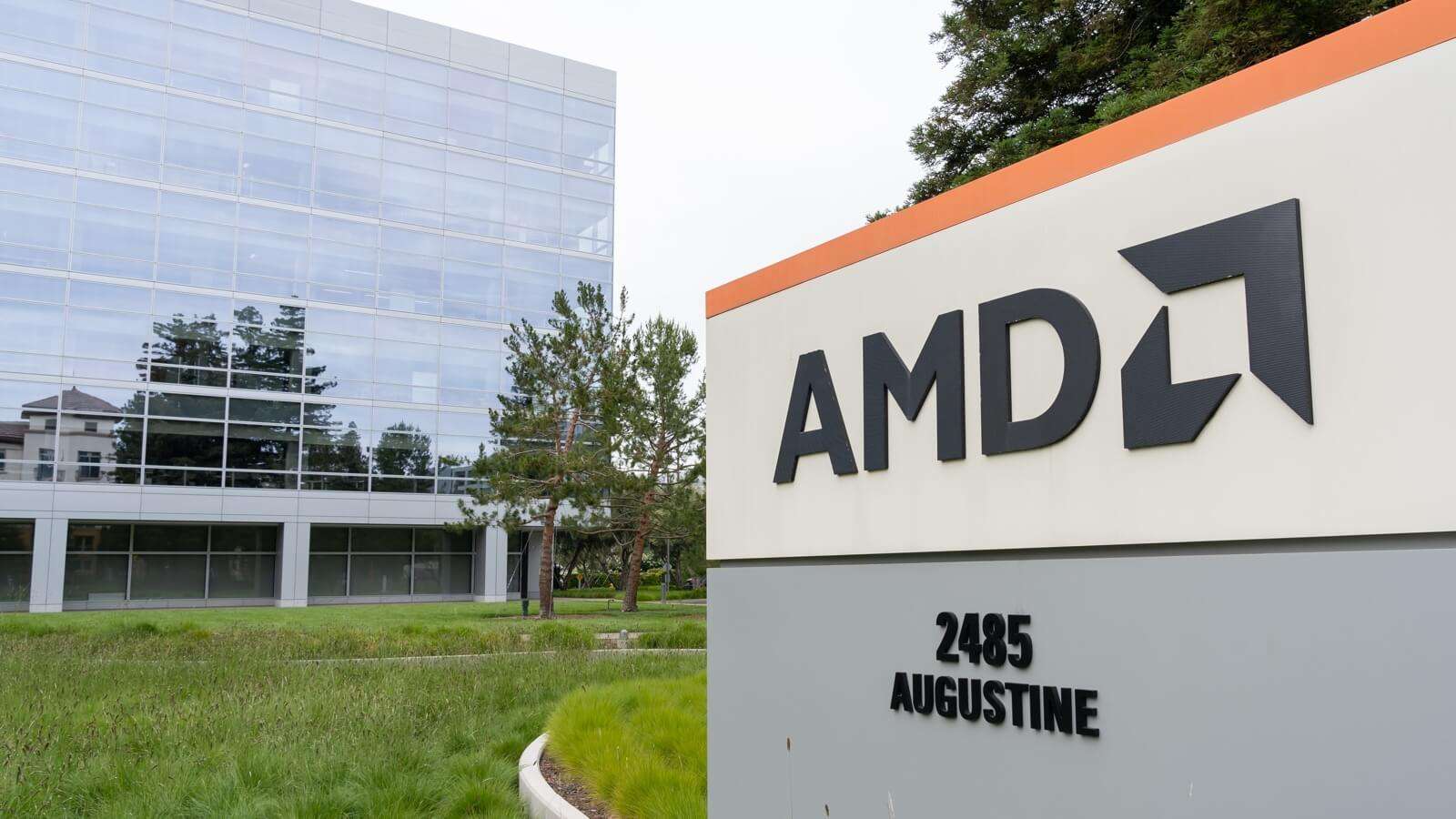
AMD has passed the $1 trillion mark in market capitalization for the first time after closing on September 21 with a 9.6% gain and a share price of $615.52. The company joins a small group of chipmakers valued above $1 trillion, as its AI strategy shifts from selling individual chips toward complete systems for data centers.
AMD and the AI chip market in 20 seconds
- AMD closed September 21 with a market cap of about $1.005 trillion.
- NVIDIA keeps a massive lead, at around $5.606 trillion.
- Broadcom reaches $1.736 trillion, while Intel sits around $646 billion.
- ARM is worth about $345 billion and Qualcomm around $204 billion.
- AMD is expanding its business from CPUs and GPUs toward complete AI systems.
AMD’s jump stands out even more against the rest of the sector. Company valuations shift with every trading session, so the most consistent comparison available is the close on September 21, 2026. By those numbers, AMD has now passed $1 trillion, but it’s still far behind NVIDIA and also below Broadcom.
| Company | Market cap at close, 9/21/2026 |
|---|---|
| NVIDIA | $5.606 trillion |
| Broadcom | $1.736 trillion |
| AMD | $1.005 trillion |
| Intel | $645.936 billion |
| ARM | $344.857 billion |
| Qualcomm | $203.900 billion |
The market cap figures come from closing prices and shares outstanding recorded for each company.
The picture leaves a very clear gap. NVIDIA is currently worth around 5.6 times AMD, while Broadcom sits at roughly 1.73 times the valuation of Lisa Su’s company. At the same time, AMD’s market cap is about 55% higher than Intel’s and nearly three times ARM’s. Qualcomm sits well below the rest, at around $204 billion.
That doesn’t mean all these companies compete in the same market. NVIDIA and AMD have direct exposure to accelerators and AI computing systems; Broadcom holds an especially strong position in networking, custom silicon, and connectivity; Intel keeps a much broader footprint in CPUs and manufacturing; ARM gets most of its value from the intellectual property and architectures other chipmakers license; and Qualcomm retains heavy exposure to mobile devices and computing while expanding into other markets.
AMD no longer wants to stop at the GPU
AMD’s stock-market jump comes alongside a shift in how it competes. The company is trying to sell more complete AI infrastructure rather than just supplying processors or accelerators, a strategy laid out in detail when comparing NVIDIA’s Vera Rubin platform against AMD’s Helios approach.
Its AMD Helios platform is the clearest example. The company is combining Instinct GPUs, EPYC CPUs, Pensando networking, and ROCm software to build rack-scale AI systems. The approach aims to compete with NVIDIA’s strategy, which has spent years expanding from GPUs into CPUs, networking, systems, and software.
The difference matters because large data centers don’t just buy an accelerator. AI infrastructure needs to connect thousands of processors, move data around, manage memory and storage, and keep fast communication between all the components. Final performance depends on the whole package.
AMD has been building up that offering throughout 2026 with large-scale deals. The company announced an agreement with Meta to deploy up to 6 gigawatts of Instinct GPUs and another with Anthropic for up to 2 gigawatts of MI450 GPUs in Helios systems. It has also said OpenAI plans to begin deploying Helios during the fourth quarter of 2026.
These deals don’t automatically turn AMD into a competitor the same size as NVIDIA. They do show, however, that the company is trying to grow the volume of infrastructure it can supply to major AI operators.
The market is already pricing in part of that expectation. AMD has gained around 185% in 2026 so far, versus 15.8% for the Nasdaq over the same period, according to data published after Monday’s jump.
NVIDIA remains in another league, Broadcom takes second place
The comparison with NVIDIA is inevitable, but the numbers help put it in perspective.
NVIDIA closed September 21 with a market cap of about $5.606 trillion, more than five times AMD’s. The company has also built a platform combining accelerators, CPUs, networking, systems, and software — a strategy the market is now judging against NVIDIA’s own scale rather than pure growth, and one AMD is partly following with Helios.
Broadcom holds a particularly relevant middle position. Its market cap stood at around $1.736 trillion at Monday’s close, about $731 billion more than AMD. The company benefits from its exposure to networking, connectivity, and custom silicon for major tech customers, along with its activity in data center infrastructure.
Below AMD comes Intel, though its stock’s rise during the same session pushed its valuation to roughly $646 billion. The chipmaker closed Monday up 12.14%, in a session of strong recovery for CPU-related companies.
The gap with ARM has also narrowed in relative terms. ARM closed the session with a market cap of about $344.857 billion, after rising 17.16% in a single day. Its valuation has climbed sharply through 2026, although its business model differs from AMD’s: ARM gets most of its revenue from licensing and royalties tied to its architectures.
Qualcomm, for its part, closed at around $203.9 billion. Its shares rose 9.29% on September 21, but its valuation remains well below AMD, Intel, and ARM.
ARM deserves attention even though it plays by different rules
ARM is especially interesting in this comparison because it doesn’t need to become a GPU maker to benefit from AI’s growth. Its architecture is already present in numerous data center processors and platforms designed by major tech companies.
During 2026, ARM has also expanded its ambitions with products aimed directly at data centers and AI workloads. That adds another layer of competition in the CPUs that sit alongside accelerators.
For AMD, this means the fight isn’t limited to NVIDIA. Its EPYC processors compete for server CPU share against Intel’s x86 designs and a growing variety of ARM-based processors. At the same time, its Instinct GPUs compete in AI acceleration against NVIDIA and against custom solutions developed by major cloud providers.
The evolution of AI systems themselves is making that distinction increasingly blurry. Model training, inference, and AI agents all use different combinations of CPU, GPU, memory, networking, and storage. That’s why companies are trying to sell more and more of the full platform.
AMD is betting on that market with a valuation that has now crossed the $1 trillion mark. NVIDIA remains on a much higher financial scale, Broadcom has moved well ahead of AMD, and companies like Intel, ARM, and Qualcomm hold relevant positions from different angles.
The most interesting part isn’t just that AMD has joined the trillion-dollar club. It’s that the company has gotten there while trying to change the question customers ask a chipmaker: not which accelerator to buy, but which complete infrastructure to run AI on.
Frequently Asked Questions
How much is AMD worth compared to NVIDIA?
At the close on September 21, 2026, AMD had a market cap of about $1.005 trillion, versus $5.606 trillion for NVIDIA.
Which company is worth more, AMD or Broadcom?
Broadcom had a market cap of about $1.736 trillion at the September 21 close, versus AMD’s $1.005 trillion.
How much are Intel and ARM worth?
Intel closed with a market cap of approximately $645.936 billion, and ARM with about $344.857 billion.
What role does Qualcomm play in this comparison?
Qualcomm had a market cap of about $203.9 billion at the September 21 close. Its business is heavily exposed to devices and communications, though it’s also expanding into other computing markets.
