
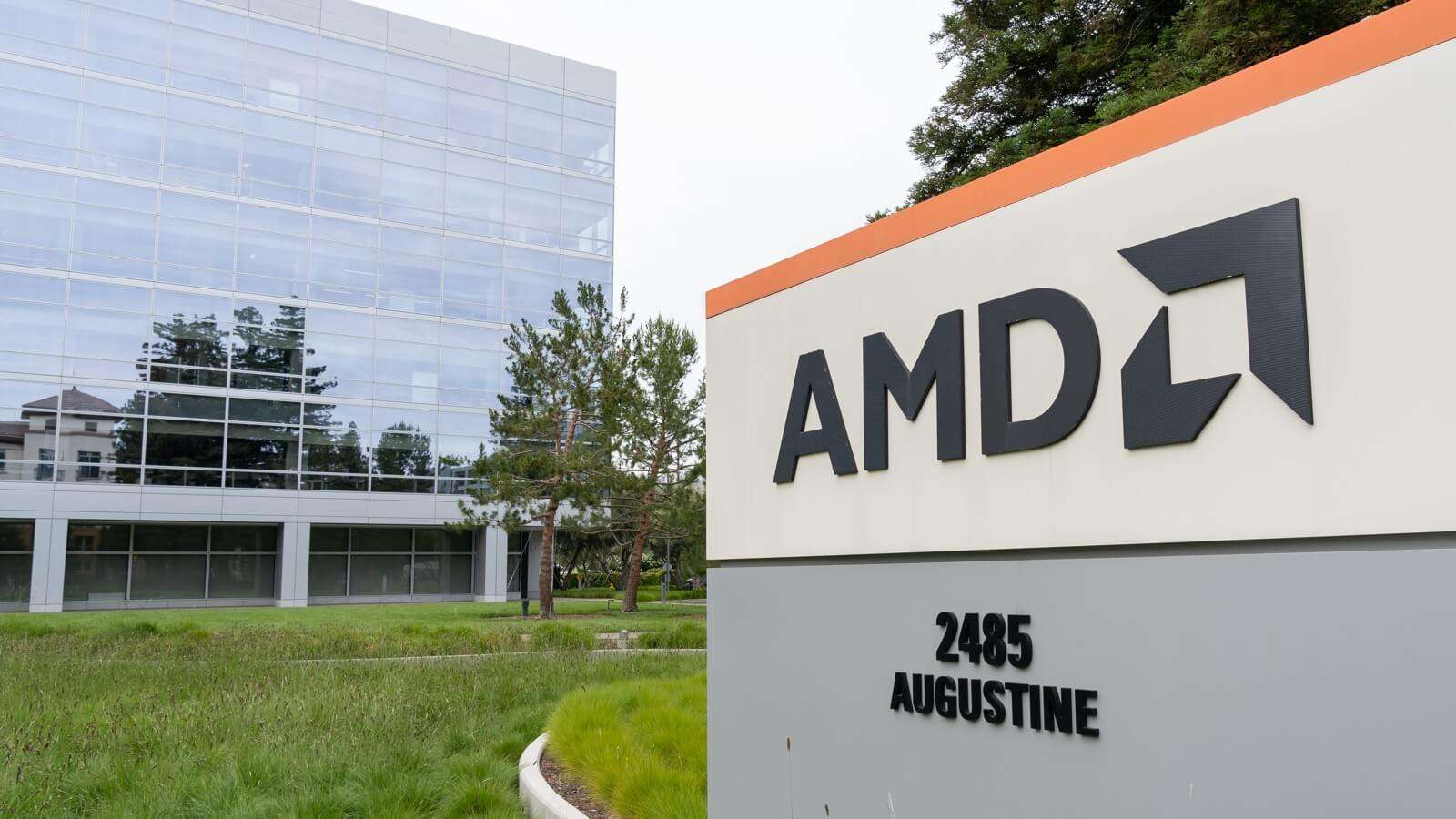
AMD reported first-quarter 2026 results that reinforce an increasingly clear idea in the semiconductor market: building infrastructure for Artificial Intelligence isn’t limited to graphics accelerators. It’s also driving demand for server CPUs, complete systems, and data center platforms capable of managing increasingly complex workloads.
The company closed the quarter with $10.253 billion in revenue, up 38% from the previous year. GAAP net income was $1.383 billion, with a diluted earnings per share of $0.84. On a non-GAAP basis, AMD achieved earnings per share of $1.37, a 43% year-over-year increase, and a gross margin of 55%.
Free cash flow was another standout metric: $2.566 billion, compared to $727 million in the same period of 2025. This improvement gives AMD more flexibility to fund its expansion in servers, accelerators, and software, just as demand for AI infrastructure is entering a more capital-intensive phase.
Data center now leads AMD’s growth
The Data Center segment was the main driver this quarter. Revenue reached $5.775 billion, a 57% year-over-year increase, fueled by demand for EPYC processors and the ramp-up of Instinct GPUs shipments. The Client and Gaming business added $3.605 billion, while Embedded contributed $873 million.
The underlying message is significant. AMD is no longer solely dependent on PC recovery or console cycles to explain its growth. The data center has become the primary revenue and profit driver, with a mix of CPUs for servers, Instinct accelerators, networking, DPUs, FPGAs, and adaptive products for cloud and AI workloads.
CEO Lisa Su linked the growth to the expansion of inference and agent-based AI. She explained that these workloads require more CPU capacity to orchestrate tasks, move data, run processes in parallel, and serve as control nodes for GPUs and other accelerators.
This perspective shifts part of the market debate. In recent years, focus has largely been on GPUs and competing with NVIDIA. AMD isn’t abandoning that battle, but it’s advocating a broader thesis: AI infrastructure requires a combination of accelerators, high-performance CPUs, memory, networking, and rack-scale systems.
AMD doubles down on the server CPU market vision
The most notable update was its forecast for total addressable market (TAM) for server CPUs. During its November Analyst Day, AMD projected an annual growth rate of nearly 18% over the coming years. Now it raises that expectation to over 35% annually, estimating the market will surpass $120 billion by 2030.
AMD interprets this growth as incremental demand rather than a direct replacement for GPUs. In other words, AI deployments aren’t reducing the need for accelerators but are adding more work for CPUs to coordinate agents, data, and processes. During the earnings call, AMD indicated that CPU-GPU configurations could approach ratios closer to 1:1 in certain deployments, compared to previous schemes closer to 1:4 or 1:8.
The company expects server CPU revenue to grow over 70% year-over-year in Q2, with continued growth through the second half of 2026 and into 2027 as new EPYC processors, including Venice (based on Zen 6 architecture and 2nm process) and Verano (a CPU tailored specifically for AI infrastructure), debut.
For AMD, this presents a dual opportunity: to gain further share against Intel in traditional servers, cloud, hybrid environments, and enterprise workloads; and to position EPYC as a key component in large AI clusters where the discussion no longer revolves solely around GPU counts.
Helios, MI450, and the race for complete systems
The other strategic pillar is Helios, AMD’s rack-scale architecture designed to compete in complete AI infrastructure solutions. The company noted strong customer demand for Helios, has begun sampling MI450 GPUs to key clients, and plans to commence production shipments in the second half of the year.
An expanded alliance with Meta is a key part of this strategy. AMD announced plans to deploy up to 6 gigawatts of Instinct GPUs across multiple generations, starting with a 1-gigawatt module based on a custom GPU derived from MI450. Meta will also be a major customer for upcoming EPYC Venice and Verano CPUs.
Timing is crucial. While AMD targets the second half of the year for shipments, the earnings call suggested MI450 will begin ramping in Q3 and see more significant growth in Q4. This transition could pressure margins early on, as AMD noted that MI450 will operate below company averages during initial deployment phases.
AMD’s guidance for Q2 also reflects confidence. It expects revenues around $11.2 billion, with a variance of ±$300 million, representing approximately 46% year-over-year growth at the midpoint and near a 9% sequential increase. The company also anticipates a non-GAAP gross margin of 56%.
The overall picture from this quarter is of a stronger AMD—one that is also more demanding. The market now expects more than just quality chips; it demands supply capacity, system integration, mature software like ROCm, deep relationships with hyperscalers, and flawless execution in platforms like Helios. The opportunity is greater than a year ago, but so is the level of competition.
FAQs
Why are AMD’s Q1 2026 results significant?
Because they show strong growth in revenue, profit, and free cash flow, with the data center business as the main engine driven by EPYC, Instinct, and AI infrastructure demand.
What does AMD’s increase of the server CPU TAM to $120 billion imply?
It indicates that the company expects the server CPU market to grow much faster than previously forecasted, driven by inference workloads, AI agents, and new data center architectures.
What is Helios for AMD?
Helios is AMD’s rack-scale AI infrastructure platform designed to integrate Instinct GPUs, EPYC Venice CPUs, and other components into complete systems for large deployments.
