
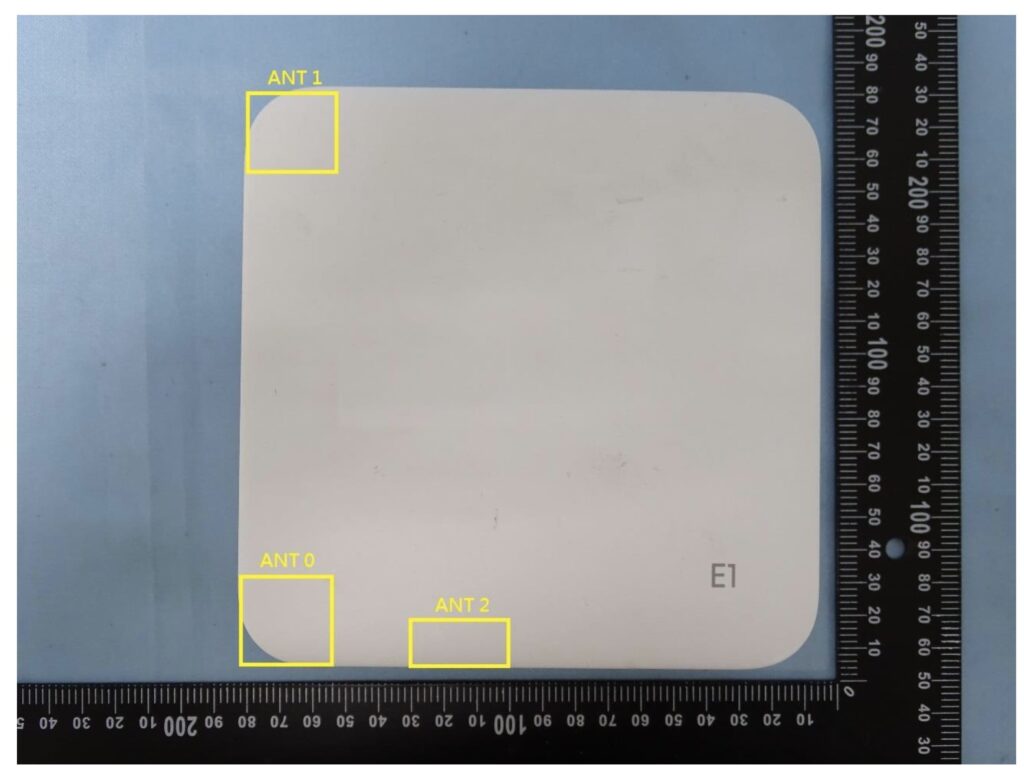
Amazon Leo, the satellite internet service with which Amazon aims to fully enter the low Earth orbit connectivity market, is beginning to show more than just rockets and satellites. The appearance of the Leo E1 router in FCC documentation, the U.S. telecommunications regulator, allows us to see for the first time what one of the closest devices to the end user will look like: the equipment that will carry the signal from the antenna to your home Wi-Fi, office, or a small remote setup.
Until now, Amazon had primarily showcased its user terminals, the antennas connecting to the satellite constellation. The router that will accompany these devices in commercial deployments was yet to be revealed. It might seem like a minor accessory, but it isn’t. In services like Starlink or Amazon Leo, user experience depends not only on the space network but also on installation ease, Wi-Fi stability, antenna power, and seamless integration into a local network.
A compact router to bring satellite to home Wi-Fi
The Amazon Leo E1 router, identified as L1LA10 in the regulatory documents, appears as a small, white, square-shaped device with rounded corners. Its dimensions are approximately 16 x 17 centimeters—more suited for residential or small business use than large corporate deployments.
The device includes Wi-Fi 6 connectivity and supports mesh mode, an important feature if Amazon wants to cover large homes, rural businesses, small warehouses, or locations where a single Wi-Fi signal isn’t enough. The router has an Ethernet LAN port, a dedicated port for the antenna connection, and power input. The available information also indicates that the system can supply power to the antenna via PoE, simplifying installation by reducing the need for extra cables and adapters.
Inside, the device features components from Qualcomm, including an IPQ5018 SoC, along with chips supporting wireless connectivity and Ethernet. It also integrates Bluetooth Low Energy and IEEE 802.15.4 support, which is interesting because this technology is used in smart home environments with protocols like Zigbee or Thread.
This doesn’t mean Amazon will turn Leo E1 into a full smart home hub from day one, but it aligns with their connected home strategy. Amazon already offers Alexa, Echo, Ring, Fire TV, and eero; adding local network and low-power capabilities in their satellite internet router makes sense if the company wants to provide a more integrated experience where Leo is the primary connection.
| Amazon Leo E1 Router Feature | Known Details |
|---|---|
| Regulatory Model | L1LA10 |
| Device Type | Router for Amazon Leo service |
| Wi-Fi | Wi-Fi 6 |
| Mesh | Supported |
| Ports | Power, Ethernet LAN, Ethernet for antenna |
| Approximate Size | 16 x 17 cm |
| Main Components | Qualcomm platform |
| Additional Connectivity | Bluetooth Low Energy and IEEE 802.15.4 |
| Likely Uses | Home, small office, Nano/Pro terminals |
The last mile of satellite internet
The router arrives at a pivotal moment for Amazon Leo. The company, which rebranded Project Kuiper as Amazon Leo in November 2025, is accelerating the deployment of its constellation. According to Amazon, the service completed 11 missions and launched over 300 satellites during its first year of large-scale deployment, making it the third-largest constellation in orbit. The company also claims to have more than 100 launches scheduled to continue expanding.
The constellation will operate in low Earth orbit, with satellites positioned around 590-630 kilometers above Earth once in their final location. This is significant because low orbit reduces latency compared to traditional geostationary systems, although it requires deploying many more satellites to provide broad and stable coverage.
Amazon still trails Starlink, which already has a mature commercial network and a global customer base. However, Jeff Bezos’s company has several key advantages: financial strength, logistical capacity, potential integration with AWS, agreements with operators, and experience with consumer devices. If Amazon manages to turn Leo into an easy-to-install and manage service, competition with Starlink could become much more serious by 2026 and 2027.
The E1 router seems primarily designed to support consumer terminals and small business setups. Amazon has previously detailed three antenna types: a compact or Nano version, a Pro version for residential and professional users, and an Ultra version for enterprises or high-bandwidth needs. For more advanced installations, customers might require higher-performance network equipment or direct integration with professional infrastructure.
More than speed: installation, coverage, and ecosystem
In satellite connectivity, download speed often makes headlines, but adoption depends on more factors. Users want antennas that are easy to install, routers that don’t require technical expertise, Wi-Fi that adequately covers the home, and stable connections even when multiple devices are connected.
Amazon seems to understand this aspect well. A straightforward router with Wi-Fi 6, Ethernet, and mesh extension capabilities lowers entry barriers. If it can also integrate with other Amazon ecosystem devices, Leo could become not just an alternative to fiber but a comprehensive platform for homes and businesses in areas underserved or poorly served by terrestrial networks.
The main challenges will be price, regional availability, and actual service quality. Starlink has demonstrated strong demand for low Earth orbit satellite internet, especially in rural areas, ships, RVs, temporary setups, emergencies, and remote business locations. Amazon arrives later, but that’s not necessarily too late. The market continues to grow, and many countries seek alternatives to bridge connectivity gaps.
In Spain, the former Project Kuiper had already made regulatory and terrestrial infrastructure advances, including a station in Santander. Full commercial service requires more than just satellites: spectrum licenses, ground stations, national agreements, and compatible terminals are needed. The appearance of the router in FCC filings doesn’t confirm the European timeline by itself, but it indicates that the user device is progressing.
The battle against Starlink won’t be decided solely in space. It will also be fought at home, on rooftops, in installation apps, in routers, support services, and the ability to maintain a reliable connection when needed. On this front, Amazon has experience developing consumer products but must prove it can compete with a network that has been operational for years.
The Leo E1 is a small piece within a larger project, but its emergence brings Amazon Leo closer to a more tangible phase. We’re no longer just talking about future launches and constellations. We’re talking about the device that users will see on desks, connected to antennas, distributing internet via Wi-Fi. That’s where the real competition begins.
Frequently Asked Questions
What is Amazon Leo?
Amazon Leo is Amazon’s low Earth orbit satellite internet service, formerly known as Project Kuiper. Its goal is to provide fast connectivity in areas with poor terrestrial coverage.
What is the Amazon Leo E1 router?
It’s the Wi-Fi router Amazon is preparing to support its satellite service, appearing in FCC documentation under the model L1LA10.
What connections will the Leo E1 router have?
The published documents suggest Wi-Fi 6, mesh support, an Ethernet LAN port, an antenna Ethernet port, and integrated power.
When will Amazon Leo’s service start?
Amazon plans to launch commercially in 2026, with gradual expansion afterward. Availability will depend on the satellite constellation’s progress and permissions in each country.
via: Amazon Leo Router
