
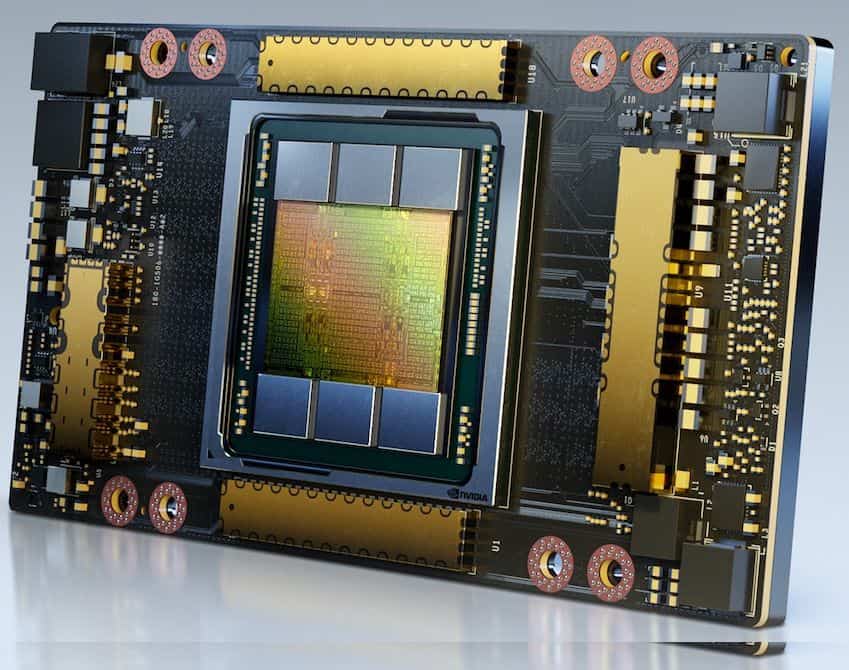
AM Intelligence has ordered another 20,000 Nvidia Rubin GPUs to expand its artificial intelligence infrastructure in India and Malaysia. The new order adds about 70 MW of capacity and brings to roughly 29,000 the number of Rubin GPUs the company has committed for its first AI factories, with deliveries expected starting in 2027.
AM Intelligence and Nvidia Rubin: the key facts in 20 seconds
- AM Intelligence has ordered an additional 20,000 Nvidia Rubin GPUs for India and Malaysia.
- The new systems represent about 70 MW of compute capacity.
- Including earlier orders, the company has committed roughly 29,000 Rubin GPUs.
- The first deployment in Hyderabad calls for 9,000 GPUs and 30 MW.
- AM Intelligence says it’s building a global portfolio of about 400 MW of AI capacity.
The announcement expands a bet AM Intelligence began putting into practice in August with an order for 9,000 Nvidia Rubin GPUs for a first AI factory in Hyderabad. That facility is initially designed for 30 MW, with accelerators expected to arrive during the first quarter of 2027.
The 20,000 new GPUs will be split between facilities in India and Malaysia. The company expects to receive them during the second quarter of 2027, so they’re not yet part of operational compute capacity. This is infrastructure under contract for upcoming deployments.
AM Intelligence Wants to Bring Rubin Infrastructure to Asia
The new systems will be based on Nvidia Vera Rubin NVL72, a platform designed to group accelerators into high-density racks. Each system integrates 72 Rubin GPUs together with 36 Vera CPUs and the networking and interconnect infrastructure needed to tie the components together.
Nvidia designed this generation with large-scale AI workloads in mind, for both training and inference. The platform combines the accelerators with NVLink, high-speed networking, memory and storage to form an integrated infrastructure.
For AM Intelligence, the bet isn’t limited to buying GPUs. The company is building facilities designed to work with high compute density, liquid cooling and high-speed networks. The goal is to offer compute capacity to cloud providers, businesses and developers that need to run AI workloads.
That distinction matters because a project involving thousands of GPUs requires far more infrastructure than the accelerators themselves. Power, cooling, networking, storage and interconnects all have to be sized to work together in a coordinated way.
For the new orders, AM Intelligence estimates about 70 MW of additional capacity. Added to the roughly 30 MW planned for Hyderabad, the orders announced so far add up to close to 100 MW of capacity.
India Looks for More AI Compute Capacity
The deployment also fits with the growth of AI infrastructure in India, where rising electricity and water demand is already straining the data centers behind the country’s AI push. The country is increasing its local compute capacity as tech companies and service providers seek access to large numbers of accelerators.
Hyderabad will be one of AM Intelligence’s first sites. The company has presented the facility as one of the first AI factories in Asia built on Nvidia Vera Rubin, although the announced timeline puts it coming online in phases during 2027.
The project also relies on the energy infrastructure available in the region. For high-density data centers, electricity and cooling capacity matter just as much as the number of GPUs installed.
AMI is positioning its facilities as compute installations that third parties can use. That model lets companies that don’t want to build their own data center rent GPU capacity to train models, run inference or develop AI applications.
The company also plans to deploy some of the new accelerators in Malaysia. The country has become one of the Asian markets attracting investment in data centers and AI-related compute services.
29,000 Rubin GPUs Committed, and a Much Larger Pipeline
With the 20,000 new accelerators, AM Intelligence now has roughly 29,000 Rubin GPUs committed through the orders it has announced so far. That figure comes from adding the 9,000 GPUs originally earmarked for Hyderabad to the 20,000 additional units destined for India and Malaysia.
The company also says it has a global pipeline of about 400 MW of Compute-as-a-Service capacity. That pipeline includes projects in India, the United States, Europe and Malaysia, though that doesn’t mean all of that capacity is already built or available to customers.
AMI has announced plans to bring another 300 MW of compute capacity to market over the next 15 months. For that buildout, the company cites capital investment of more than $20 billion, on top of the $6 billion it says it has already committed for its first 100 MW.
It also holds larger-scale targets, with around 1 GW of global Compute-as-a-Service capacity and up to 5 GW of data centers with power supply ready for AI workloads. These are business targets announced by AM Intelligence, and their execution will depend on building the facilities, accelerator supply and power availability.
Nvidia’s own timeline helps explain why these large purchases are closing before operational capacity exists. Rubin represents the company’s next generation of accelerators and is designed for data centers where hundreds or thousands of GPUs work as a single compute system.
Rubin Turns the Data Center Into an Integrated System
The Vera Rubin NVL72 architecture reflects an evolution in how AI data centers are built. Rather than treating each GPU as an independent component, Nvidia groups accelerators, CPUs, memory and network interconnects into complete systems.
The company has announced very high performance figures for this platform, but those numbers correspond to specific Nvidia configurations. In a real-world project, final performance also depends on the data center’s configuration, software, networking and the workloads being run.
For AM Intelligence, the challenge will be turning its current orders into facilities capable of delivering that capacity to customers. The first 9,000 GPUs for Hyderabad are expected in the first quarter of 2027, while the additional 20,000 would arrive during the second quarter.
That makes 2027 an important year for checking how much of the announced capacity actually ends up deployed. Until then, the 29,000 GPUs represent orders and infrastructure commitments, not 29,000 accelerators running simultaneously.
The move also shows how the race for AI infrastructure is changing. Competition is no longer just about securing enough GPUs. Operators need electricity, cooling, networking, storage and physical space to house increasingly dense systems, all at the same time.
India and Malaysia thus emerge as two of the markets where this new generation of data centers is taking shape. AM Intelligence is trying to position itself early, with Rubin-based infrastructure and a capacity pipeline that, if its plans pan out, will be far larger than the first 100 MW currently committed.
Frequently asked questions
How many Nvidia Rubin GPUs has AM Intelligence ordered?
AM Intelligence has committed to roughly 29,000 Rubin GPUs, after adding an initial order of 9,000 accelerators to the 20,000 announced later.
Where will the new Rubin GPUs be installed?
The 20,000 new GPUs will go to AI facilities in India and Malaysia. The company’s first announced project is located in Hyderabad.
When will AM Intelligence start receiving the Rubin GPUs?
The first 9,000 GPUs for Hyderabad are expected in the first quarter of 2027. The other 20,000 accelerators are scheduled for delivery during the second quarter of 2027.
What AI infrastructure capacity is AM Intelligence building?
The company says it has a global pipeline of about 400 MW of Compute-as-a-Service capacity and plans to develop another 300 MW over the next 15 months. These figures correspond to plans and projected capacity, not fully operational infrastructure.
