
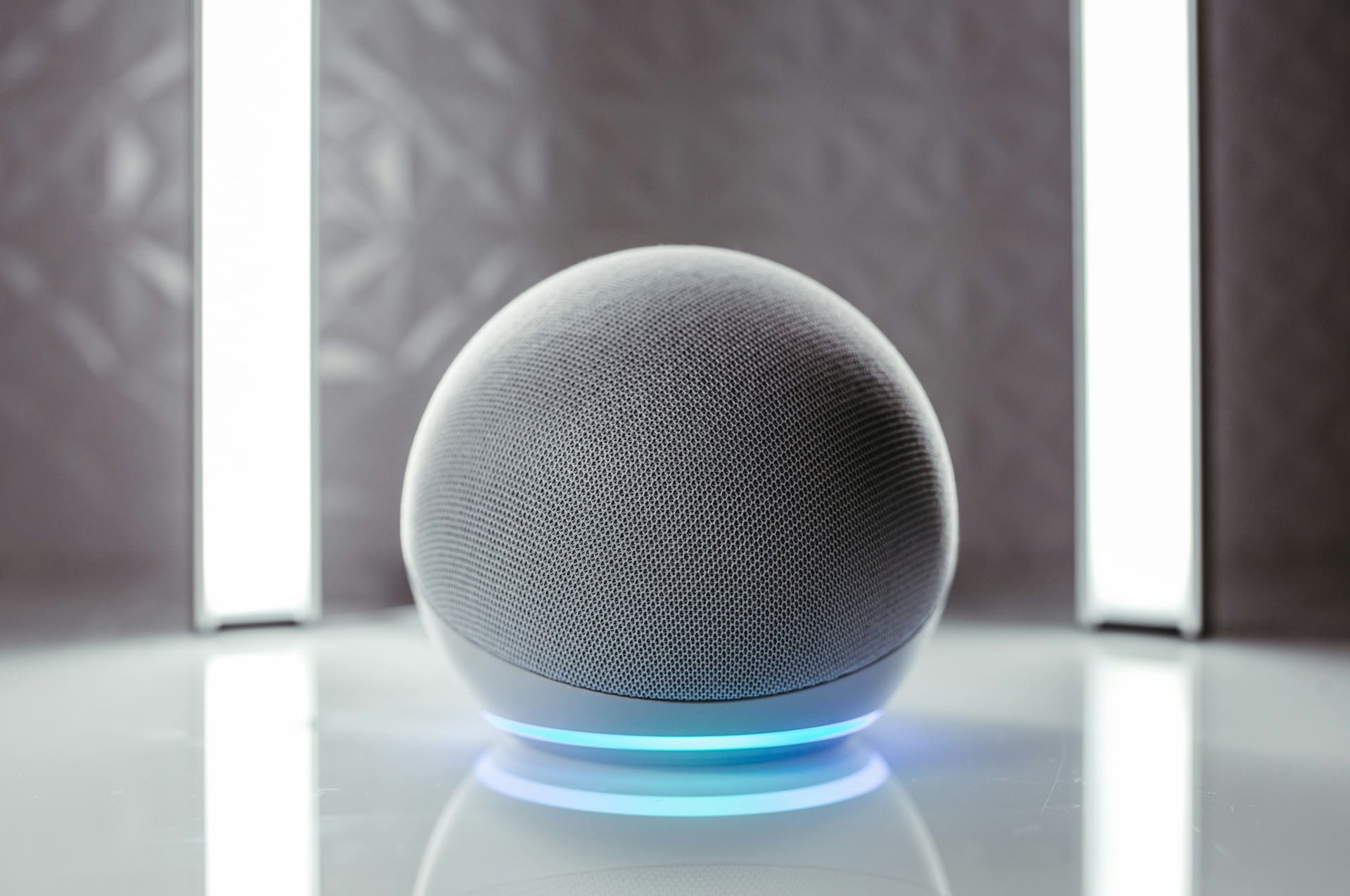
Alexa was born as a voice inside a speaker. At first, it answered simple questions, played music, turned on lights, or announced the weather. Later, it learned to control connected homes, integrate with screens, and better understand natural language. Now, Amazon is looking further ahead: they want their assistant to stop being limited to a screen or an Echo and to be able to act physically in the real world.
Michele Butti, Amazon’s Vice President of Alexa International, summarized that vision with a very vivid phrase in an interview with Computer Hoy: “In 10 years, I’d like Alexa to have arms and legs.” This isn’t meant as an announcement of a specific robot or an official launch date, but rather as a direction of development: combining conversational artificial intelligence and robotics so that digital assistants can perform household tasks, not just respond to commands.
From talking to Alexa to asking her to do things
The evolution of Alexa+ helps explain why Amazon is thinking about that future. The new version of the assistant, presented as a rebuild for the era of generative AI, aims to be more conversational, better remember context, and execute tasks from start to finish. Amazon describes it as an assistant capable of organizing plans, managing calendars, interacting with home devices, and moving through different services with more naturality than traditional Alexa.
Butti avoids calling Alexa+ a “chatbot,” because he believes its function is different from tools like ChatGPT, Copilot, or Gemini. His argument is that Alexa doesn’t live solely in a conversation window: it’s integrated into speakers, screens, TVs, smart home systems, and Amazon services. That presence in the home environment is precisely what makes robotics seem like the next logical step.
Until now, users could tell Alexa to turn on the light or set an alarm. In a more advanced vision, they could ask her to act physically: carry an object, help in the kitchen, check a room, assist with chores, or care for elderly people. The difference is huge. Interpreting a request is one thing; moving through a house, manipulating objects, avoiding obstacles, and doing so safely is another.
Amazon has already experimented with that direction. Astro, their household robot with Alexa, was created as a mobile device for home surveillance, video calls, reminders, and tracking people around the house. It doesn’t have arms or legs, but demonstrates that the company has been testing for years how to shift Alexa from a fixed point to a device capable of moving. They’ve also worked with various manufacturers to integrate the assistant into third-party products, something Butti sees as a possibility for future robots.
The challenge isn’t just giving AI a body
Imagining Alexa with arms and legs sounds appealing, but the technical leap is enormous. A voice assistant can make mistakes answering questions and correct itself later. A household robot that handles dishes, opens drawers, or completes a recipe needs precision, vision, balance, controlled strength, and a reliable understanding of its environment. In a real home, there are pets, children, stairs, out-of-place furniture, fragile objects, and unpredictable situations.
Domestic robotics has promised a revolution for decades, but progress has been slower than hoped. Robot vacuums have been a major success because they perform a specific, repetitive, and limited task. Moving from floor cleaning to cooking, fetching, caregiving, or manipulating varied objects requires much more complex capabilities.
Generative AI can speed up part of that process. Current models understand open instructions better, can plan steps, interpret images, and adapt to changing contexts. But a robot doesn’t rely solely on language. It needs sensors, motors, computer vision, control models, physical safety measures, energy autonomy, and a reasonable cost to enter homes.
Trust is also a key issue. Many people accept having a smart speaker at home, though often with privacy concerns. A robot equipped with cameras, microphones, and mobility raises much more sensitive questions: What data does it collect? Where is it processed? Can it record a room? How do we prevent it from acting outside expectations? Who is responsible if it causes damage or an accident?
Amazon will need to answer these questions before turning the vision of a body-equipped Alexa into a mass-market product. Utility alone won’t suffice if users don’t feel they retain control.
A future of physical assistants, but not necessarily made by Amazon
Butti leaves the possibility open that these future robots could be created by third parties. In fact, Amazon has built much of Alexa’s reach through agreements with device manufacturers—ranging from TVs to appliances, headphones, or smart home systems. The company might prefer Alexa to serve as a common intelligence across many different robots, rather than manufacturing all types of bodies themselves.
This model makes sense. Not all homes need the same robot. An elderly person may require assistance and monitoring. A family might value domestic help. A business might need robots for reception, inventory, or security. A specialized manufacturer could design the hardware, while Amazon provides the assistant, integration with services, and AI layer.
The risk is market fragmentation. If each robot interprets Alexa differently, with varying capabilities and unclear limits, the experience could become confusing. For a physical assistant to work well, users must understand what they can ask for and what they cannot. The “make my life easier” promise quickly breaks if the robot fails at basic tasks.
Still, the direction seems inevitable. Apple, Google, Amazon, Tesla, Figure, Agility Robotics, and others are exploring ways to combine AI and robotics. Not all are focused on home use, but they share a common idea: AI models will be more useful when they can perceive and act in the physical world.
Alexa has an advantage: it already maintains a daily relationship with millions of users. They don’t need to be convinced to talk to an assistant—that’s already achieved. The next step is much harder: convincing them that this assistant can move around their home.
Butti’s vision might take more than ten years, or arrive in a different form than we imagine. Maybe we won’t see Amazon humanoids folding clothes in every house, but rather specialized robots with Alexa integrated. Perhaps initial arrivals will be assistance for seniors, kitchen helpers, advanced home surveillance, or mobile robots for simple tasks. The key point is that Amazon no longer sees Alexa solely as a voice.
The perfect future assistant, if it arrives, won’t be the one that responds with the cleverest phrases. It will be the one that understands a need, acts safely, and knows when not to do anything. For that, better models are necessary, as well as reliable robotics, clear privacy policies, and a much deeper trust relationship than the one we have today with a smart speaker.
Frequently Asked Questions
Has Amazon announced a robot with Alexa and humanoid form?
No. Michele Butti has shared a ten-year vision, but Amazon hasn’t introduced a concrete product with arms and legs or an official launch date.
What’s the relation between Alexa+ and robotics?
Alexa+ is a more advanced version of the assistant, based on generative AI, designed for executing more complex tasks. That evolution could serve as a foundation for future robots that need to understand instructions and act in the real world.
Does Amazon already have household robots?
Yes. Amazon introduced Astro, a household robot with Alexa aimed at security, video calls, reminders, and moving around the house. It doesn’t have arms or legs but anticipates part of this future.
What would a robot with Alexa need to do to make it into homes?
It would need to be safe, reliable, useful, and respect privacy. It would also require sensors, autonomy, object manipulation capabilities, and a reasonable price for domestic markets.
