
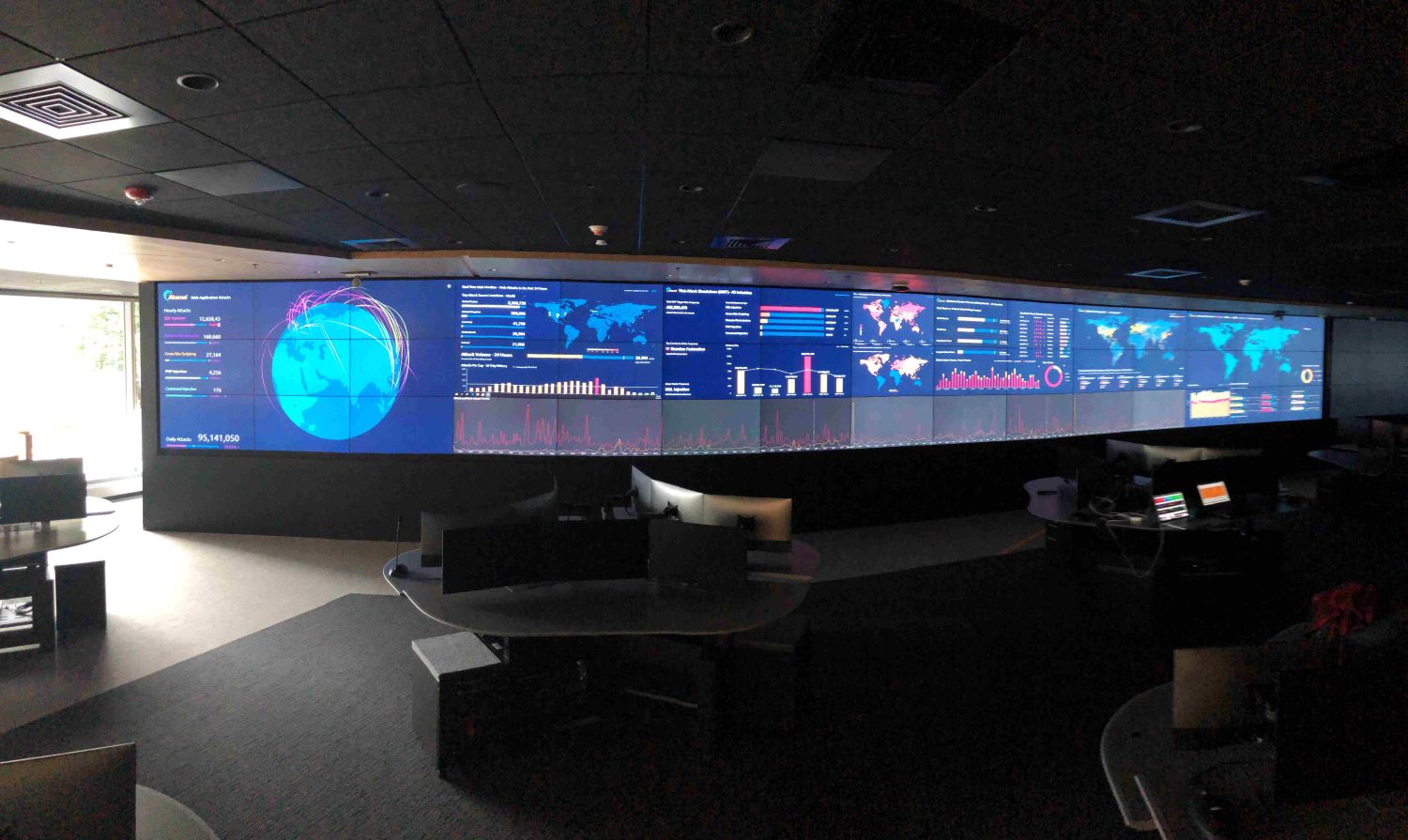
Akamai has added NVIDIA Blackwell Ultra GPU clusters to its cloud and is preparing its data centers for Vera Rubin in 2027, as the foundation for two services it has just launched in beta: Akamai Inference, to serve AI models, and Akamai Agent Sandbox, to run agents in isolation. The company, which announced the news on October 27, 2026, says its cloud has signed multi-year contracts worth more than $14 billion combined.
Akamai’s new AI offering in 30 seconds
- Akamai Inference serves 12 open-weight models with OpenAI-compatible APIs, in serverless or dedicated mode.
- Agent Sandbox runs agent code isolated from the agent itself using WebAssembly, microVMs, or containers.
- It adds NVIDIA Blackwell Ultra GPU clusters with eight GPUs and 2.3 TB of memory per node.
- Its cloud has racked up more than $14 billion in multi-year contracts and is preparing for Vera Rubin’s arrival in 2027.
As noticias.ai reported, Akamai Inference launches with 12 open-weight models, including NVIDIA Nemotron 3 Ultra, OpenAI’s gpt-oss-120b, and Google’s Gemma 4, while Agent Sandbox separates the code agents generate from the agent itself. For CloudNews, the most relevant part is what’s underneath: Akamai is using its distributed network — more than 4,350 edge locations, according to the company — as the basis for offering inference, a space where major clouds and neoclouds already compete, building on the GPU buildout for the inference era that CloudNews covered earlier this year.
GPUs for the Edge and the Core
According to Akamai’s press release, low-latency inference relies on NVIDIA RTX PRO 6000 Blackwell Server Edition GPUs, while to train, fine-tune, and host its own models the company has added NVIDIA Blackwell Ultra clusters to its dedicated fleet. Each eight-GPU node has 2.3 TB of HBM3e memory, 288 GB per GPU. Availability of the B300 clusters requires contacting the sales team.
The rest of the stack combines NVIDIA-accelerated instances and dedicated CPUs, managed Kubernetes, and Akamai Functions for serverless execution both at the edge and in core regions. Models can connect to data stored in Akamai’s managed databases and object storage, as well as to public and private clouds — a point that matters to anyone who wants to set up inference without moving all their data to a hyperscaler.
An Isolated Environment for Agents
Agent Sandbox ships as an open-source component of the Spin framework and uses WebAssembly isolation to limit compute, memory, outbound connections, and system capabilities. Developers can choose between microVMs with snapshots and forking, containers with enforced policies, or WebAssembly-isolated functions. Akamai plans to add controls over what agents can access and who can access them.
Adam Karon, Chief Operating Officer and head of Akamai Cloud, argues the company is “uniquely positioned to bring its scale and distribution” to real-time inference. Jon Alexander, Senior Vice President of Cloud Technology, adds that businesses shouldn’t have to choose “between speed and control” when putting AI into production.
Contracts, Beta, and What’s Missing
The figure of more than $14 billion in multi-year contracts is the total Akamai gives for its cloud business, with no breakdown by customer. The press release doesn’t detail which deals it includes; in September, CloudNews reported on Akamai’s $11.6 billion agreement with Anthropic.
Both services are in beta, with no general-availability dates or pricing beyond the fact that the serverless tier is billed by usage, and the press release gives no latency figures or customer names for the new products. Akamai’s own edge network, long associated with CDN delivery, is now explicitly competing for inference workloads against hyperscalers and neoclouds alike.
Frequently Asked Questions
What GPUs does Akamai use for its inference service?
NVIDIA RTX PRO 6000 Blackwell Server Edition GPUs for low-latency inference, and NVIDIA Blackwell Ultra clusters to train, fine-tune, and host models.
How much memory do Akamai’s Blackwell Ultra nodes have?
Each eight-GPU node has 2.3 TB of HBM3e memory, 288 GB per GPU.
When will Vera Rubin arrive at Akamai?
Akamai says it’s preparing its data centers to support the NVIDIA Vera Rubin platform in 2027.
Are Akamai Inference and Agent Sandbox available?
Yes, in beta. Akamai hasn’t published pricing or general-availability dates.
Sources:
