
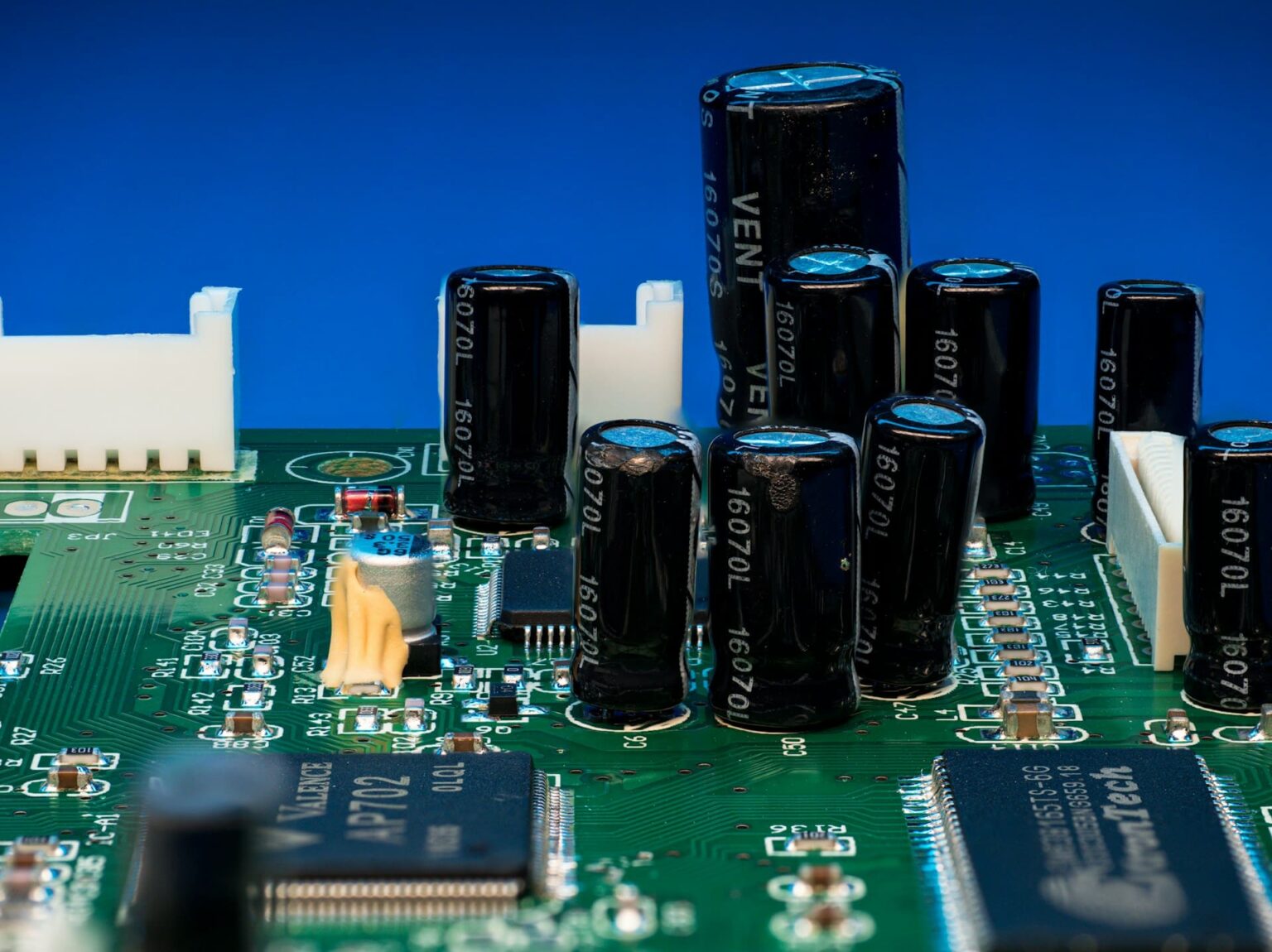
The price increases across the AI supply chain are no longer just affecting GPUs, HBM memory, advanced wafers, or high-end PCBs. Now, they are also impacting a much less visible component found in nearly every modern electrical system: capacitors.
Rubycon, one of the leading Japanese manufacturers of aluminum capacitors, has announced a price hike effective August 1, 2026. The measure affects aluminum electrolytic capacitors, solid aluminum capacitors, and film capacitors. Almost simultaneously, Jianghai, a major Chinese manufacturer in the sector, has also communicated a price adjustment to its clients for aluminum capacitors, film capacitors, and supercapacitors.
This coincidence is not minor. In recent weeks, other Japanese manufacturers like Nichicon and Nippon Chemi-Con had already started price adjustments. With Rubycon joining the movement, the market interprets that top Japanese suppliers of aluminum capacitors are entering a new re-pricing phase. For Taiwanese and Chinese manufacturers, this makes it easier to pass on the cost pressures that have been building for months to their own customers.
The trigger isn’t singular. Clearly, raw materials such as aluminum, copper, tin, aluminum foil, chemicals, carbon powder, energy, and logistics have all become more expensive. But the broader story goes beyond that: the AI infrastructure is stressing deeper layers of power electronics.
Capacitors are also part of the AI boom
When discussing AI data centers, the focus usually falls on Nvidia GPUs, custom ASICs, HBM memory, servers like GB200 or GB300, high-speed networks, and liquid cooling. But an AI rack isn’t just about computing. It also involves power supplies, power conversion, stabilization, surge protection, filtering, and energy backup.
This is where capacitors come into play. A capacitor stores and releases electrical energy over very short periods. In power supplies, they filter noise and stabilize voltage. On a circuit board, they smooth out current variations. In power systems, they are crucial for maintaining stability when loads change suddenly.
AI servers are especially demanding because they consume high power and experience rapid load fluctuations. A rack equipped with advanced accelerators may have power requirements far exceeding previous generations. This compels reinforcement of power supplies, backup modules, converters, boards, and internal distribution systems. In this context, aluminum, film, tantalum capacitors, MLCC, and supercapacitors shift from secondary components to critical design elements.
| Component Type | Typical Use | Importance in AI |
|---|---|---|
| Aluminum electrolytic capacitors | Power supplies, filtering, industrial energy | Handle power loads and stabilize electrical systems |
| Solid aluminum capacitors | Boards and compact equipment with higher thermal demands | Improve response and reliability in dense designs |
| Film capacitors | Power electronics, inverters, filtering | Significant in power supply and conversion systems |
| Supercapacitors | Fast backup, energy spikes, intensive cycles | Growing interest in BBU architectures and AI racks |
| MLCC | Boards, decoupling, compact electronics | Essential near processors, GPUs, and memory |
| Tantalum | High-reliability, high-density applications | Higher-value uses in advanced designs |
While these components don’t usually make headlines like a GPU does, their cost influences many layers of the chain. If the prices of capacitors, resistors, inductors, PCBs, power supplies, copper, transformers, and cooling systems rise, the real cost to deploy AI increasingly diverges from just the chip’s price.
AI isn’t just buying silicon; it’s also buying the entire electrical infrastructure to power that silicon.
Japan and China move nearly simultaneously
Rubycon justifies its price increase due to rising costs of metallic materials, petroleum derivatives, auxiliary components, and logistics. The company notes that prices for raw materials like aluminum, copper, and tin remain very high and that the international situation has worsened a trend seen since last year. They also leave open the possibility of further revisions if costs continue to escalate.
Jianghai cited a similar rationale in its communication to clients. The Chinese manufacturer attributes the increase to sustained rises in aluminum foil, chemicals, carbon powder, and electricity. According to the company, their current cost structure has surpassed the original pricing model, prompting adjustments in three categories: aluminum capacitors, film capacitors, and supercapacitors.
Jianghai’s entry is notable because it’s not just a local supplier. The firm has a broad portfolio in aluminum, film, and supercapacitors—categories increasingly linked to energy, industry, automotive, renewables, and data centers. If the adjustment is limited to one manufacturer, it might be viewed as a local issue; but with Japan, China, and likely Taiwan involved, the signal points to a more systemic shift.
| Manufacturer | Country / Group | Relevant Movement |
| Nippon Chemi-Con | Japan | Global reference in aluminum capacitors |
| Nichicon | Japan | Price hikes tied to demand and costs |
| Rubycon | Japan | New prices from August 1, 2026 |
| Jianghai | China | Adjustments across aluminum, film, and supercapacitors |
| KEMET / Yageo | USA / Taiwan | Exposure to tantalum, film, aluminum, and passive components |
| Panasonic | Japan | Major player in aluminum and tantalum capacitors |
| Lelon, APAQ, CapXon, Kaimei | Taiwan | Suppliers linked to power supplies, servers, and AI chains |
The sector-wide table circulating in Asia also highlights increasing interest in Taiwanese suppliers involved in power supplies, servers, BBU, and Nvidia’s supply chain. Lelon operates across Thailand and China; KEMET (within Yageo) is significant in tantalum, aluminum, and film capacitors; APAQ is linked to Nvidia’s supply chain; and other names like CapXon, Kaimei, Nichidenbo, and PADA are noted for their exposure to power, distribution, and Japanese OEMs.
The market’s takeaway is clear: passive components are back on the radar.
The cost of AI is distributed across electronics
The pressure on capacitors follows recent movements in other passive components. Over the past months, tensions have been seen in MLCCs, resistors, tantalum, and power components for servers. The reason is that AI infrastructure is shifting demand: away from cheap consumer electronics toward high-value, high-power, and high-reliability equipment.
AI servers no longer just need more components; they need better ones—higher thermal tolerance, longer lifespan, lower ESR, greater ripple current capacity, specific formats, and more stringent certifications. This pushes capacity toward premium segments and constrains margins in traditional lines.
Furthermore, transitioning to higher-power racks alters electrical design. As kilowatts per rack increase, power stability becomes more delicate. BBU systems, energy storage trays, and fast backup architectures gain importance. In this context, supercapacitors can play a greater role by providing rapid response, numerous charge/discharge cycles, and high efficiency in applications where conventional batteries aren’t always ideal.
This does not mean supercapacitors will replace batteries in data centers. Their energy density differs, and each technology has its place. However, they are well-suited for instant backup, stabilization, and supporting power peaks—especially as AI raises demands.
For industrial buyers, the message is practical: the availability and price of passive components are now key factors in planning. It’s not enough to secure GPUs, memory, or complete servers; procuring power supplies, BBU modules, capacitors, second-tier suppliers, and delivery timelines are equally crucial.
| Pressure Factor | Likely Impact |
| Demand for AI servers | Increased orders for power and reliability components |
| Rising aluminum, copper, and tin costs | Higher costs for capacitors and related parts |
| More expensive energy and logistics | Additional pressure on Japanese, Chinese, and Taiwanese manufacturers |
| Higher power per rack | Greater demands on supplies, BBU, and stabilization systems |
| Consolidation of suppliers | Less margin to negotiate on critical categories |
| Simultaneous regional adjustments | Easier to pass price increases to end customers |
Another sign that AI raises infrastructure costs
Rising capacitor prices alone won’t overhaul the economy of AI deployment, but they confirm an increasingly visible trend: AI is absorbing industrial capacity across multiple layers simultaneously. It’s not just a GPU bottleneck; demand spans memory, wafers, advanced packaging, PCBs, connectors, copper, cooling, transformers, substations, batteries, BBU, capacitors, and materials.
This broad increase makes cost containment more challenging. A company might negotiate the price of servers, but if the entire power component chain rises, margins evaporate. Equipment manufacturers can absorb some of the rise temporarily, but when key suppliers revise tariffs simultaneously, final prices inevitably increase.
There can also be sector-specific effects. Automotive, renewables, industrial electronics, telecom, defense, and high-end consumer markets compete for the same components. If AI demands high-end capacity, other sectors might face longer lead times or reduced availability.
The question is no longer whether AI will require more data centers—it’s clear it will. The real question is how many industrial layers can be strained before the cost of deploying computing begins to alter investment plans.
Capacitors are small, inexpensive compared to GPUs, and almost invisible to the end-user. But when they fail, stability suffers. And when all rise together, they remind us of an important truth: artificial intelligence is not just in the cloud; it’s built into countless physical components—many produced by companies rarely recognized in headlines.
Frequently Asked Questions
Why are aluminum capacitors increasing in price?
Due to a combination of rising demand linked to AI infrastructure, higher raw material costs for aluminum, copper, and tin, as well as increased energy, chemical, and logistics expenses.
Which manufacturers have announced price hikes?
Rubycon and Jianghai have joined a wave already involving major Japanese firms like Nichicon and Nippon Chemi-Con.
Which products are affected?
According to the cited communications, aluminum electrolytic capacitors, solid aluminum capacitors, film capacitors, and in Jianghai’s case, also supercapacitors.
What’s the connection between capacitors and AI?
AI servers and racks require more powerful, stable power systems. Capacitors help filter, stabilize, and back up energy in power supplies, boards, BBU units, and power electronics.
Could this increase the cost of data centers?
Yes, but not solely. It’s an additional pressure within a chain where GPUs, memory, PCBs, cooling, transformers, electrical equipment, and network capacity are also rising.
via: X Jukan
