
Magnetic tape seemed destined to keep shrinking into an ever-smaller corner next to hard drives and SSDs, but the data explosion tied to artificial intelligence is helping keep it very much alive. LTO storage capacity shipped during the first quarter of 2026 grew 57% year over year, according to data published by the Linear Tape-Open (LTO) program, backed by Hewlett Packard Enterprise (HPE), IBM, and Quantum.
The LTO comeback in 30 seconds
- LTO capacity shipped during Q1 2026 grew 57% compared with the same period in 2025.
- 160.3 exabytes of compressed capacity shipped in 2025, just below the record 176.5 exabytes reached in 2024.
- AI, enterprise archiving, and air-gapped backups against cyberattacks are driving demand.
- LTO-10 offers native 30 TB and 40 TB cartridges, the latter equivalent to 100 TB with 2.5:1 compression.
- The current roadmap aims to reach LTO-14, with a maximum target of 365 TB native per cartridge.
This doesn’t mean companies are replacing their SSDs with tape. The two technologies serve very different roles. Flash systems remain necessary when data needs to be available with low latency, while tape is attractive when huge volumes of information that don’t need immediate access must be kept for years.
That’s where a growing share of the data surrounding artificial intelligence fits in. Training models, keeping datasets, holding on to previous versions, storing information for future retraining, or archiving large repositories that are rarely accessed can end up generating petabytes of data. Keeping all of that permanently on high-performance storage carries a significant economic and energy cost.
From a Decline in 2025 to 57% Growth in 2026
Recent figures help make sense of the trend. The LTO market hit a historic high in 2024 with 176.5 exabytes of compressed capacity shipped, up 15.4% from the year before.
2025 brought a correction. The figure fell by about 9%, to 160.3 exabytes, though it still ranked as the second-highest annual volume on record at the time.
The start of 2026 has shifted the trend again. Capacity shipped during the first quarter rose 57% compared with the same period in 2025. The LTO Program links the growth to a combination of traditional archiving demand, the rise in data tied to AI workloads, and the search for backup systems with greater isolation from attacks.
It’s worth clarifying exactly what that 57% figure measures. It doesn’t mean 57% more cartridges were sold — it means the storage capacity of the media shipped grew by that percentage. The arrival of higher-density cartridges has a direct effect on this metric.
Storage analyst Tom Coughlin also points to another factor behind the earlier decline: during 2025, uncertainty around international trade led some companies to be more cautious with purchases, inventory, and vendor decisions.
Power availability adds another variable. An archive stored on a tape that’s sitting on a shelf doesn’t need motors, controllers, and other components running continuously. In large repositories holding rarely used information, that trait can reduce power consumption compared with keeping large sets of disks permanently active.
That doesn’t automatically make tape the most efficient option for every scenario, either. Modern data centers combine different storage tiers based on access frequency, required performance, recovery times, and acceptable cost.
LTO-10 Pushes Each Cartridge to 40 TB
The other factor behind the renewed interest is the technology’s own evolution. LTO launched commercially around 25 years ago and has kept gaining capacity and performance generation after generation.
LTO-9 offers 18 TB of native capacity per cartridge, which can reach 45 TB applying the 2.5:1 compression ratio used as the standard’s reference figure.
LTO-10 pushes those numbers up considerably and currently comes in two capacities. The LTO Program specifies native 30 TB and 40 TB cartridges, equivalent to 75 TB and 100 TB respectively with 2.5:1 compression.
The 40 TB media began commercial rollout during 2026 after the LTO program announced its specifications in late 2025.
The capacity jump doesn’t necessarily mean giving up high transfer speeds for sequential tasks. IBM specifies a native transfer rate of up to 400 MB/s for its LTO-10 drives. With data that compresses at a 2.5:1 ratio, the company puts that figure at up to 1,000 MB/s in certain configurations. Actual performance depends on factors such as the interface, the host system, and the characteristics of the data.
The difference from an SSD shows up mainly in random access. Tape is a sequential medium and has to physically locate where the data sits. It makes no sense to use it as primary storage for a database handling thousands of queries, but that limitation matters far less when it comes to keeping datasets for years that only need to be retrieved occasionally.
It also has another feature that’s appealing for cyber-resilience strategies: a tape removed from the drive can stay physically disconnected from the IT infrastructure. That isolation, usually known as an air gap, makes it harder for ransomware to encrypt or delete that copy over the network. It doesn’t remove the need for a proper backup strategy, but it adds an extra layer of separation.
LTO-14’s Target Rises to 365 TB Native
LTO’s roadmap shows its backers expect to keep pushing density up over the next few generations.
There’s an important difference from earlier plans here. In 2022, the program envisioned up to 1.44 PB of compressed capacity for LTO-14. The roadmap was later revised and now sets different targets.
Under the current plan, LTO-14 targets a maximum of 365 TB of native capacity and 913 TB compressed per cartridge. That would be nearly a petabyte compressed on a single piece of media.
These aren’t specifications for a product available today. The LTO Program itself warns that its roadmap represents technology targets and can change. So the 365 TB figure for LTO-14 should be read as a planned goal, not a guaranteed commercial specification.
Tape’s resurgence isn’t a head-to-head contest that has to end with hard drives or SSDs disappearing, either. AI’s growth is actually driving the opposite effect: organizations need more capacity across virtually every category.
GPUs need fast storage systems capable of feeding training and inference processes. Active data can stay on flash or disk storage, while historical information, rarely used datasets, backups, and long-term archives can move to cheaper tiers.
It’s at that last tier where a technology born long before today’s AI boom is finding new reasons to stick around in data centers. The more data AI generates and keeps, the more it matters to decide what needs to be available immediately and what can wait a few minutes to come back from a tape.
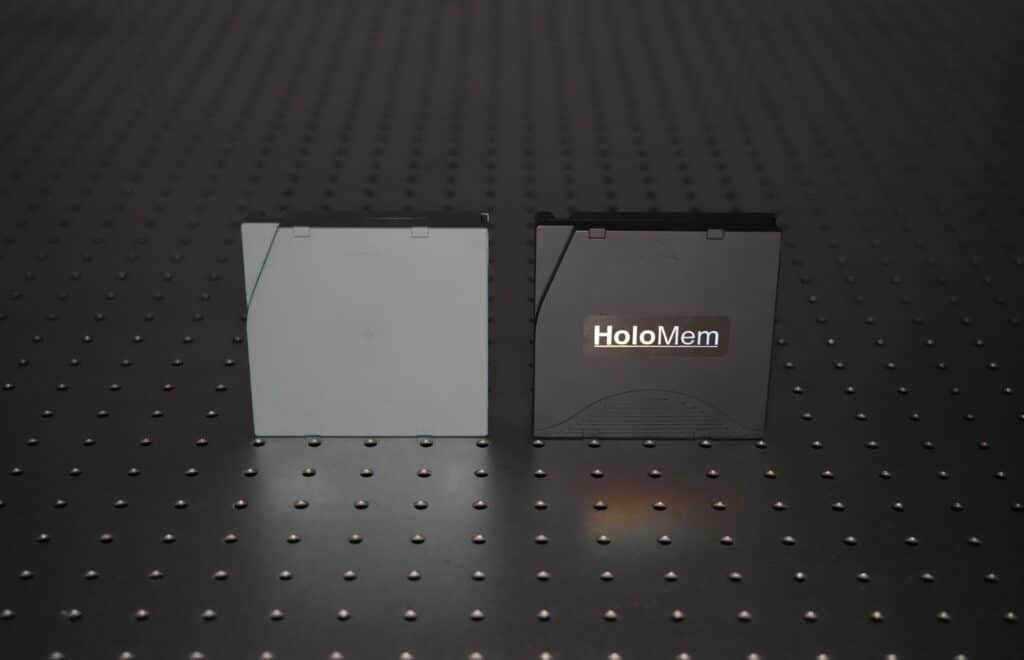
LTO-10’s arrival follows a similar jump cloudnews.tech covered when Fujifilm raised the stakes with its own LTO Ultrium 10 40TB cartridge, and tape isn’t the only technology chasing this market — see how HoloMem is pitching holographic tape as a rival to magnetic tape storage.
Frequently Asked Questions
How much has LTO storage grown in 2026?
The capacity of LTO media shipped during the first quarter of 2026 grew 57% compared with the same period in 2025. The figure refers to storage capacity shipped, not necessarily the number of cartridges sold.
How much data does an LTO-10 tape hold?
LTO-10 comes in cartridges with 30 TB and 40 TB of native capacity. Applying a 2.5:1 compression ratio, the stated capacities go up to 75 TB and 100 TB respectively.
Why could AI increase tape usage?
AI projects can generate and retain enormous datasets that don’t always need immediate access. Tape lets some of that data move to a high-capacity, long-term archival tier.
How much will LTO-14 be able to store?
The LTO program’s current roadmap sets a target of up to 365 TB native and 913 TB compressed per cartridge for LTO-14. That’s a roadmap goal, not an available product or a guaranteed commercial specification.
Source: businesswire
