
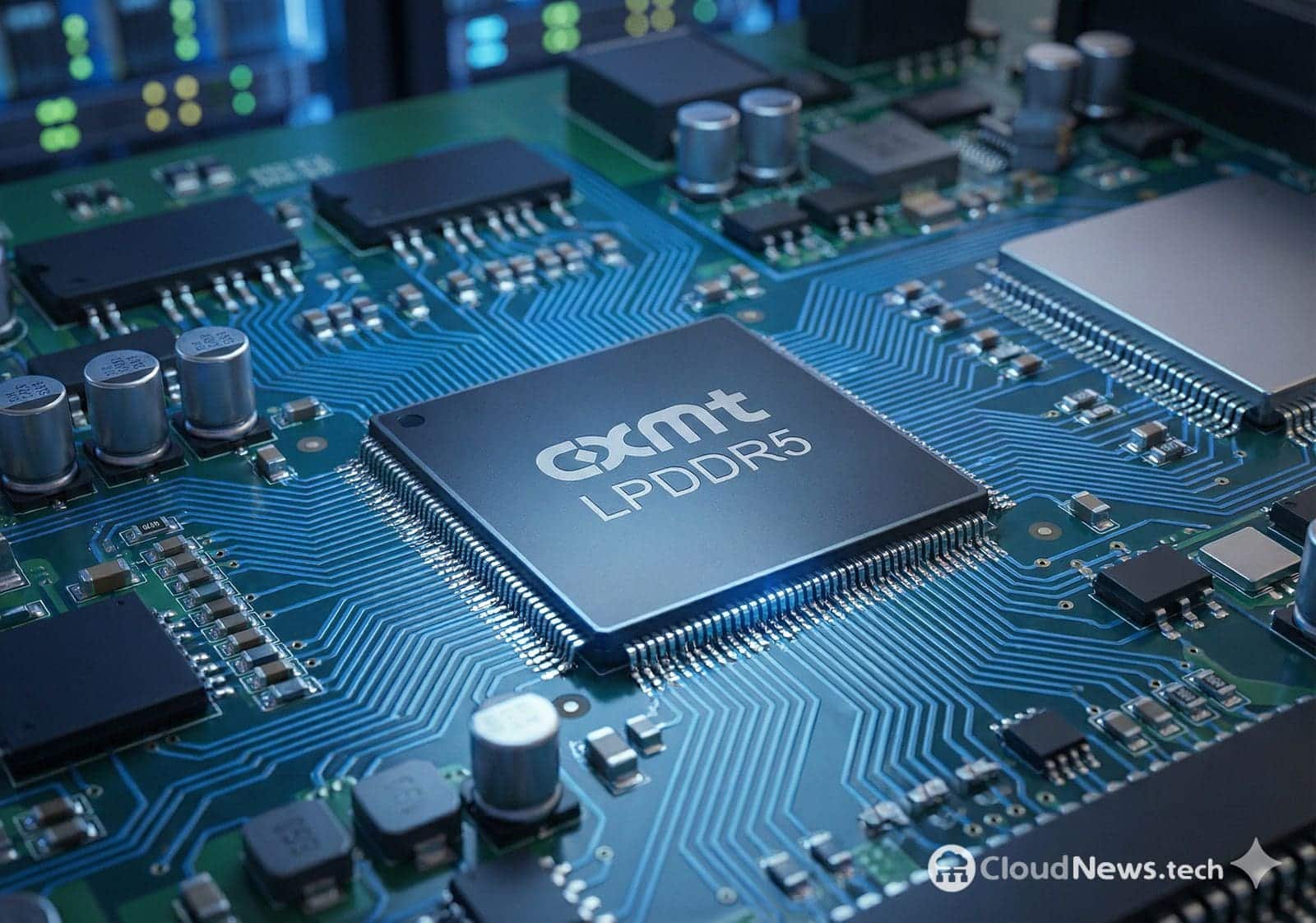
The global memory market is experiencing one of its biggest shifts in recent years. While Chinese manufacturer CXMT trebled its DRAM revenue during Q2 2026, Sandisk just completed its best fiscal year ever, with a 175% increase in annual revenue driven by flash storage for data centers and artificial intelligence.
Although both companies operate in different segments, the results show how AI is completely disrupting the global memory market landscape.
The Key Highlights of the Memory Market in 20 Seconds
- CXMT increased its interannual DRAM revenue by 716% during Q2 2026.
- Samsung continued to lead the global DRAM market with a 39% share, followed by SK hynix (26%) and Micron (25%).
- Sandisk grew its annual revenue by 175% and expects to keep expanding during the first fiscal quarter of 2027.
- AI is shifting investment toward HBM memories and storage for data centers, opening room for new players in traditional DRAM.
…
CXMT Takes Advantage of the Gaps Left by Samsung and SK hynix
CXMT’s growth isn’t solely due to demand from China. It’s also a result of strategic shifts by major international manufacturers.
Samsung, SK hynix, and Micron are dedicating much of their manufacturing capacity to HBM (High Bandwidth Memory), used by AI accelerators like NVIDIA Blackwell, AMD Instinct, and upcoming AI chips from big hyperscalers.
This shift has reduced the supply of conventional DDR4, DDR5, and LPDDR memories, a space CXMT is capitalizing on to ramp up production and gain market share in China.
Nevertheless, it’s important to put the figure into perspective. Despite growing by 716%, CXMT accounts for roughly 7% of the global DRAM market, far from the combined dominance of Samsung, SK hynix, and Micron.
Sandisk Shows That the Profitable Business Is Now in Data Centers
While CXMT gains ground in conventional DRAM, Sandisk is experiencing a different reality.
The company closed FY 2026 with:
| Company | Segment | Growth |
|---|---|---|
| CXMT | DRAM | +716% (Q2 2026) |
| Sandisk | NAND Flash | +175% (FY 2026) |
In Sandisk’s case, growth mainly comes from data center storage and high-value clients, where data center business increased by 437% compared to the previous year.
Additionally, the company projects revenue between $10.3 billion and $10.8 billion during Q1 2027 and has expanded its share repurchase program to $15.5 billion, reflecting confidence in the ongoing bullish cycle. (Based on financial results published by Sandisk).
Two Very Different Markets
While DRAM and NAND often evolve together, they are currently taking different paths.
HBM memory is experiencing a severe shortage due to the explosive growth of generative AI.
Conventional DRAM holds elevated prices because much of its manufacturing capacity has shifted toward HBM.
Meanwhile, NAND Flash continues to expand thanks to the massive storage needs for training models, datasets, and powering data centers.
Could CXMT Become a Threat?
In the short term, probably not.
The company still lags several years behind Samsung, SK hynix, and Micron in HBM memory and remains limited by U.S. restrictions on access to ASML’s EUV equipment, forcing it to use DUV lithography and multi-patterning techniques.
However, the scenario could change in the Chinese market.
If CXMT completes its industrial expansion plans — which could boost its capacity above 600,000 wafers per month — it might meet a significant portion of domestic demand for conventional DRAM and increase competitive pressure on international manufacturers, especially as the current extraordinary HBM cycle winds down.
AI Is Transforming the Memory Business
What CXMT and Sandisk’s results reveal is that artificial intelligence is not only driving sales of accelerators like those from NVIDIA.
It is also redefining the entire memory supply chain.
While Samsung, SK hynix, and Micron focus their investments on HBM, new entrants like CXMT are carving out space to grow in traditional DRAM. Likewise, specialized flash storage producers like Sandisk benefit from the enormous capacity demands of AI-focused data centers.
Together, both cases highlight a market in full transformation, where the traditional divisions among DRAM, HBM, and NAND are changing faster than ever before.
