
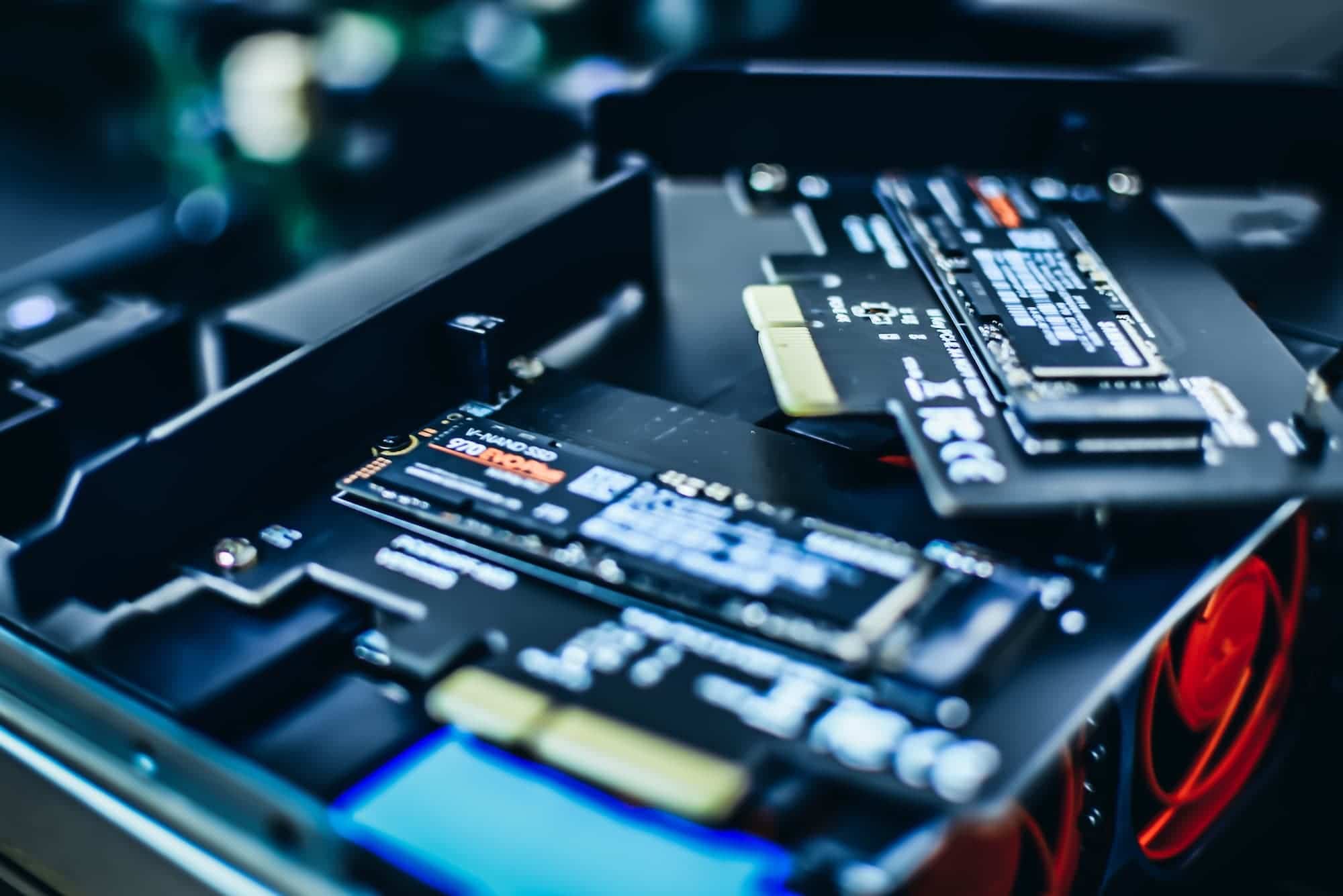
Artificial agential intelligence is beginning to leave an increasingly visible mark on the storage market. The latest analysis from TrendForce estimates that the revenue of the top five enterprise SSD manufacturers reached $18.461.7 million in the first quarter of 2026, a record high and an 86.1% jump from the previous quarter. This figure confirms that AI servers are not only absorbing GPU, HBM memory, and power but are also reshaping the global demand for NAND Flash.
The impact on PC, laptop, or console users may not immediately translate into an 80% price increase seen in some enterprise contracts. But the underlying message is clear: when major cloud providers and data centers buy enterprise SSDs at scale, manufacturers tend to prioritize those higher-value products. This reduces the margin for offering high-capacity consumer SSDs at aggressive prices—at least while AI demand continues to grow faster than available capacity.
The Big Five manufacturers hit record numbers
According to TrendForce, the strong growth of AI Agent services and the heavy purchasing by CSPs (large cloud providers) caused a significant imbalance between supply and demand in 1Q26. Inventories among leading providers fell to historic lows, production couldn’t keep pace with orders, and enterprise SSD contract prices rose by around 80% during the quarter.
The market snapshot shows a high concentration. The top five suppliers accounted for 92% of the enterprise SSD market in 1Q26, slightly above the 91.8% share of the previous quarter.
| Position | Manufacturer | Q1 2026 Revenue (M$) | QoQ Growth | Market Share Q1 2026 | Market Share Q4 2025 |
|---|---|---|---|---|---|
| 1 | Samsung | 7,050.0 | 92.8% | 35.1% | 33.8% |
| 2 | SK hynix Group | 4,644.1 | 42.5% | 23.1% | 30.2% |
| 3 | Micron | 3,085.2 | 120.2% | 15.4% | 13.0% |
| 4 | Kioxia | 2,215.2 | 90.5% | 11.0% | 10.8% |
| 5 | SanDisk | 1,467.2 | 233.5% | 7.3% | 4.1% |
| Total top 5 | 18,461.7 | 86.1% | 92.0% | 91.8% |
Samsung led the quarter with $7.050 billion in enterprise SSD revenue, experiencing a 92.8% quarter-over-quarter growth. TrendForce notes that Samsung couldn’t fully meet the nearly doubling demand from CSPs, but managed to increase its production through migration to NAND with 236 layers and high-volume shipments of 176-layer QLC products.
The SK hynix Group, comprising SK hynix and Solidigm, reached $4,644.1 million in revenue, up 42.5%. Solidigm continues to expand shipments of units based on QLC, while SK hynix increased deliveries of 176-layer TLC solutions to meet AI inference demands. Looking ahead, TrendForce indicates Solidigm’s transition to 240-layer NAND and SK hynix’s development of 375-layer TLC products.
Micron was one of the big beneficiaries of the quarter. Its enterprise SSD revenue hit $3,085.2 million, a 120.2% increase. The key lies in a strategic move made last year: reallocating capacity from smartphones and channels toward enterprise SSDs. This move partly explains the good results but also illustrates why server segment pressure can eventually impact the consumer market.
AI is changing the storage hierarchy
The most notable aspect of the report isn’t just the revenue growth. TrendForce emphasizes that SSDs are no longer just data repositories. In AI architectures, they are beginning to become part of the system’s computational performance. Capacity limits and higher DRAM costs push for high-performance SSDs as an additional layer within the memory hierarchy.
This shift redefines the role of storage. In many data centers, enterprise SSDs are no longer secondary elements compared to CPUs, GPUs, or DRAM. They now influence data flow, model feeding, inference, dataset access, and overall infrastructure efficiency.
| Before | Now in AI workloads |
| SSD as data repository | SSD as part of system performance |
| Capacity-based purchasing | Purchases based on capacity, latency, and throughput |
| Cost per TB priority | Cost per TB, performance, and availability focus |
| Predictable demand | Accelerated by agents, datasets, and inference |
| Clearer separation between memory and storage | More diffuse hierarchy among DRAM, NAND, and intermediate layers |
TrendForce highlights initiatives such as Micron’s SLC SSDs and Kioxia’s XL-Flash technology as examples of this pursuit of new high-performance storage layers. The reasoning is simple: if DRAM becomes too costly or insufficient for certain architectures, the industry seeks intermediate levels that bring data closer to compute without incurring the high costs of main memory.
At the same time, capacity becomes critical. Kioxia, for example, is expanding validation of its 245 TB QLC enterprise SSDs to accelerate shipments in the second half of the year. SanDisk also benefits from high-capacity trends, with bits shipped increasing around 20%, and volume-produced QLC enterprise products already in the market during a time of scarcity of high-density solutions.
Why this could impact PCs, laptops, and consoles
Users should interpret this carefully. Not all enterprise SSDs compete directly with consumer-grade SSDs. Specs, controllers, firmware, validation, endurance, interfaces, and margins differ. But all are part of the same NAND Flash-based industry chain, involving fabrication capacity, wafer planning, and product allocation.
When enterprise SSDs offer better margins and strong demand from large cloud clients, manufacturers are incentivized to prioritize that segment. Micron has already shifted capacity from smartphones and channels toward enterprise SSDs. If other manufacturers follow suit, the consumer channel might see reduced competitive pressure, which in previous years led to increasingly affordable SSDs.
| Segment | Potential impact of enterprise pressure |
| Desktops | Fewer aggressive high-capacity SSD deals |
| Laptops | Higher costs for larger storage configurations |
| Consoles | Less affordable large-capacity compatible SSDs |
| Smartphones | Increased competition for NAND and production capacity |
| Retail channel | Reduced availability of specific models during shortages |
| OEM builders | More challenging negotiations if NAND contracts rise |
| Advanced users | More pressure on 2TB, 4TB, and higher units |
This doesn’t mean consumer SSDs will disappear or that prices will rise immediately. The consumer market has its own cycles, inventories, and promotions. Plus, manufacturers can adjust product mixes based on profitability and demand. But if AI continues to drive NAND demand, recovering those record low prices seen during overcapacity periods will become more challenging.
SanDisk and Kioxia also approach record levels
While Samsung, SK hynix, and Micron attract much attention, Kioxia and SanDisk also experienced strong growth. Kioxia reached about $2,215.2 million, a 90.5% increase, supported by qualification and volume increases of their 218-layer products among North American clients and a higher share in OEM servers.
SanDisk posted the highest relative growth, with 233.5% quarter-over-quarter and revenue of $1,467.2 million. The company benefited from high-capacity demand and mass production of its enterprise QLC SSDs. TrendForce expects these products to be a significant driver as customer qualification completes and storage needs grow for AI training datasets.
| Leading manufacturer | Key takeaway for 1Q26 |
| Samsung | Clear leadership and strong migration to 236-layer NAND |
| SK hynix Group | Combination of SK hynix and Solidigm for TLC and QLC |
| Micron | Reallocation of capacity toward enterprise SSDs |
| Kioxia | Advancement with 218-layer products and validation of 245 TB QLC SSDs |
| SanDisk | Very strong growth driven by high capacity and enterprise QLC |
QLC emerges as a key technology today. Its lower cost per bit compared to other NAND variants makes it attractive for high-capacity applications, though it comes with trade-offs in endurance and performance that need to be managed through controllers, firmware, and design. In AI workloads where datasets and repositories grow exponentially, this density is especially valuable.
Capacity is not the only priority—it’s about priorities
The SSD market is experiencing a classic tension in the semiconductor industry: when demand for a high-value segment rises rapidly, capacity is reallocated to that segment. End consumers don’t compete contract-to-contract with cloud providers but are still affected by the same balance of supply, investment, and prices.
Agent-based AI adds a new layer. Agents not only generate more queries or automate tasks—they also create more data flows, logs, intermediate results, embeddings, documents, copies, and demand for fast storage. If usage models expand, enterprise SSD demand could stay high throughout 2026.
| Demand factor | How it impacts storage |
| AI agents | More continuous execution and intermediate data |
| Large-scale inference | Fast access to models, caches, and context |
| Training | Massive datasets and checkpoint storage |
| RAG and vector search | Databases and fast storage |
| Logs and observability | More telemetry from agents and models |
| Cloud data centers | Concentrated purchases and large contracts |
For PC users, the impact will be more noticeable in high-capacity products. A 1TB SSD might see more competition and turnover. Larger units of 4TB, 8TB, or higher depend more on abundant, affordable NAND. If enterprise QLC absorbs much capacity, those ranges may take longer to decrease in price.
A favorable cycle for manufacturers, an uncomfortable one for buyers
For manufacturers, 1Q26 was exceptional. Prices rose, demand outstripped supply, and revenues surged. For enterprise buyers, the scenario is less comfortable: higher costs, less negotiating margin, and a need for advanced capacity planning.
Consumers face a risk of losing one of the biggest advantages of recent years: a steady decline in price per TB. SSD prices dropped due to overcapacity, competition, and density improvements. Now, AI is absorbing some of that excess and shifting production priorities.
This doesn’t mean consumer SSDs will vanish or that prices will immediately rise. The consumer market has its own cycles, inventories, and promotions. Manufacturers may also adjust product mixes based on profitability and demand. Still, if AI continues to sustain NAND demand, returning to the record-low prices seen during oversupply periods will be more difficult.
SanDisk and Kioxia nearing record highs
While Samsung, SK hynix, and Micron command much attention, Kioxia and SanDisk also posted strong growth. Kioxia reached approximately $2,215.2 million, a 90.5% increase, driven by qualification and increased volume of their 218-layer products among North American clients and a larger share in OEM servers.
SanDisk reported the highest relative growth, at 233.5% quarter-over-quarter, with revenue of $1,467.2 million. The company benefited from demand for high-capacity storage and mass production of its enterprise QLC SSDs. TrendForce expects these products to be a significant growth driver as customer qualification concludes and storage needs grow for AI training datasets.
| Top manufacturer | Main takeaway for 1Q26 |
| Samsung | Clear leadership and strong migration to 236-layer NAND |
| SK hynix Group | Combined SK hynix and Solidigm for TLC and QLC |
| Micron | Reallocating capacity toward enterprise SSDs |
| Kioxia | Progress with 218-layer products and validation of 245 TB QLC SSDs |
| SanDisk | Very strong growth driven by high capacity and enterprise QLC |
QLC stands out as a key technology today. Its lower cost per bit versus other NAND types makes it attractive for high-capacity applications, albeit with trade-offs in endurance and performance that require careful management through controllers, firmware, and product design. In AI workloads, where datasets and repositories expand exponentially, this density proves especially valuable.
The issue isn’t just capacity, but priorities
The SSD market faces a classic dilemma in the semiconductor industry: when demand for a high-value segment surges, capacity is diverted there. End consumers aren’t competing directly with cloud providers contractually, but they are affected by the same supply, investment, and pricing dynamics.
AI agents add another layer. They not only generate more queries and automate tasks—they also produce more data flows, logs, intermediate results, embeddings, documents, copies, and a heightened need for fast storage. If usage models expand, enterprise SSD demand could remain elevated throughout 2026.
| Demand factor | Impact on storage |
| AI agents | More continuous execution and intermediate data |
| Large-scale inference | Quick access to models, caches, and context |
| Training | Massive datasets and checkpoint storage |
| RAG and vector searches | Databases and fast storage |
| Logs and monitoring | More telemetry from agents and models |
| Cloud data centers | Bulk purchasing and large contracts |
For PC users, the effect will be more noticeable in high-capacity products. A 1TB SSD may face more competition and turnover. Larger units of 4TB, 8TB, or higher rely more on abundant, low-cost NAND. If enterprise QLC absorbs significant capacity, those ranges may take longer to see price reductions.
A strong cycle for manufacturers, a challenging one for buyers
For manufacturers, 1Q26 was outstanding. Prices increased, demand surpassed supply, and revenues soared. For enterprise buyers, the scenario is less favorable: higher costs, narrower margins, and a need for strategic capacity planning.
Consumers face the risk of losing one of the biggest advantages of recent years: the steady decline in price per TB. SSD prices fell due to overcapacity, intense competition, and density improvements. Now, AI is capturing some of that surplus and shifting production priorities.
This doesn’t mean consumer SSDs will disappear or that prices will rise immediately. The consumer market has its own cycles, inventories, and promotions. Manufacturers can also adjust product mixes based on profitability and demand. However, sustained demand from AI for NAND will make reverting to previously recorded low prices more challenging.
SanDisk and Kioxia nearing record levels
While Samsung, SK hynix, and Micron garner much attention, Kioxia and SanDisk have also seen robust growth. Kioxia reached approximately $2,215.2 million, a 90.5% increase, driven by qualification processes and increased volume of their 218-layer products among North American clients and in OEM servers.
SanDisk experienced the highest relative growth, at 233.5% quarter-over-quarter, with revenues of $1,467.2 million. The company benefited from high-demand capacity and mass production of its enterprise QLC SSDs. TrendForce anticipates these products will be a major growth driver as customer qualification progresses and storage needs for AI training datasets expand.
| Leading manufacturer | Main insights for 1Q26 |
| Samsung | Clear leadership and aggressive migration to 236-layer NAND |
| SK hynix Group | Combined SK hynix and Solidigm efforts for TLC and QLC |
| Micron | Reallocating capacity toward enterprise SSDs |
| Kioxia | Progressing with 218-layer products and validating 245 TB QLC SSDs |
| SanDisk | Very strong growth driven by high capacity and enterprise QLC |
QLC emerges as a key technology today. Its lower cost per bit compared to other NAND types makes it ideal for high-capacity applications, though with trade-offs in endurance and performance that need to be managed carefully via controllers, firmware, and product design. In AI workloads with rapidly growing datasets, this density is especially valuable.
Capacity is not just about size—it’s about priorities
The SSD market experiences a fundamental industry tension: when demand for a high-value segment surges, capacity shifts accordingly. End users don’t compete contractually with cloud providers but are nonetheless influenced by the same supply, investment, and price dynamics.
AI agents introduce a new layer. They not only generate more queries or automate tasks—they also create more data streams, logs, interim outputs, embeddings, documents, copies, and a greater need for fast storage. As usage models expand, enterprise SSD demand could remain robust through 2026.
| Demand factor | Impact on storage |
| AI agents | More continuous operation and intermediate data |
| Large-scale inference | Quick access to models, caches, and context |
| Training | Massive datasets and checkpoint storage |
| RAG and vector searches | Databases and rapid storage |
| Logs and observability | Increased telemetry from agents and models |
| Cloud data centers | Bulk buying and large contracts |
For PC users, the main effect will be in high-capacity units. A 1TB SSD might see increased competition and turnover. Larger capacities—4TB, 8TB, or more—depend more on abundant, low-cost NAND. If enterprise QLC takes a significant share, prices in those ranges could take longer to decrease.
A cycle favoring manufacturers, challenging for consumers
For manufacturers, 1Q26 was extraordinary. Prices rose, demand exceeded supply, and revenues soared. For consumers, the situation is less favorable: higher costs, smaller margins, and the need for advanced capacity planning.
Consumers risk losing one of the biggest recent advantages: the continual fall in price per TB. SSD prices declined due to overcapacity, competition, and density gains. Now, AI is absorbing some of that surplus and shifting manufacturing priorities.
This doesn’t mean that consumer SSDs will disappear or that prices will rise immediately. The consumer market has its own cycles, inventories, and promotions. Manufacturers can also adjust product mixes based on profitability and demand. Still, if AI sustains high NAND demand, returning prices to previous lows will be more difficult.
SanDisk and Kioxia nearing new highs
While Samsung, SK hynix, and Micron attract the most attention, Kioxia and SanDisk also experienced robust growth. Kioxia reached about $2,215.2 million, up 90.5%, driven by qualification and increased volumes of their 218-layer products among North American clients and a larger OEM server share.
SanDisk posted the highest relative growth, at 233.5% quarter-over-quarter, with revenues of $1,467.2 million. Benefit from high capacity demand and mass production of its enterprise QLC SSDs support this trend. TrendForce expects these products to be key growth drivers as qualification processes complete and storage requirements for AI training datasets expand.
| Leading manufacturer | Key insights for 1Q26 |
| Samsung | Clear leadership and rapid migration to 236-layer NAND |
| SK hynix Group | Combined efforts of SK hynix and Solidigm for TLC and QLC |
| Micron | Reallocating capacity towards enterprise SSDs |
| Kioxia | Progress with 218-layer products and validation of 245 TB QLC SSDs |
| SanDisk | Very strong growth driven by high capacity and enterprise QLC |
QLC technology is prominent today. Its lower cost per bit compared to other NAND types makes it suitable for high-capacity applications, despite trade-offs in endurance and performance that need management through controllers, firmware, and design choices. In AI workloads with massive datasets, this density offers notable benefits.
Capacity isn’t the only concern—priorities matter
The SSD industry faces a classic challenge: when demand for a high-value segment rises sharply, capacity is redirected there. End-user consumers do not compete directly with cloud providers contractually but are influenced by similar market balances of supply, investment, and pricing.
AI agents add a new dimension. They generate more queries, automate workflows, and produce more data streams, logs, and storage needs. As usage models evolve, enterprise SSD demand may stay elevated through 2026.
| Demand factor | Impact on storage |
| AI agents | More continuous activity and intermediate data |
| Large inference | Fast access to models, caches, and context |
| Training | Massive datasets and checkpoints |
| RAG & vector search | Databases and rapid storage |
| Logs & monitoring | More telemetry from agents and models |
| Cloud data centers | Bulk purchases and large contracts |
For PC users, the main effect will be on high-capacity drives. A 1TB SSD might see more competition and turnover. Larger options—4TB, 8TB, or higher—depend more on affordable, abundant NAND. If enterprise QLC claims a significant share of capacity, prices in those ranges could take longer to decrease.
A cycle favoring producers, not necessarily consumers
For manufacturers, 1Q26 was remarkable. Prices increased, demand outpaced supply, and revenues surged. For consumers, the landscape is less favorable with higher costs, tighter margins, and increased capacity planning needs.
There’s a risk of losing the long-standing trend of falling per TB prices—driven by overproduction, fierce competition, and density improvements. AI is now absorbing some of that surplus and reshaping how manufacturing capacity is allocated.
This does not imply that consumer SSDs will vanish or prices will spike immediately. The consumer market operates in its own cycles, with inventories and promotions. Manufacturers can also tune product mixes for profitability and demand. But ongoing high demand for NAND due to AI will make returning to previous low prices more challenging.
SanDisk and Kioxia approaching record highs
Although Samsung, SK hynix, and Micron grab most attention, Kioxia and SanDisk have also grown strongly. Kioxia hit about $2,215.2 million, up 90.5%, supported by qualification and increased volume of 218-layer products among North America and OEMs.
SanDisk achieved the highest relative growth, with 233.5% quarter-over-quarter and revenues of $1,467.2 million. Growing demand for high-capacity storage and mass production of enterprise QLC SSDs are the main driver. TrendForce anticipates these will be key growth drivers as qualification completes and storage demands for AI training datasets continue to rise.
| Top manufacturer | Key insights for 1Q26 |
| Samsung | Strong leadership and rapid shift to 236-layer NAND |
| SK hynix Group | Unified efforts of SK hynix and Solidigm for TLC and QLC |
| Micron | Re-routing capacity towards enterprise SSDs |
| Kioxia | Advancing with 218-layer NAND and validating 245 TB QLC SSDs |
| SanDisk | Very strong growth driven by high capacity and enterprise QLC |
QLC remains a key technology, offering a lower-cost per bit solution suitable for high-capacity needs, despite endurance and performance trade-offs. In AI applications with rapidly expanding datasets, this density offers significant advantages.
Capacity isn’t everything—it’s about priorities
The SSD market faces a recurring industry dilemma: when demand for key segments surges, capacity shifts accordingly. End consumers aren’t directly competing with cloud providers contractually but are affected by the same supply and pricing dynamics.
AI agents introduce a new dimension. They generate more data, logs, embeddings, and demand for rapid storage. If usage continues to grow, enterprise SSD demand could stay high through 2026.
| Demand factor | Impact on storage |
| AI agents | More continuous operation and intermediate data |
| Large inference | Fast access to models and caches |
| Training | Huge datasets and checkpoints |
| RAG & vector search | Databases and rapid storage |
| Logs & telemetry | More data from agents and models |
| Cloud centers | Bulk purchasing, large contracts |
For PC users, especially those with high-capacity drives, the impact might involve increased competition and longer turnover times. Larger capacities like 4TB or more will rely more heavily on abundant, affordable NAND. If large enterprise QLC consumes significant capacity, prices in those categories could stay higher longer.
A cycle favorable to producers, challenging for buyers
For manufacturers, 1Q26 was outstanding. Prices increased, demand outpaced supply, and revenues soared. For buyers—especially in enterprise—costs are higher, margins thinner, and capacity planning more urgent.
Consumers should watch for the possible loss of the declining price trend per TB, driven by oversupply, market competition, and density advancements. AI’s demand for NAND is shifting this landscape, making cost reductions less certain.
SanDisk and Kioxia approaching new peaks
While Samsung, SK hynix, and Micron are dominant, Kioxia and SanDisk are also growing strongly. Kioxia hit roughly $2,215.2 million, up 90.5%, supported by qualification and larger volumes in North America and OEMs.
SanDisk’s growth was the highest in relative terms, at 233.5%, with revenues reaching $1,467.2 million. High capacity demand and mass production of enterprise QLC SSDs are key factors. TrendForce expects these to be drivers of growth as qualification processes conclude and storage needs for AI training expand further.
| Leading manufacturer | Key points for 1Q26 |
| Samsung | Leading role and fast migration to 236-layer NAND |
| SK hynix Group | Combined efforts with Solidigm on TLC and QLC |
| Micron | Reallocating toward enterprise SSDs |
| Kioxia | Progressing with 218-layer NAND and validating 245 TB QLC SSDs |
| SanDisk | Strong growth driven by high capacity and enterprise QLC |
QLC remains a major technology today. Its lower cost per bit makes it attractive for high-capacity storage needs, despite endurance and performance compromises that are managed via controllers, firmware, and design. In AI and large datasets, this density provides substantial benefits.
Capacity is about more than size—it’s about priorities
The industry faces a familiar challenge: demand spikes for high-value segments cause capacity redistribution. End users are affected indirectly through supply, investment, and pricing, even if they don’t contract directly with cloud providers.
AI-driven data generation—through agents, training, inference, and search—amplifies this. If it continues, enterprise SSD demand is likely to stay high through 2026.
| Demand factor | Impact on storage |
| AI agents | More continuous operation and data flow |
| Inference at scale | Fast access to models and data caches |
| Training datasets | Huge data and checkpoints |
| Embedding and search | Databases and quick storage |
| Telemetry & logs | More data from models and agents |
| Cloud centers | Large-volume contracts, bulk buys |
For PC users, specifically those looking at high-capacity drives, the main effect will be increased competition and potentially longer replacement cycles. Larger capacities like 4TB and above rely more on a plentiful supply of affordable NAND. If enterprise QLC monopolizes capacity, prices in those categories may stay elevated longer.
A cycle favoring production, not necessarily consumers
For manufacturers, 1Q26 was exceptional. Prices increased, demand surpassed supply, and revenues boomed. For end users, costs are higher, margins are tighter, and capacity planning is more critical.
A risk exists of losing the consistent decline in price per TB, historically driven by overproduction, intense competition, and density gains. AI’s demand for NAND is reshaping this landscape, making future price reductions less certain.
This doesn’t mean consumer SSDs will vanish or that prices will immediately rise. The consumer market’s own cycles and promotions persist. Manufacturers can also tailor product mixes for profitability and demand. But high ongoing AI-driven NAND demand will likely complicate returning to past low-price levels.
