
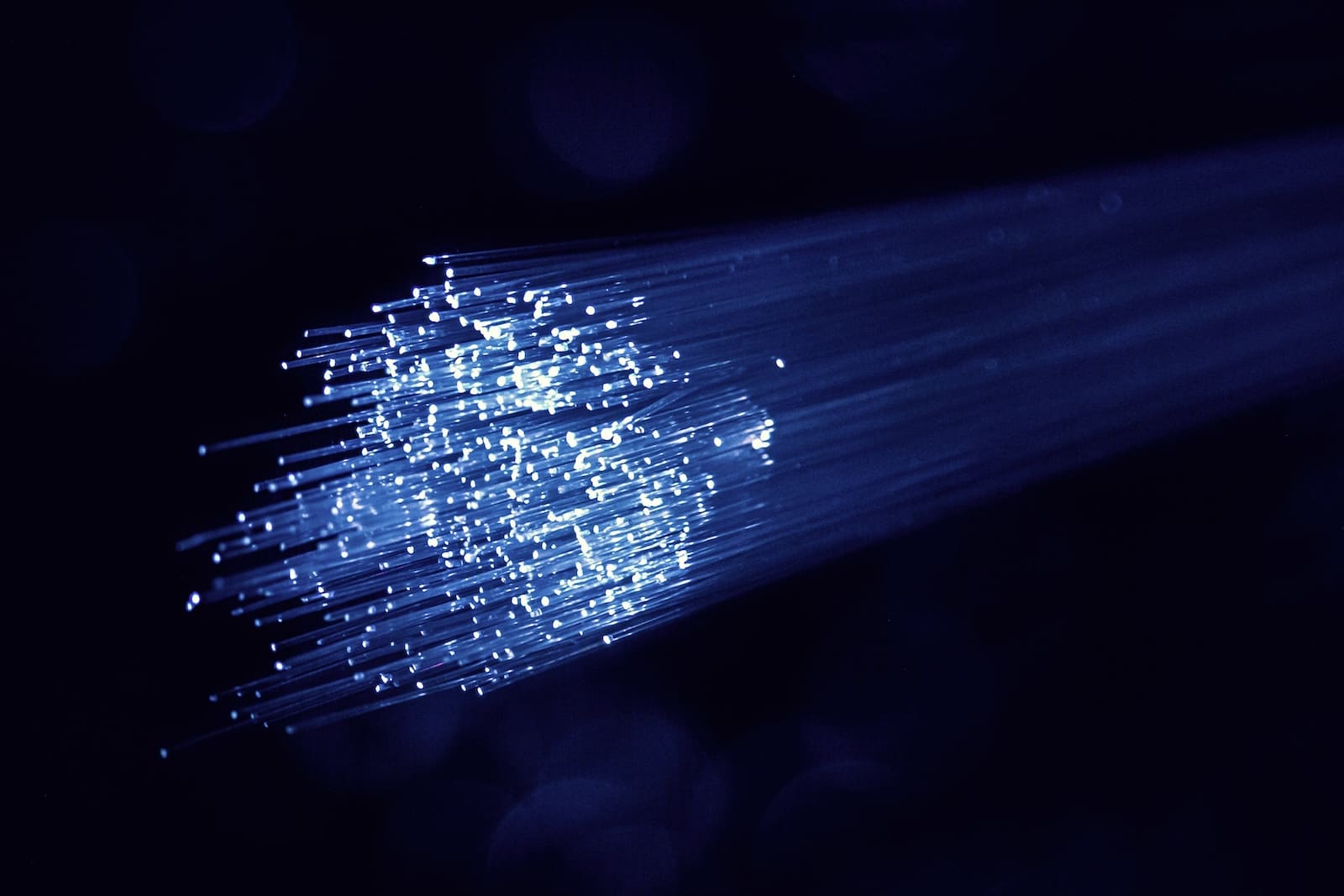
The race to build artificial intelligence data centers is putting pressure on another physical link of the digital infrastructure: fiber optics. After months of tension in GPUs, HBM memory, power, transformers, cooling, and flooring, the bottleneck is now shifting to glass. Large AI clusters require interconnection densities far greater than traditional data centers, and the fiber supply chain was not prepared to absorb this leap.
According to DigiTimes, major Chinese fiber optic manufacturers like Hengtong and FiberHome already have committed orders through early 2027, with production lines operating at full capacity and delivery cycles extending from weeks to several months. In some cases, lead times for smaller buyers can reach up to a year, while large clients are signing multi-year agreements to secure supply.
This summarizes an uncomfortable reality for the industry: AI not only needs chips. It requires millions of physical connections within and between data centers. And those connections depend on fiber, connectors, optical transceivers, ultrapure glass, preforms, and factories capable of scaling quickly. Here, the sector faces a limitation that cannot be solved with capital alone: expanding optical preform capacity typically takes between 18 and 24 months, according to industry sources cited by DigiTimes and reported by Tom’s Hardware.
AI clusters multiply fiber demand
The difference between a conventional data center and one oriented to AI lies in the internal network. A classic cloud environment connects CPU servers, storage, and service networks with high but manageable density. An AI training or inference cluster needs thousands of GPUs to communicate with low latency, high bandwidth, and minimal loss. This requires much denser interconnection meshes, with more optical links inside racks, between racks, and toward the aggregation layer.
Rahul Puri, head of optical networking at STL, noted that AI-focused data centers might require around 36 times more fiber than traditional CPU rack designs. This figure should not be seen as a universal rule for all projects, because it depends on architecture, network generation, GPU density, and campus design, but it helps illustrate the scale shift.
The demand is growing at a rate that surpasses previous forecasts. Data from CRU, cited by sector publications, indicate that fiber demand for data centers grew around 76% year-over-year in 2025, and this segment could account for nearly 30% of global fiber demand by 2027. In 2024, it was below 5%. Although these figures are market estimates, they reflect a clear trend: the data center has shifted from being a significant customer to becoming one of the main drivers of the fiber industry.
The problem is that fiber isn’t manufactured like conventional electrical cable. The main bottleneck isn’t just in the final cabling but in the preforms: highly pure glass rods from which fiber is drawn. Producing them requires complex chemical and thermal processes, impurity control, precise doping, and specialized equipment. Without enough preforms, cable plants can work extra shifts, but cannot increase actual supply.
The scarcity already affects prices and priorities
The AI surge is also changing which types of fiber are produced. Some suppliers have shifted capacity from standard G.652D fiber, common in telecom networks, to G.657A fiber, which is more flexible and attractive for high-density data centers and other uses with more demanding bend radii. This reassignment improves margins for manufacturers but creates secondary shortages of conventional fiber for telecom operators.
Tom’s Hardware reports that global fiber prices have risen from a low of about $3.70 per fiber-kilometer in 2021 to around $6.30, an increase of nearly 70%. This helps explain why buyers are changing their behavior. Instead of requesting fibers on a per-project basis, hyperscalers are trying to lock in long-term contracts to reserve capacity before supply tightens further.
Meta is the most visible example. In January, the company signed a multi-year agreement with Corning worth up to $6 billion to accelerate the construction of advanced data centers in the U.S. Corning will supply optical fiber, cabling, and connectivity solutions, expanding its capacity in North Carolina with Meta as an anchor customer.
Corning also confirmed that two other hyperscalers have signed large, long-term agreements similar in size and duration to Meta’s. The company reported a 36% growth in Optical Communications in its first-quarter 2026 results, attributing the growth to demand for products for generative AI and optical networks.
NVIDIA has also moved to address the bottleneck. The company announced a $300 million investment in Corning to build three new optical fiber plants in North Carolina and Texas, aiming to increase U.S. fiber and optical connectivity capacity for AI data centers. However, these new facilities won’t solve the immediate problem, as additional capacity is not expected to arrive significantly before 2027 or later.
A new critical dependency for data centers
The fiber shortage forces a reevaluation of AI infrastructure. During the initial boom phase, the focus was on GPUs and HBM memory. Later, power, transformers, permits, and cooling became priorities. Now, optical connectivity joins the list. Each layer seems to reveal a new physical limit.
For data center promoters, the implications are significant. A campus may have land, electrical power, and servers secured, but if it lacks sufficient internal fiber, structured cabling, transceivers, and long-distance connectivity, the project may be delayed or costlier. In AI clusters, the network isn’t just an accessory—it determines how many accelerators can work together efficiently.
For telecom operators, the outlook is mixed. On one hand, the surge in data centers creates demand for new routes, interconnection links, and dark fiber. On the other, competition for materials could increase costs for deploying traditional FTTH, mobile backhaul, metropolitan networks, or enterprise projects. If manufacturers prioritize higher-margin fibers for AI, some operators may face longer lead times or less favorable prices.
China remains a central player in this chain. Manufacturers like Hengtong and FiberHome have scale, industrial capacity, and a strong position in global fiber production. DigiTimes emphasizes that their lines are operating at full capacity, with orders already extending through 2027. This industry dependency adds a geopolitical layer to AI infrastructure, especially as the U.S. and allies try to reduce vulnerabilities in semiconductors, energy, and critical materials.
The U.S. response involves supply contracts and establishing new local capacity, as shown by agreements between Corning with Meta and NVIDIA. But building factories, training personnel, securing materials, and stabilizing production take time. AI scales within months; optical glass industry scales in years.
The predictable outcome is a period of high prices, long lead times, and strategic purchasing. Major clients can reserve capacity via multi-year deals. Smaller and medium buyers have less negotiating power and may face greater delays. In such a tight supply chain, every new AI data center announcement increases pressure on an infrastructure that previously seemed abundant.
Optical fiber was once a quiet layer of internet infrastructure. Now, it’s a strategic resource for artificial intelligence. Without it, GPUs cannot communicate at necessary speeds, racks can’t expand, and models can’t be trained or serve responses efficiently. The next bottleneck for AI is not only chips or power—it also lies in the glass.
Frequently Asked Questions
Why do AI data centers need so much fiber optic cable?
Because AI clusters connect thousands of GPUs with ultra-low latency, high-bandwidth networks. This architecture demands many more optical links inside racks, between racks, and across data centers.
Is it true they require 36 times more fiber?
This estimate, cited by STL, compares AI data centers with traditional CPU-server-based designs. It does not apply universally but illustrates the density jump in internal networking.
Why can’t fiber be manufactured quickly?
The bottleneck is in the optical preforms—ultrapure glass rods from which fiber is drawn. Expanding capacity typically requires 18-24 months due to the technical complexity of the process.
Who is most affected by the shortage?
AI data centers, hyperscalers, telecom operators, and smaller buyers. Large clients are closing multi-year deals, while smaller buyers may face much longer lead times.
via: Digitimes
