
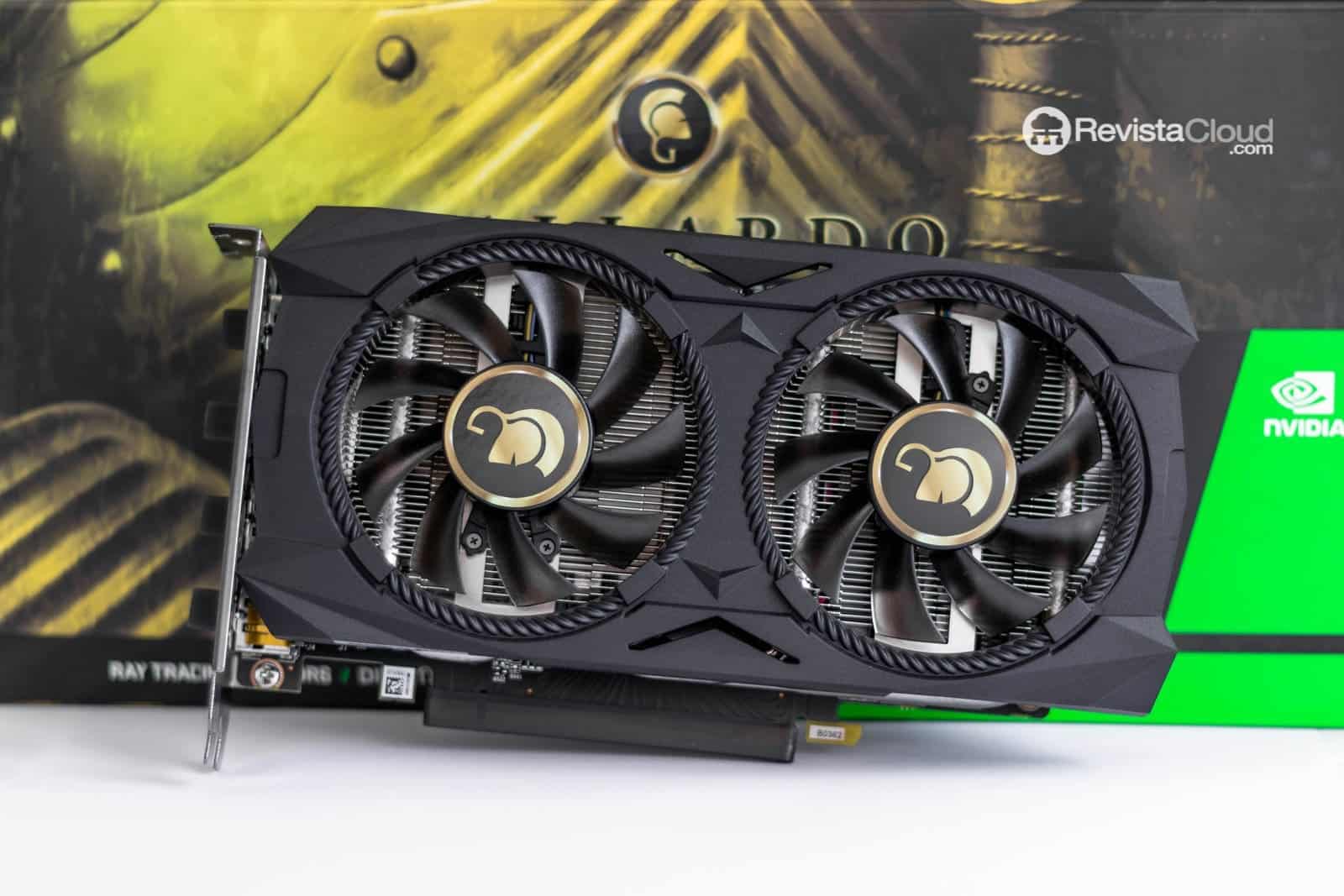
The market for dedicated desktop graphics cards just posted one of its best quarters in years. During the second quarter of 2026, 12.5 million AIB (Add-in Board) graphics cards shipped worldwide, the highest quarterly volume since the first quarter of 2022, according to data from Jon Peddie Research (JPR). The growth comes even as the cost of components like memory keeps pushing prices up, with NVIDIA holding onto roughly 90% of the market.
The graphics card market in 30 seconds
- Desktop graphics card shipments reached 12.5 million units in the second quarter of 2026.
- Volume grew around 10% quarter-over-quarter and 6.6% year-over-year, according to JPR’s latest figures.
- It’s the best quarter since early 2022.
- NVIDIA holds roughly 90% of the AIB market, versus 8% for AMD and 2% for Intel.
- The figure reflects shipments into the channel, not necessarily final sales to consumers.
That last point matters a great deal. In statistics like these, talking about 12.5 million GPUs “sold” can be misleading. JPR counts AIB card shipments — that is, units distributed to the market and the channel. It doesn’t necessarily mean all 12.5 million have already ended up installed in end users’ computers.
It’s also worth separating this market from another figure JPR published at roughly the same time: 75.5 million PC GPUs recorded for the quarter. That much larger number includes both integrated and discrete graphics, across desktops, laptops, and other PC categories. The 12.5 million figure refers specifically to the dedicated desktop graphics card market.
12.5 million graphics cards and the best quarter in four years
JPR’s data puts the second quarter of 2026 clearly above recent years.
The AIB market reached approximately 12.5 million units, up from about 11.8 million in the first quarter. The exact comparison can vary slightly due to rounding in JPR’s published figures, which in its first-quarter release cited both 12 million and 11.8 million units.
The overall picture looks like this:
| Period | AIB graphics cards |
|---|---|
| Q1 2022 | ~13.38 million |
| Q1 2025 | ~9 million |
| Q2 2025 | ~11.6 million |
| Q1 2026 | ~11.8 million |
| Q2 2026 | 12.5 million |
That makes the second quarter the best since early 2022, though still below the roughly 13.38 million shipped in that earlier period.
The cumulative figures also show a clear recovery. Around 24.3 million cards shipped during the first half of 2026, compared with about 20.8 million during the first six months of 2025 — a difference of roughly 17%.
This is unusual for another reason: the second quarter isn’t typically a strong one.
JPR notes that the market has historically tended to slow during this period, as manufacturers and distributors adjust inventory. Yet in 2026, discrete GPUs grew strongly even as the research firm describes a backdrop of rising component costs driven, among other factors, by tensions in the memory market.
There’s also a distinction between two JPR reports that shouldn’t be conflated. Its general Market Watch report says discrete GPUs grew 12.2% quarter-over-quarter, while the specific AIB card report puts that segment’s growth at around 10%. The first figure covers a broader category of discrete GPUs; the second refers specifically to desktop graphics cards.
NVIDIA takes nine out of every ten cards
Market concentration remains extremely high.
Based on the percentages published for the quarter, NVIDIA holds approximately 90% of the global AIB graphics card market, while AMD sits around 8% and Intel around 2%.
Applying those rounded percentages to the quarter’s 12.5 million units gives an approximate breakdown of:
| Vendor | Approximate share | Estimated units* |
|---|---|---|
| NVIDIA | 90% | 11.25 million |
| AMD | 8% | 1 million |
| Intel | 2% | 250,000 |
| Total | 100% | 12.5 million |
*Units are an estimate obtained by applying JPR’s rounded shares to the total market. They are not sales figures individually reported by NVIDIA, AMD, or Intel.
Share changes from the previous quarter were small. AMD lost around 0.16 percentage points, NVIDIA lost about 0.1 points, and Intel gained roughly 0.3 points.
The result leaves NVIDIA in an especially dominant position: roughly nine out of every ten dedicated desktop graphics cards shipped during the quarter used one of the company’s GPUs.
That doesn’t mean NVIDIA controls the entire PC graphics market to the same degree. The company’s dominance in dedicated cards isn’t new, either: it closed 2025 with nearly 94% of the AIB market, as AMD posted its worst historical share, before easing slightly to the roughly 90% seen this quarter.
Once integrated GPUs found in desktop and laptop processors are included, Intel and AMD gain considerable weight. JPR’s overall report counts 75.5 million PC GPUs for the second quarter, up 10.4% from the previous three months and 1.1% above the same period in 2025.
Within that broader market, desktop graphics fell 4% quarter-over-quarter, while laptop graphics grew 16.8%. That’s another reminder that the 75.5 million PC GPU figure and the 12.5 million AIB card figure describe related but not equivalent markets.
Are buyers rushing to beat further price hikes?
The hardest part to prove is what’s actually driving the growth.
One interpretation floating around JPR’s data is that some buyers are pulling their purchases forward out of concern that graphics card prices will keep climbing. Jon Peddie himself ties the quarter’s behavior to rising component prices and various supply-and-demand shifts.
But shipment data can’t tell you what each buyer was actually thinking.
So it can’t be stated as fact that users are upgrading their GPUs because they see this as a “buy now or never” moment. It’s a plausible explanation for part of the growth, not a conclusion the numbers themselves prove.
What the data does show is that the market has kept absorbing a high number of cards at a time that isn’t particularly favorable for prices.
There’s another striking indicator. JPR puts desktop CPU shipments at approximately 14 million units for the second quarter, against 12.5 million AIB cards shipped. That works out to a penetration rate of around 89% for the quarter.
That doesn’t mean 89% of all computers sold during those three months necessarily came with a dedicated graphics card, either. GPUs can be installed in existing computers, used as upgrades, or sit temporarily in inventory.
Upgrades to already-installed systems, in particular, help explain why graphics card sales don’t have to move at the same pace as new PC sales.
Longer-term forecasts don’t suggest the current growth will hold indefinitely, either. JPR projects a compound annual growth rate of -2.5% for the AIB market between 2025 and 2030, with an installed base expected to reach around 193 million cards by the end of that period.
The second quarter of 2026 therefore paints a peculiar picture: high prices and component tensions coexisting with the highest quarterly volume of dedicated graphics cards since 2022.
And there’s a clear winner in terms of share. With roughly 90% of AIB shipments, NVIDIA holds a massive lead over AMD and Intel in the desktop graphics card market, even as much of the company’s financial and technological attention has shifted toward data center and AI accelerators.
Sources:
