
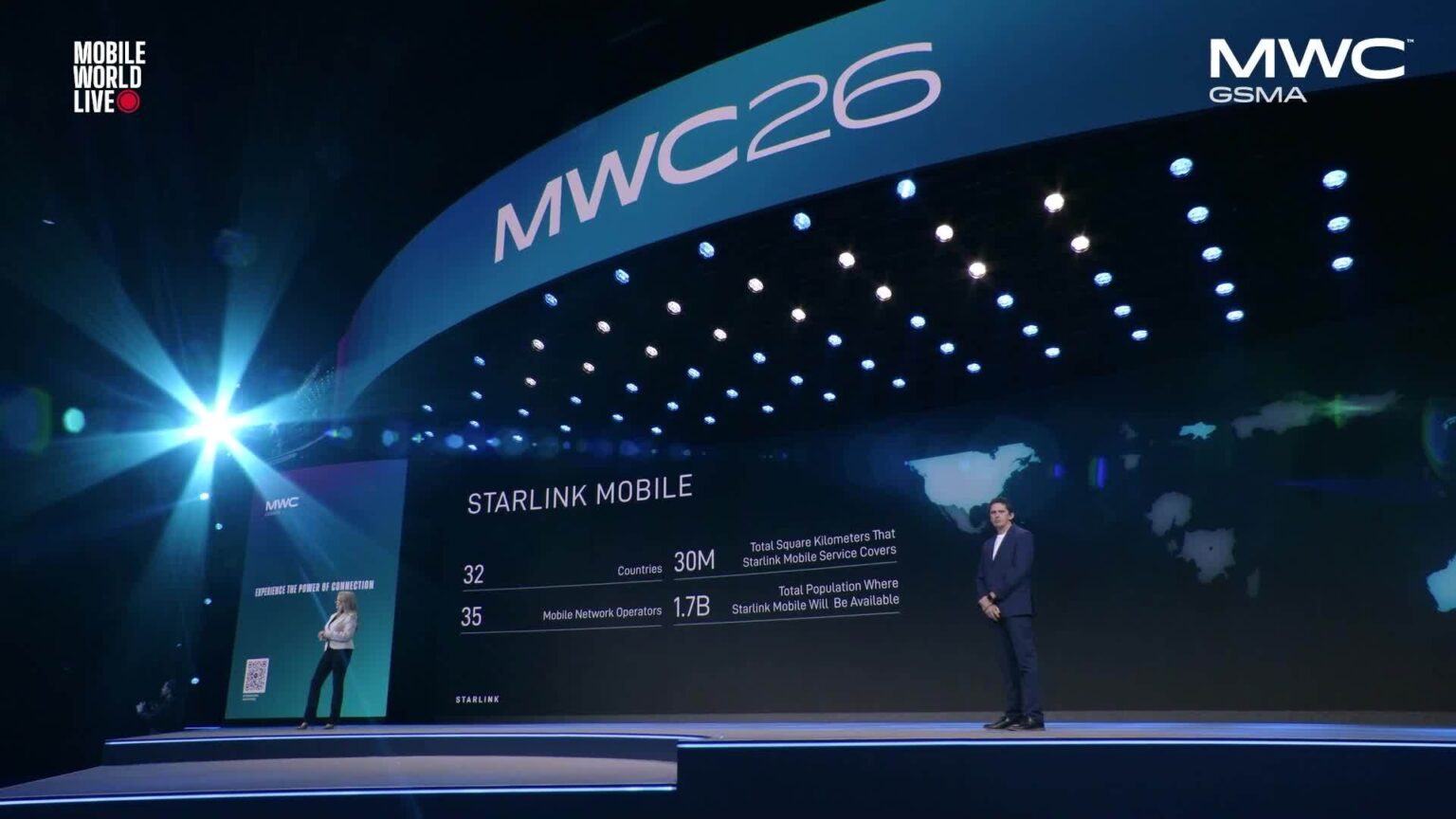
Telefónica, Orange, Vodafone, and Deutsche Telekom are holding preliminary talks about forming a consortium that could jointly bid for European spectrum earmarked for satellite mobile services. The move would let four of the continent’s largest operators compete in the direct-to-device (D2D) market, where Starlink is gaining ground, and comes as Brussels prepares a new system for awarding the strategic 2 GHz band once the current authorizations expire in May 2027.
The possible European alliance in 20 seconds
- Telefónica, Orange, Vodafone, and Deutsche Telekom are considering bidding together for European satellite spectrum.
- Talks are preliminary and no final decision has been made.
- The EU is preparing a new award process for the 2 GHz band for satellite mobile services.
- Viasat and EchoStar’s current authorizations expire in May 2027.
- Brussels wants to strengthen European capabilities and cut reliance on foreign operators.
Information first reported by Bloomberg and later confirmed by other sources says the four companies are studying setting up a joint structure to bid for the portion of spectrum the European Union intends to reserve for operators majority-controlled from within Europe.
The project is still at an early stage. Vodafone, Orange, and Telefónica have avoided publicly confirming the details, and based on the information available, no final decision has been made either on setting up the consortium or on submitting a bid.
What is decided is that Europe wants to reorganize frequencies that could become far more valuable in the coming years.
Europe Prepares to Carve Up a Band That’s Especially Attractive for Connecting Phones
On May 27, the European Commission put forward a proposal to establish an EU-wide selection procedure for providers authorized to use the harmonized 2 GHz band for mobile satellite services (MSS) after 2027.
The frequencies affected are the 1,980-2,010 MHz and 2,170-2,200 MHz blocks.
These aren’t new frequencies. The EU ran a joint selection process in 2009 that ultimately granted rights to Inmarsat, now part of Viasat, and Solaris, which later became EchoStar.
Member states issued the corresponding national authorizations for 18 years. That period ends in May 2027, so Brussels needs to decide what happens next.
The difference from 2009 is that the market has changed completely.
When those frequencies were awarded, directly connecting a conventional phone via low Earth orbit satellites wasn’t the market that exists today. The emergence of 5G Non-Terrestrial Networks (5G NTN) and new constellations is bringing space communications closer to how traditional mobile networks operate.
The Commission itself considers the 2 GHz band especially well-suited for D2D services.
Letting a smartphone connect directly to a satellite would extend coverage in rural areas, on roads, in mountains, at sea, or in places affected by an outage of terrestrial infrastructure.
This is no longer just about specialized satellite phones.
The industry’s goal is for increasingly ordinary handsets to send messages, make calls, and use data even where there’s no coverage from a terrestrial tower.
Starlink Turns Spectrum Into a Strategic Issue for Telecom Operators
Starlink is one of the main reasons traditional operators are paying so much attention to this market.
SpaceX has spent years deploying thousands of low Earth orbit satellites and has progressively added Direct to Cell capabilities. The goal is to complement terrestrial mobile networks by connecting handsets directly from space.
Starlink’s position was further strengthened by the deal announced in 2025 to acquire spectrum from EchoStar in the United States. That deal, together with the availability of satellite frequencies, has fueled expectations that SpaceX could develop services that depend less and less on traditional agreements with mobile operators.
For Telefónica, Orange, Vodafone, and Deutsche Telekom, controlling part of the European spectrum would put them in a very different position in future negotiations.
The four companies already have millions of customers, terrestrial networks, billing systems, conventional mobile spectrum, and roaming agreements. What they don’t have is a constellation comparable to Starlink’s.
That’s why securing the frequencies wouldn’t necessarily mean they’d build their own satellites.
They could use space infrastructure provided by third parties.
That’s where AST SpaceMobile comes in, one of the companies trying to compete with Starlink in direct satellite-to-smartphone communications. Vodafone has a close relationship with AST SpaceMobile and has worked on developing satellite mobile services in Europe.
A possible combination of spectrum controlled by European operators, their terrestrial networks, and space capacity contracted from third parties would allow a service to be built without having to develop an entire constellation from scratch.
But there’s still no decision on what infrastructure the eventual consortium would use.
IRIS² Adds Technological Sovereignty to the Commercial Battle
The spectrum reorganization also coincides with a much broader European policy aimed at reducing technological dependencies.
The European Union is developing IRIS², its future multi-orbit secure communications constellation.
The project envisions around 290 satellites and is led by the European Commission together with the SpaceRISE consortium, headed by SES, Eutelsat, and Hispasat, alongside other European partners.
IRIS² will serve both government and commercial uses and aims to provide secure communications for public institutions, businesses, and citizens.
It’s due to enter service gradually starting toward the end of this decade, so it won’t immediately close the scale gap with Starlink.
The policy on the 2 GHz spectrum is trying to cover precisely another piece of the same problem.
The Commission wants future authorizations to allow services to be offered across the entire Union under more uniform conditions, avoiding the fragmented model of national authorizations that makes it hard to roll out pan-European services.
It also wants to set aside room for European companies.
Under the proposal known so far, a portion of the commercial frequencies would be earmarked for operators majority-controlled from within the EU. That’s precisely the block that could interest the consortium formed by Telefónica, Orange, Vodafone, and Deutsche Telekom.
The approach thus combines industrial policy, telecommunications, and technological sovereignty.
Europe doesn’t want to be limited to consuming connectivity provided by U.S. constellations as satellite communications start integrating with mobile networks.
An Alliance Between Four Rivals Would Also Raise Competition Questions
A collaboration of this size would have another delicate angle.
Telefónica, Orange, Vodafone, and Deutsche Telekom compete with each other in various European markets. A joint consortium bidding for a limited resource like spectrum would need a structure compatible with competition rules.
A joint bid also doesn’t necessarily mean the four companies would later coordinate their mobile businesses.
The telecom industry has long experience sharing infrastructure. There are agreements to use towers, fiber, access networks, and even certain parts of mobile networks without commercial competition between operators disappearing.
A satellite system could follow a similar model.
A distinction would also have to be made between obtaining the frequencies and actually using them. The final terms of the award will determine the coverage, rollout, and spectrum-use obligations that awardees will have to meet.
For now, the Commission has proposed a new European framework, but the regulatory process still has to be completed.
Either way, the possible alliance between the four operators shows just how much the market has changed.
Just a few years ago, satellite mainly served to bring connectivity to places where rolling out fiber or mobile networks was too expensive. Now it can become an extension of the mobile network itself.
If a phone can automatically switch from a terrestrial 5G tower to a satellite when it loses coverage, whichever company controls the spectrum and the space infrastructure will gain access to a slice of the market that, until now, belonged almost exclusively to traditional operators.
Starlink has accelerated that shift. Europe is trying to keep the new market from being born entirely dependent on foreign providers, and its major telecom operators seem willing, for the first time, to set aside part of their rivalry to compete for it.
Frequently Asked Questions
Have Telefónica, Orange, Vodafone, and Deutsche Telekom already set up the consortium?
No. The companies are holding preliminary talks, and there’s still no final decision on setting up the consortium or on a future joint bid.
Which frequencies does the European Union want to re-award?
It’s the harmonized 2 GHz band for mobile satellite services, specifically 1,980-2,010 MHz and 2,170-2,200 MHz. The current authorizations expire in May 2027.
What’s the point of connecting a phone directly to a satellite?
Direct-to-device technology provides connectivity in places with no terrestrial network coverage. Its evolution aims to gradually offer messaging, calls, and data services from compatible phones.
Would European operators have to launch their own satellites?
Not necessarily. They could contract capacity from satellite operators or form alliances with specialized companies. Vodafone, for example, has a strategic relationship with AST SpaceMobile, though it hasn’t yet been announced what infrastructure the eventual consortium would use.
via: bandaancha.eu