
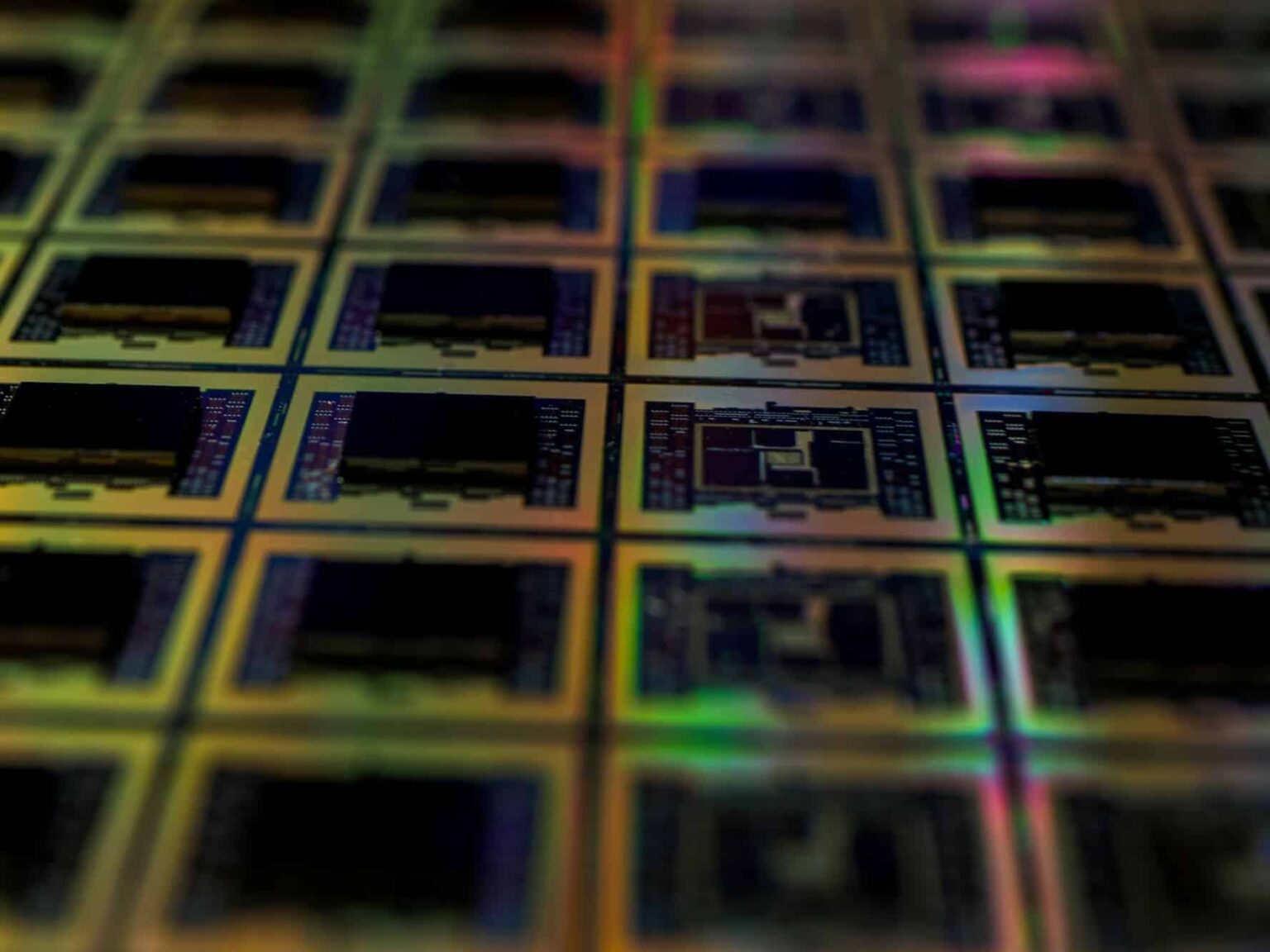
The global semiconductor market is heading toward an extraordinary year. Gartner predicts that revenues will reach $1.555 trillion in 2026, an increase of 92% compared to the $809 billion recorded in 2025. Memory will be responsible for much of this jump, driven by the expansion of artificial intelligence data centers, high-bandwidth memory (HBM) demand, and a stronger price cycle than expected.
The key points of the semiconductor market in 20 seconds
- Gartner forecasts $1.555 trillion in semiconductor revenue for 2026.
- This figure represents a year-over-year growth of 92%.
- Memory will generate about $837.3 billion, making up 54% of the market.
- DRAM will grow by 246.6%, and NAND Flash by 371.9%.
- By 2027, Gartner projects a market near $1.94 trillion.
These figures demonstrate how the race to build AI infrastructure is transforming an industry that traditionally relied more heavily on personal computers, smartphones, and consumer electronics. Data centers are now taking a much larger position within the global chip demand.
Gartner estimates that the AI data center ecosystem will account for 36.5% of semiconductor revenues in 2026. By 2030, this share could exceed 53%. If this forecast holds, more than half of the industry’s value generated by the end of the decade will be related to this infrastructure.
Memory explains a significant part of the growth
The overall figure of 92% might imply that all semiconductor categories are growing at a similar pace, but Gartner’s projections reveal a much more uneven picture.
Memory will be the main driver of this growth.
| Market | 2025 | 2026 | 2027 |
|---|---|---|---|
| Memory | $220.1 billion | $837.3 billion | $1.076 trillion |
| Other semiconductors | $589 billion | $717.9 billion | $864.4 billion |
| Total | $809 billion | $1.555 trillion | $1.94 trillion |
Revenue from memory is expected to jump from $220.1 billion in 2025 to $837.3 billion in 2026, nearly quadrupling in just one year.
Its share of the total market will also change dramatically. Memory accounted for roughly 27% of semiconductor revenue in 2025, and Gartner anticipates reaching 54% in 2026.
Behind these numbers are both increased demand and higher prices.
The analyst firms forecast that DRAM revenues will increase by 246.6% in 2026, while NAND Flash revenues could grow by 371.9%.
This doesn’t necessarily mean that the number of chips sold will multiply by these proportions. Gartner specifically identifies the upward price cycle for memory as a key factor explaining the extraordinary revenue growth.
Furthermore, AI demand is intensifying pressure on available capacity.
Accelerators used to train and run large models require increasing amounts of HBM, while servers incorporate significant capacities of conventional DRAM and NAND storage.
Manufacturers thus have incentives to allocate capacity and invest in components aimed at data centers, where the economic value of each system is considerably higher than many consumer products.
Gartner expects new production capacity to come online by 2027, but believes the supply-demand balance will remain tight due to rising AI infrastructure consumption.
AI is no longer benefiting only GPUs and memory
Growth isn’t just limited to NVIDIA, AMD accelerators, or custom chips developed by major cloud providers.
Building larger clusters simultaneously increases the capacity needs for other components.
Servers require CPUs for managing workloads, networking chips to connect thousands of accelerators, controllers, analog devices, power management systems, and optical interconnect technologies.
Gartner estimates that the semiconductor market excluding memory will grow from $589 billion in 2025 to $717.9 billion in 2026.
This represents a 21.9% increase, a significant figure but much smaller than memory’s growth.
By 2027, this sector could reach $864.4 billion.
The divergence between these segments highlights a major shift in the industry. The bottleneck in AI infrastructure isn’t just about acquiring enough GPUs.
Modern systems need to continuously feed these accelerators with vast amounts of data. This emphasizes the importance of memory bandwidth, connections between GPUs, and the network linking entire servers and racks.
As models grow larger and inference workloads incorporate longer contexts and autonomous systems, moving data efficiently can be as critical as having additional computational capacity.
A market that could approach two trillion dollars in 2027
Gartner foresees that growth will extend beyond this year.
The forecast for 2027 places global semiconductor revenues at $1.9399 trillion, about 24.7% higher than the anticipated levels for 2026.
Memory would again hold a large share: $1.0755 trillion, compared to $864.4 billion for the rest of the market.
These numbers suggest a deeper shift than just a period of high prices.
Gartner notes that the expansion of AI infrastructure is reshaping the composition of global semiconductor demand. Data centers that previously mainly required CPUs, memory, and standard storage now incorporate large quantities of accelerators, HBM, high-speed networks, and specialized components.
The economic value concentrated within each installation is also increasing. Large-scale AI clusters require thousands or tens of thousands of accelerators, along with substantial memory and communication infrastructure.
The projected 53% share for 2030 better summarizes this shift than the 92% growth forecast for this year. If Gartner’s estimate is correct, the economic center of gravity for semiconductors will continue shifting toward the infrastructure needed to train, run, and connect AI systems.
This also means that the sector’s evolution will increasingly depend on how fast hyperscalers, cloud providers, AI labs, and large corporations sustain their investments in data centers.
Frequently Asked Questions
How much will the global semiconductor market generate in 2026?
Gartner predicts revenues of $1.555 trillion, up from $809 billion in 2025. That’s an estimated growth of 92%.
Why are memory revenues growing so strongly?
The combination of high prices and strong demand from AI infrastructure is significantly boosting the market’s value. Gartner expects memory to account for 54% of all semiconductor revenue in 2026.
How much will DRAM and NAND Flash grow?
According to Gartner, DRAM revenue will increase by 246.6% in 2026, and NAND Flash will rise by 371.9%.
Will the chip market continue to grow in 2027?
Gartner’s forecast points to $1.9399 trillion in 2027, with slightly over $1.075 trillion coming from memory.
via: gartner
