
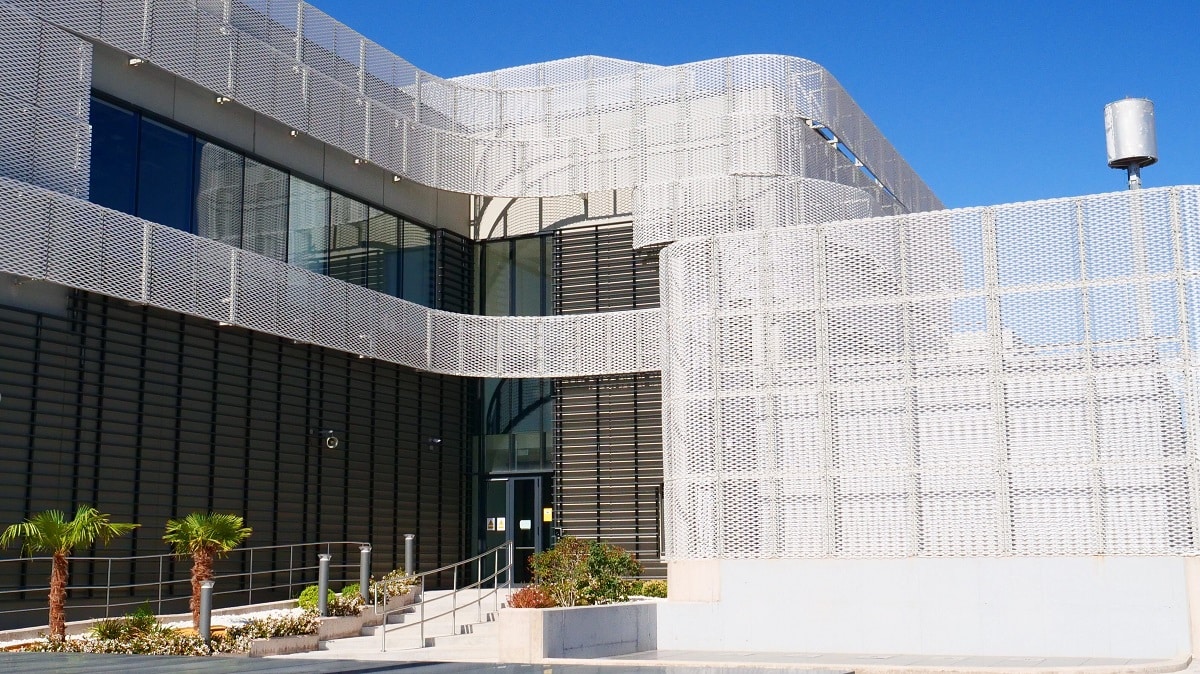
Nabiax is preparing for a new growth phase that involves around 800 million euros in investment and increasing its capacity from the current approximately 35 MW to 140 MW of IT capacity. One of the key components will be ADC3, the next expansion of its campus in Alcalá de Henares (Madrid), designed to serve high-density loads, cloud, and artificial intelligence.
The key points of Nabiax’s expansion in 20 seconds
- Nabiax plans to invest around 800 million euros in its new expansion phase.
- The goal is to increase from about 35 MW currently to 140 MW of IT capacity.
- ADC3 will expand the Alcalá campus, which currently has 22.3 MW of IT.
- The new development is tailored for high-density loads and liquid cooling.
- The company is also exploring opportunities in Portugal, the UK, Italy, and Germany.
This plan arrives at a time when securing land for data centers is no longer enough. The growth of artificial intelligence is increasing power per rack and, most importantly, the need to secure large blocks of electrical energy years in advance.
Nabiax’s CEO, Pablo Ruiz-Escribano, explained that the company is analyzing new investments in Madrid and potential international opportunities. Portugal, the UK, Italy, and Germany are among the markets under evaluation, though no specific projects have been announced in these countries yet.
This move also signifies a scaling up for a company that was founded seven years ago from assets of Telefónica data centers and has been fully owned by Aermont Capital since late 2024.
ADC3 Prepares Alcalá for a New Generation of Data Centers
Currently, Nabiax’s most important asset is its Alcalá de Henares campus, located on Avenida Punto Com, relatively close to Adolfo Suárez Madrid-Barajas Airport.
Official figures give an idea of its size. Alcalá Data Center offers 22.3 MW of IT power across its first two phases and over 10,000 square meters of built IT space.
ADC1 became operational in 2013, featuring seven IT rooms and 4,800 square meters. Its infrastructure has Tier IV certification.
ADC2 added another six rooms and approximately 6,000 square meters of IT space. Nabiax’s own documentation states it was commissioned in 2021, though some later references about the various expansions may cause some confusion regarding development and commissioning dates.
ADC3 takes this strategy to a different scale.
The technical documentation published this year describes a development specifically oriented toward growth in artificial intelligence and high-density computing. Its features include the possibility of providing up to 100 MW of secured IT power on the campus, plus an additional 110 MW requested for future needs.
This doesn’t mean ADC3 will immediately incorporate all that capacity nor that the 210 MW are currently available. The 100 MW refers to the secured power Nabiax presents for large-scale development, while the additional 110 MW is requested capacity for potential long-term expansions.
This distinction is especially important in today’s data center market, where capacity announcements may refer to installed power, secured power, requested capacity, or planned capacity.
ADC3 is also designed to support up to 100% liquid cooling, a feature directly related to the increasing thermal density of servers used for artificial intelligence.
GPUs and other accelerators for training and inference models can concentrate power consumptions much higher than traditional cloud infrastructure. This is forcing changes in the design of server rooms, electrical systems, and heat extraction technologies.
According to the project documents, ADC3 aims for a design PUE of 1.2. PUE (Power Usage Effectiveness) relates all the energy consumed by a data center to the energy that directly reaches the IT systems. The closer to 1, the more energy is dedicated to cooling and auxiliary services.
Nabiax also plans to source electricity from renewable sources and to design the facility with zero water consumption for cooling.
From 35 MW to 140 MW: a Significant Scale-Up
The Alcalá project is part of a broader corporate plan.
When Aermont Capital acquired Nabiax from Asterion Industrial Partners and Telefónica in November 2024, the company announced an installed capacity of approximately 35 MW of IT, distributed among its campuses in Alcalá de Henares, Julián Camarillo in Madrid, and Terrassa in Barcelona.
Nabiax’s current website slightly raises the overall figure to 36 MW.
The differences mainly reflect the timing of capacity measurement and the expansions carried out. To assess the new plan, the key point is its magnitude: the company aims to approximately quadruple its capacity up to 140 MW over the coming years.
The associated investment would amount to around 800 million euros.
The projected growth underscores how much the business has evolved. For example, in May 2024, Nabiax announced a 47 million euro investment to develop an additional 10 MW contracted by two hyperscalers—7.5 MW at Alcalá and 2.5 MW at Julián Camarillo.
Two years later, plans are measured in hundreds of millions and tens of additional megawatts.
Artificial intelligence helps explain part of this acceleration. The market no longer only needs large facilities to host conventional servers. Operators must prepare for GPU configurations requiring much more electricity, new cooling technologies, and very high-capacity connectivity.
For Nabiax, Alcalá also has an advantage that’s hard to quickly replicate: years of preparing its energy capacity growth. As early as 2020, the company indicated the campus was designed to surpass 100 MW and would have its own electrical substation.
Madrid Continues to Grow for Cloud and AI Infrastructure
The expansion also strengthens the concentration of digital infrastructure around Madrid.
The capital and its metropolitan area have become one of the main data center markets in southern Europe. Beyond traditional hosting and cloud, there is now infrastructure needed for artificial intelligence, which demands much more power and advanced cooling systems.
Nabiax also asserts that it hosts infrastructure for three of the four major global cloud providers in Madrid, although it does not specify which clients in the ADC3 documentation.
International expansion could be the next step.
Ruiz-Escribano mentioned that the company is exploring opportunities in Portugal, the UK, Italy, and Germany. For now, these are markets under evaluation, not confirmed new data centers.
The leap to 140 MW won’t happen immediately. It’s the target outlined in the company’s new growth plan and will depend on project development, capacity contracting, and energy availability.
Nevertheless, the planned 800 million euro investment and ADC3’s scale demonstrate how the Spanish market is changing. Just a few years ago, expanding a few megawatts was a significant project. The rise of AI workloads is prompting operators and investors to plan entire campuses with dozens or even hundreds of megawatts.
For Nabiax, this transition coincides with a new business phase under Aermont and a long-standing asset in Alcalá ready to grow. ADC3 could become the key piece transforming that expansion potential into capacity specifically designed for the new generation of cloud and AI infrastructure.
Frequently Asked Questions
How much does Nabiax plan to invest in new data centers?
The new plan involves an approximate investment of 800 million euros to expand the company’s capacity over the coming years.
What is ADC3 of Nabiax?
ADC3 is the next major expansion of the Alcalá de Henares campus. It is planned for high-density infrastructure supporting cloud and AI workloads, with support for liquid cooling.
How much capacity does Nabiax currently have?
The acquisition in 2024 was finalized with a capacity of about 35 MW of IT. Currently, Nabiax’s website states a total capacity of 36 MW and 28,000 square meters of IT space.
Will Nabiax build data centers outside Spain?
The company is exploring opportunities in Portugal, the UK, Italy, and Germany, but has not yet confirmed the construction of specific data centers in these markets.
