
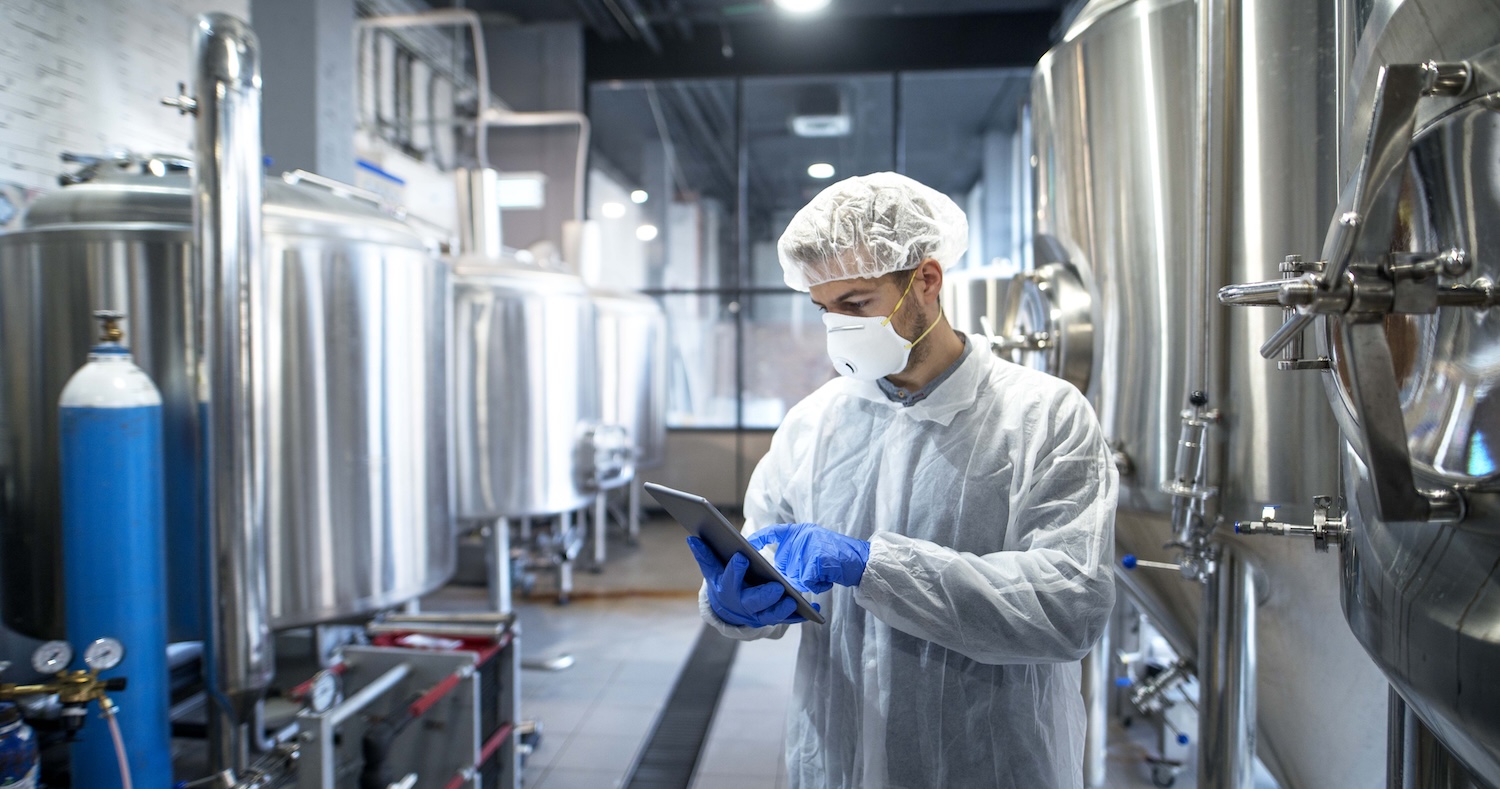
Eurecat collaborates with EMLIFE Biotics and Connecthink in developing PROBIO-AI, a European project that will apply artificial intelligence and a cognitive digital twin to digitize the operational knowledge of a liquid probiotic manufacturing plant. The initiative aims to transform protocols, data, and the experience accumulated by operators into a knowledge infrastructure that helps improve productivity, traceability, and decision-making without replacing human judgment.
The keys to PROBIO-AI in 20 seconds
- The project develops a cognitive digital twin to support probiotic manufacturing.
- Utilizes explainable artificial intelligence and a knowledge infrastructure based on operational data.
- Intends to reduce up to 60% of the time needed to locate information and increase productivity by 30% to 40%.
- Funded by Horizon Europe under the WASABI program to boost AI in the manufacturing industry.
The initiative addresses one of the most common challenges in the biotech industry: a large portion of critical knowledge still depends on dispersed documents and worker experience. PROBIO-AI aims to convert this information into a structured digital system capable of assisting operators during production and laboratory processes.
A digital twin that organizes factory knowledge
Unlike traditional digital twins, which mainly focus on representing machine or process behavior, PROBIO-AI incorporates an explainable AI layer that transforms protocols, operational data, and expert knowledge into a reusable knowledge base.
The solution will leverage GenInContext, a framework developed by Connecthink for context engineering and knowledge management. This will enable building an infrastructure where information can be queried, related, and used to assist workers during various production phases.
According to project leaders, the system will help guide operators during microbiological and physicochemical tests, enhancing process traceability and facilitating compliance with food safety standards.
A notable aspect of the project is that AI is conceived as a supporting system. Eurecat emphasizes that the final decision will always remain with people, within a governance model designed to ensure ethical and transparent AI use.
Increased productivity and faster training for new employees
The implementation of PROBIO-AI aims to achieve several operational goals: reducing up to 60% of the time spent searching for technical information, increasing productivity between 30% and 40%, and achieving 95% traceability during probiotic production.
Beyond production impacts, the system also seeks to facilitate the onboarding of new workers. With digitized protocols and step-by-step assistance, the company hopes to shorten learning curves and accelerate staff training without relying solely on oral knowledge transfer.
The project also plans to promote internal mobility, enabling employees from areas like logistics or packaging to assume production-related roles supported by this knowledge infrastructure.
A model that could extend to other industries
While PROBIO-AI is initially developed for liquid probiotic manufacturing, Eurecat believes that the model can be applied to other sectors with complex processes and strong reliance on operational knowledge.
Industries such as food, biotechnology, cosmetics, pharmaceuticals, and advanced manufacturing—especially organizations where traceability and knowledge management are critical factors—could benefit from this approach.
The project has a budget exceeding €200,000 and is part of the twelve experiments selected in the second open call of the European WASABI program, funded by Horizon Europe, which aims to promote AI-based solutions for the manufacturing sector.
Within the consortium, Connecthink is responsible for the technological architecture and explainable AI components; EMLIFE Biotics will implement the industrial solution at their facility; and Eurecat will validate performance indicators measuring the project’s impact, along with leading the ethical governance of AI.
Frequently Asked Questions
What is PROBIO-AI?
It is a European project developing a cognitive digital twin with artificial intelligence to assist operators during the manufacturing of liquid probiotics.
What improvements does it aim to achieve?
Objectives include reducing up to 60% of the time to access operational information, increasing productivity by 30% to 40%, and improving process traceability to 95%.
Will artificial intelligence replace operators?
No. According to Eurecat, the system is designed as a support tool, and the final decision will always remain with humans.
Can it be applied in other sectors?
Yes. The consortium considers that the developed infrastructure could be adapted to industries such as food, pharmaceuticals, cosmetics, biotechnology, or advanced manufacturing.
