
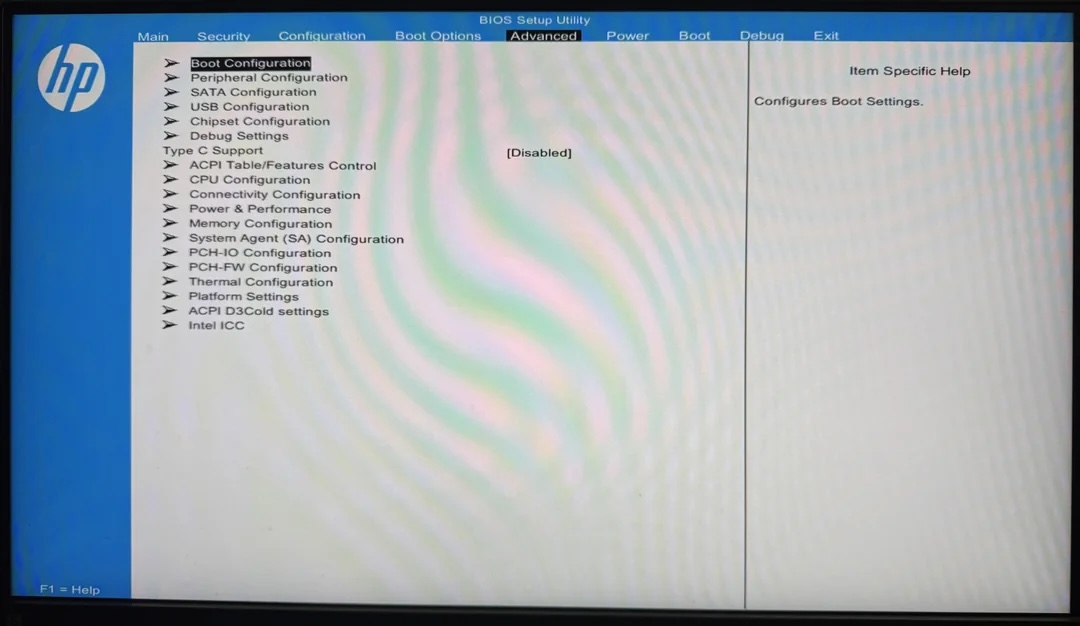
An enthusiast in artificial intelligence conducted a test that demonstrates how programming models can accelerate reverse engineering tasks. A Reddit user claims to have used Claude Code, Anthropic’s development assistant, to modify an HP laptop’s BIOS, remove several security restrictions, and unlock dozens of hidden options that remained inaccessible.
The key points of the experiment in 20 seconds
- A user used Claude Code to analyze and modify a locked HP BIOS.
- The process allowed disabling an RSA-2048 signature check and enabling 55 hidden firmware options.
- The work required reverse engineering tools, technical knowledge, and hardware to reprogram the BIOS.
- The case shows how AI can speed up complex firmware analysis tasks, though it doesn’t mean every device can be unlocked the same way.
The story, initially published on Reddit and later picked up by Tom’s Hardware, revolves around a HP 15-dw1036ne equipped with an Intel Core i7-10510U and BIOS F.68. According to the author, the laptop prevented any firmware modifications through standard integrity checks, displaying a “BIOS Corruption Detected” message when changes were made.
AI Didn’t Do the Work Alone
Although some headlines suggest Claude “hacked” the BIOS, the process was much more complex.
The user employed a set of specialized firmware analysis tools, including:
- Ghidra
- UEFITool
- UEFIExtract
- UEFIFind
- Capstone
- CH341A for reprogramming the BIOS chip
- Custom Python scripts
Claude Code primarily served as an assistant during the reverse engineering process, helping to locate functions, interpret disassembled code, and suggest modifications to the firmware.
The outcome was a completely unlocked BIOS for that specific model.
Three Key Modifications
According to the author, three main modifications were necessary.
First, locating and disabling the cryptographic check based on RSA-2048 that verified firmware integrity before boot.
Second, recovering 55 hidden configurations, divided between options merely hidden in the interface and others fully disabled by HP.
Finally, enabling four new advanced settings tabs:
- Advanced
- Power
- Debug
- Boot
These options are usually reserved for developers or manufacturers and allow for manipulation of more advanced hardware parameters.
An Example of AI’s Potential in Reverse Engineering
Beyond this specific case, the experiment highlights a significant shift.
Until recent years, reverse engineering a BIOS required weeks of manual firmware analysis. Tools like Claude Code can significantly reduce that time by helping interpret large amounts of assembly code, locate relevant functions, or generate scripts to automate certain tasks.
This does not mean AI automatically finds vulnerabilities or can bypass all security mechanisms. It still requires an expert to understand how the firmware works, validate changes, and accept the risks involved in modifying critical system components.
It Doesn’t Mean All BIOS Can Be Unlocked
The author emphasizes that the developed procedure is specifically designed for that HP model.
Even small differences in motherboard revisions or firmware versions could cause the script to fail or even render the device inoperable.
Moreover, modern professional laptops incorporate more advanced protection mechanisms, such as TPM integration or additional firmware verification systems, which might not be vulnerable to the same approach.
AI Accelerates an Existing Trend
Reverse engineering BIOS is not new. For years, communities have worked on unlocking hidden settings, recovering locked devices, or modifying UEFI firmware.
The innovation is that AI-based programming assistants are beginning to become collaborators capable of dramatically speeding up these investigations.
Rather than replacing technical expertise, models like Claude Code help reduce the time spent analyzing thousands of lines of code, interpreting compiled functions, or creating small auxiliary tools.
This case exemplifies that evolution: artificial intelligence didn’t replace the researcher but acted as a productivity multiplier in a particularly complex task.
Frequently Asked Questions
Did Claude Code automatically hack the BIOS?
No. The process required reverse engineering tools, a physical programmer for the BIOS chip, technical knowledge, and human oversight. Claude Code served as an assistant during the analysis.
What did the user manage to unlock?
According to the author, he enabled 55 hidden configurations and activated four new advanced BIOS tabs.
Can this be done on any HP laptop?
No. The procedure was developed for a specific model (HP 15-dw1036ne), and the creator warns that it likely won’t work on other devices.
What does this experiment prove?
Essentially, that AI-based programming assistants can significantly accelerate complex firmware analysis and reverse engineering tasks, reducing the time needed to locate functions and develop modifications.
via: Reddit
