
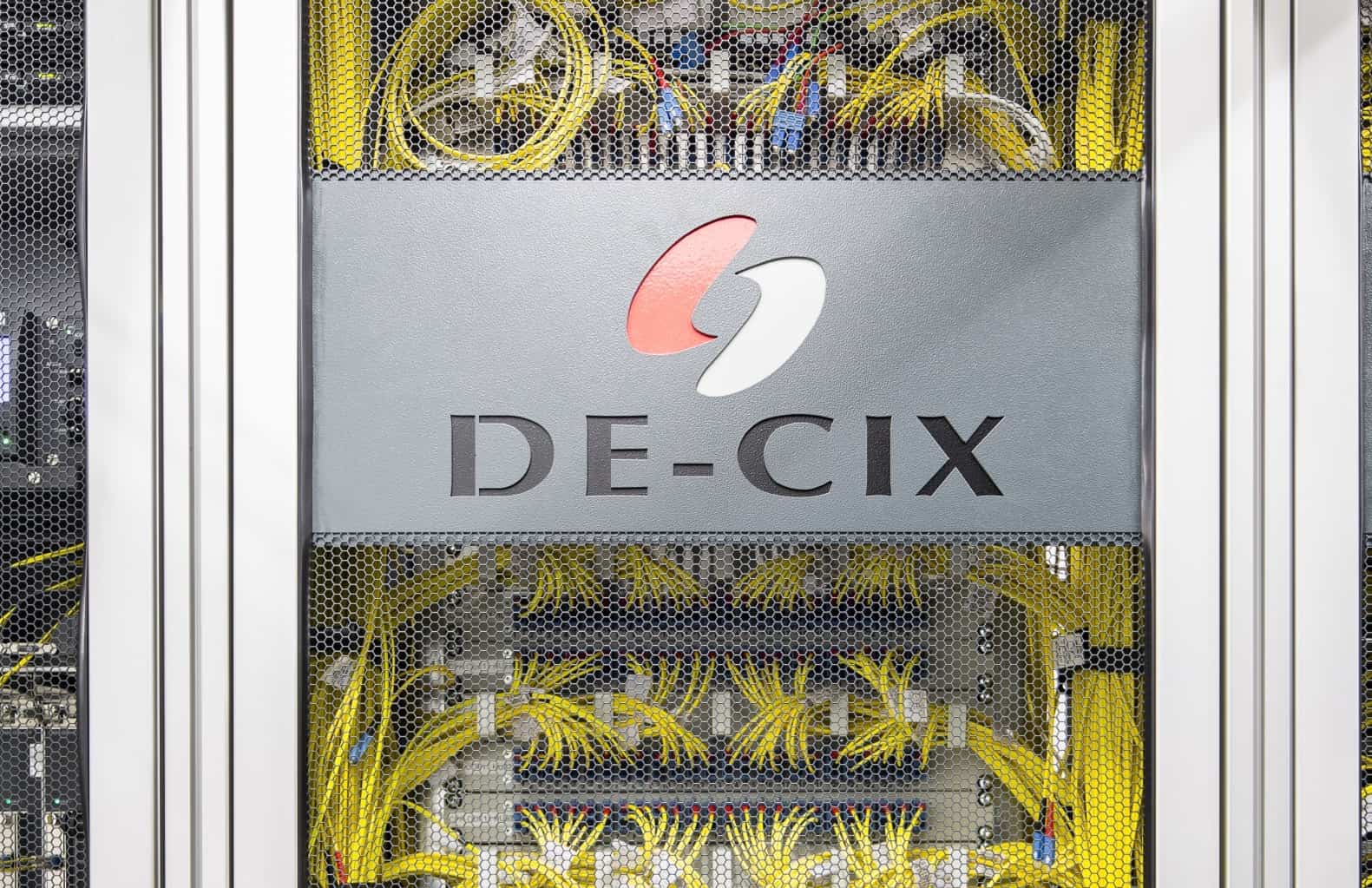
The digital transformation of industry no longer relies solely on integrating robots, artificial intelligence, or smart sensors. As factories automate more processes, their networks’ ability to transmit data quickly, securely, and with low latency is shaping up to be a key factor in maximizing these investments. This is the main conclusion of the analysis presented by DE-CIX, an international operator of neutral Internet exchange points, which warns that many companies could face a technological bottleneck if they do not modernize their connectivity infrastructures.
The key points of industrial connectivity in 20 seconds
- PwC forecasts that industrial automation will rise from the current 18% to 50% by 2030.
- DE-CIX considers that networks will be decisive in leveraging AI and robotics.
- Smart cobots, SASE architectures, and software-defined networks are among the most relevant technologies.
- Low latency and direct interconnection are gaining importance in the connected industry.
The evolution of smart manufacturing is increasing the volume of data flowing in and out of industrial plants. Collaborative robots, sensors, cameras, cloud platforms, and AI systems continually exchange information to coordinate processes and make real-time decisions.
Automation increases pressure on infrastructure
The Global Industrial Manufacturing Sector Outlook 2026 report, prepared by PwC, estimates that the level of automation will grow from 18% to 50% before the decade’s end.
This advancement means that more processes will depend on digital infrastructures capable of responding within milliseconds, both for machinery control and processing large volumes of data.
According to DE-CIX, connectivity will shift from a secondary element to a strategic component of industrial competitiveness.
Cobot evolution powered by artificial intelligence
One of the most visible examples of this transformation is collaborative robots, known as cobots.
The new generation incorporates AI algorithms that allow them to recognize objects, interpret images from cameras, monitor processes, or adapt their movements based on the environment.
The company cites as an example the recent use of humanoid robots at a BMW plant in the United States, where they assist in manufacturing tasks that require placing metal parts in just seconds and with precision margins of a few millimeters.
Such applications demand fast and stable communications between robots, sensors, and data processing platforms.
More flexible networks for a connected industry
To meet these new needs, DE-CIX identifies three technologies with a prominent role in the coming years.
The first is software-defined networks (SDN), which enable dynamic traffic management tailored to each industrial process.
The second involves Secure Access Service Edge (SASE) architectures, a model that integrates connectivity and cybersecurity from the cloud to protect communications and enforce access policies based on user, device, or application identity.
The third is direct interconnection between networks and cloud providers, an alternative that reduces dependence on public Internet and helps lower latency in critical applications.
According to the company, these technologies will allow building more open infrastructures prepared for distributed production.
Connectivity gaining importance in Industry 4.0
DE-CIX is currently involved in European initiatives such as NEXUS, a project funded under the IPCEI-CIS program aimed at developing a sovereign cloud-edge infrastructure based on open architectures and software-defined interconnection.
The company believes that investments in AI or automation will only reach their full potential if accompanied by a corresponding evolution in network infrastructures.
Citing César Vega, DE-CIX’s Business Cloud & Enterprise Sales Lead for Southern Europe: “It’s pointless to invest millions in advanced machinery or AI if the factory’s network is outdated.” According to the executive, connectivity has become one of the main factors influencing productivity and profitability in Industry 4.0.
As industrial digitization advances, communication infrastructure ceases to be purely a technical element and becomes a strategic component that conditions companies’ ability to implement new data-driven and AI-based production models.
Frequently Asked Questions
Why is the network so important in an AI-enabled factory?
Because AI systems, robots, and sensors constantly exchange information and require fast, secure, low-latency communications to operate effectively.
What are cobots?
They are collaborative robots designed to work alongside humans. The incorporation of AI allows them to adapt to their environment and perform more complex tasks than previous generations.
What is a software-defined network?
It is an architecture where software dynamically controls network operation, allowing connectivity to be tailored to each application or industrial process’s needs.
What role does SASE play in industry?
Secure Access Service Edge architectures combine connectivity and cybersecurity to protect communications among users, devices, and distributed applications.
