
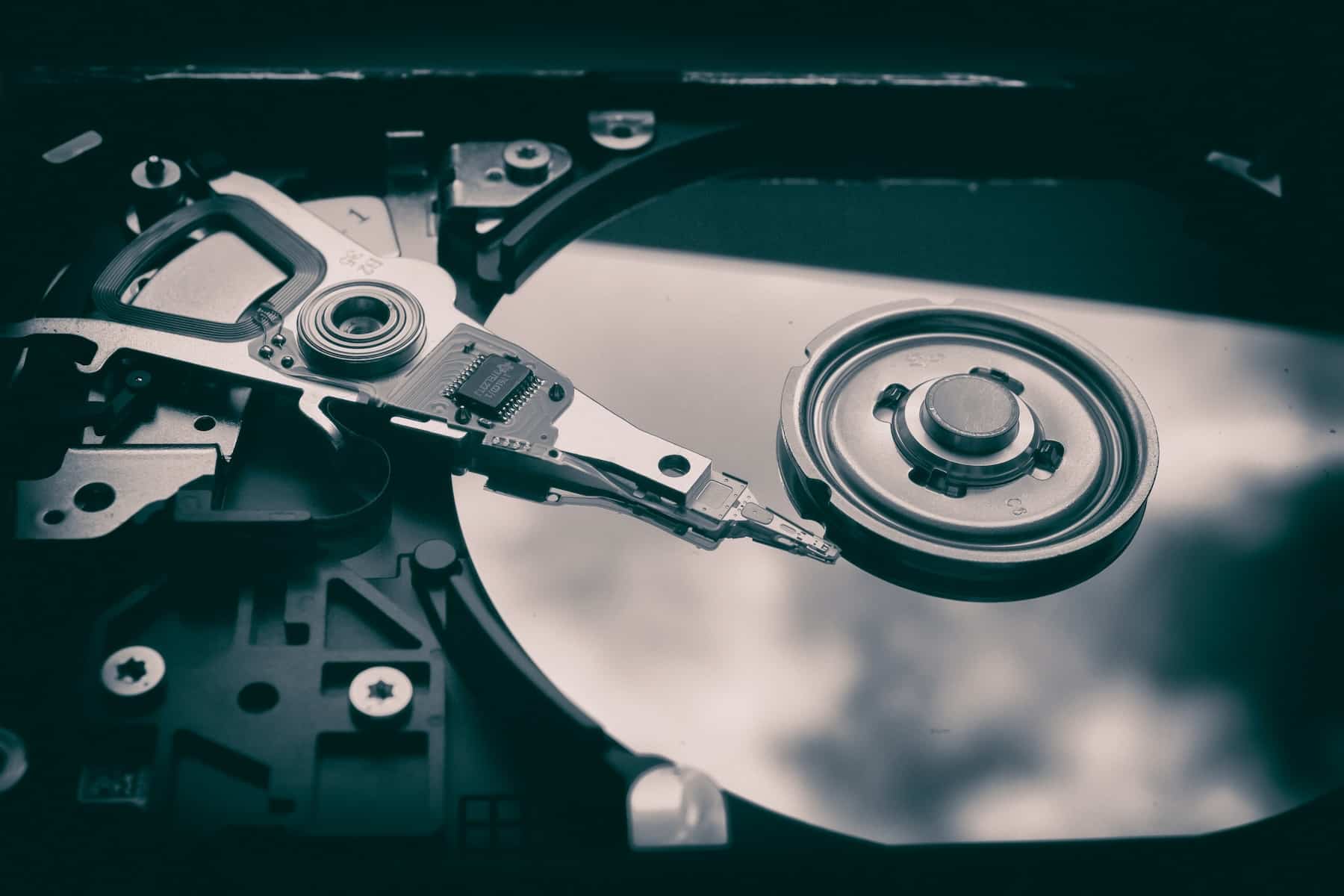
Wave Domain has introduced Standing Wave Storage (SWS), an optical archiving technology promising to preserve information for 500 years without electricity and to represent up to 9,000 different states per pixel. The approach adapts the color photography interference method developed by physicist Gabriel Lippmann at the end of the 19th century to the digital age, although it still has a way to go from a proven prototype to a commercially produced system at scale.
The key points of Wave Domain storage in 30 seconds
- Standing Wave Storage captures information through interference patterns created on a photosensitive silver halide emulsion.
- Wave Domain claims that their current demonstration reaches approximately 9,000 states per pixel and estimates a lifespan of up to 500 years.
- Samples were exposed for months in the environment of the International Space Station without noticeable degradation.
- The company aims to license its intellectual property to manufacturers instead of producing the supports and read systems directly.
- The system is designed for permanent archives, not for replacing everyday high-speed storage.
The company emerged from stealth mode in June 2026 during the 68th IT Press Tour held in Boston. There, it showcased a technology primarily known as WORF, an acronym for Write Once, Read Forever.
The idea addresses an increasingly visible problem. Organizations generate vast amounts of data that must be preserved for decades, yet the storage media used for archiving do not last as long as the data itself. Discs fail, tapes age, formats become obsolete, and facilities require energy, environmental controls, and periodic migrations.
Wave Domain proposes a shift in this paradigm. Instead of maintaining bits through electric charges, magnetic fields, or structures that need updating over time, their system physically records data onto a photographic emulsion. Once developed, the support requires no power to retain the information.
From the first color photographs to digital archiving
The scientific origin of Standing Wave Storage traces back to Gabriel Lippmann’s work. In the 1890s, the physicist developed a method to reproduce colors via wave interference in a silver halide emulsion without using conventional photographic pigments.
His method exposed a photosensitive emulsion to light and used its reflection to generate standing waves. These interference patterns left microscopic structures within the material, which, when illuminated later, reconstructed the original colors.
While complex for commercial photography, this process earned Lippmann the Nobel Prize in Physics in 1908. Over a century later, Wave Domain uses the same fundamental principle for a different purpose: representing digital information.
Standing Wave Storage divides the medium into small areas equivalent to pixels. Within each, multiple wavelengths can superpose, acting as distinguishable states during reading.
A conventional binary system represents two possibilities: zero or one. Wave Domain’s approach combines multiple wavelengths within a single physical location. According to their data, the current prototype selects four wavelengths from a larger set, achieving around 9,000 possible combinations per pixel. They estimate the theoretical potential exceeds 40,000 combinations.
This doesn’t automatically mean a nine-thousand-fold increase in capacity over tapes or disks. Final density also depends on pixel size, error correction methods, optical precision, and data writing/reading speed. The figures describe the technique’s multi-state capacity, not a ready-market product directly comparable to current supports.
Writing involves silver halide emulsions and light sources of different wavelengths. To retrieve data, the support is illuminated, and its spectral response analyzed. Wave Domain asserts that initial systems can be built with commercially available components, including LEDs, digital cameras, and specialized photographic materials.
A space test still doesn’t guarantee 500 years of durability
A key project component was the HELIOS mission, designed to test the support’s resilience in a more demanding environment than terrestrial archives. Samples spent roughly eight months exposed on the International Space Station in 2019.
According to technical documentation released by the project team, the plates endured exposure to space radiation, microgravity, and environmental changes without detectable degradation of the recorded patterns.
While this provides insight into the material’s physical resilience, it doesn’t alone prove a 500-year lifespan. That estimate is based on the known stability of metallic silver, accelerated aging tests, and historical photographic material experience.
Lippmann’s color photographs from the late 19th century show that these structures can remain intact for over a century under suitable conditions. Extending this to five centuries requires aging models and environmental controls that can only be partially verified through accelerated testing.
Therefore, the 500-year figure should be viewed as the preservation goal specified by the developers, not a proven lifespan.
It’s also important to clarify what “no energy consumption” means. The support needs no electricity while stored, but energy is necessary for data writing, illuminating the plates during reading, and operating systems that reconstruct data.
A supplementary solution rather than an immediate replacement
Standing Wave Storage targets permanent archiving, where access is infrequent and long-term preservation is the priority. It’s not intended for running databases, hosting applications, or competing with solid-state drives in speed.
Potential applications include scientific records, digitized cultural heritage, legal documentation, public archives, intellectual property, medical histories, and datasets to be preserved across generations.
In these scenarios, the cost of the medium is just part of the total expense. Organizations must also factor in periodic migrations, replacement of reading devices, climate control, electricity, and the risk of losing access to legacy formats.
Magnetic tape remains one of the most cost-effective options for storing large volumes of data. However, operators must monitor tape condition and migrate data periodically. The exact lifespan depends on tape type, storage conditions, and organizational policies, so a universal 30-year expiration isn’t accurate.
Other R&D avenues include glass-based storage, holographic storage, and DNA data storage. Some promise durations exceeding millennia but often require expensive writing/reading equipment or processes still not widely accessible.
Wave Domain distinguishes itself through the use of known materials and potentially accessible optical readers. Still, this economic advantage needs further validation outside the prototype stage.
Licensing the technology instead of building factories
The company does not plan to manufacture all supports, readers, or archive systems itself. Its strategy involves licensing patents and technical know-how to firms with existing industrial capacity and distribution channels.
In 2023, Wave Domain partnered with yet2 to seek licensees interested in WORF technology. This approach is reminiscent, with appropriate differences, of companies developing IP for other manufacturers to incorporate into their products.
This model reduces capital investment but makes timelines dependent on third parties. A licensee must turn current demonstrations into repeatable systems, certify materials, develop reliable readers, and define long-lasting formats.
The company expects about three years to achieve mass-produced readers, aiming for deployment around 2029, contingent on industrial partnerships and further development. For now, Standing Wave Storage remains a pre-commercial technology.
Perhaps its most important contribution isn’t promising a 500-year lifespan but reminding us how digital archiving still relies on surprisingly temporary supports. Recovering a photograph from 1891 may seem unusual, but it raises a fundamental question: how to preserve information across centuries without forcing future generations to copy it repeatedly.
Frequently asked questions
What is Standing Wave Storage?
An optical archiving technology developed by Wave Domain that records data through interference patterns in a silver halide emulsion. It has also been called WORF, Write Once, Read Forever.
Can it really store 9,000 states per pixel?
Wave Domain claims to have demonstrated about 9,000 combinations using multiple wavelengths in the same location. This indicates multi-state encoding but doesn’t alone determine the final capacity of a future commercial support.
Is it proven that data can last 500 years?
Not over an actual five-century period. The 500-year estimate is based on material stability, aging tests, and historical photographic experience. While the space exposure supports durability, it doesn’t guarantee the full lifespan.
When will this technology be available for purchase?
Wave Domain projects about three years from its public debut in June 2026 to mass-produce readers, depending on industrial partnerships and commercial development.
Sources:
- Nobel Prize, official information on Gabriel Lippmann and the 1908 Nobel in Physics. (Nobel Prize)
- yet2, licensing process announcement for WORF technology. (yet2)
- StorageNewsletter, presentation at IT Press Tour 68 and evolution of WORF to Standing Wave Storage. (StorageNewsletter)
- Technical documentation on WORF and the HELIOS mission on the ISS. (ResearchGate)
- Technical coverage of Standing Wave Storage, testing, and development status. (vmblog.com)
