
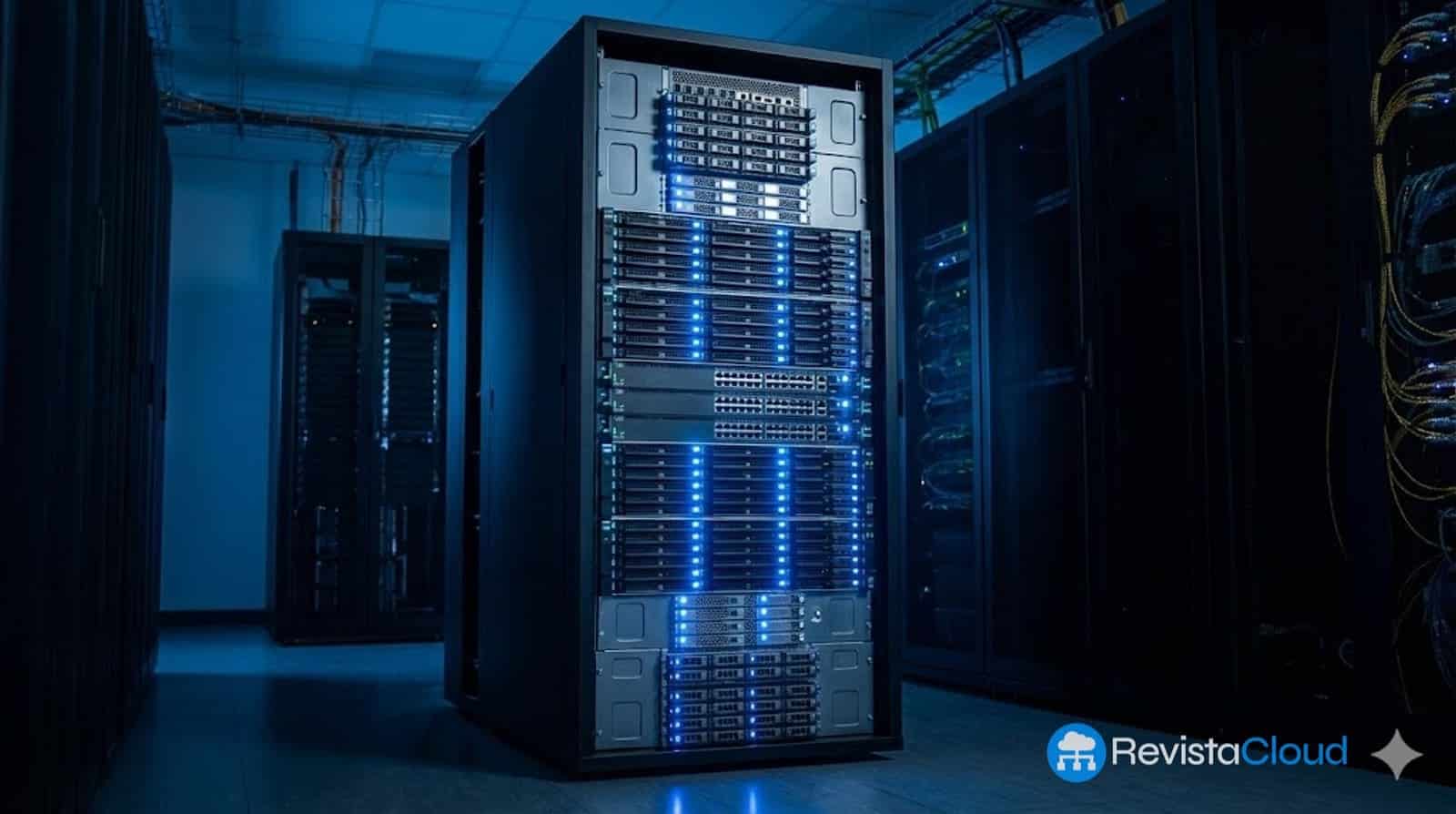
AMD is close to finalizing a definitive agreement with Samsung to incorporate large volumes of HBM4 memory into its Instinct MI455X accelerators and the Helios AI platform. This operation expands the collaboration announced in March and allows Lisa Su’s company to strengthen one of the hardest components to secure in the race to compete with NVIDIA’s upcoming Rubin systems.
The key points of the AMD-Samsung agreement in 30 seconds
- In March, AMD and Samsung signed a memorandum to prioritize the supply of HBM4 for the Instinct MI455X accelerator.
- Lisa Su states that the formal contract to acquire large volumes is nearly finalized.
- Each Helios system will include 72 MI455X GPUs and approximately 31 TB of HBM4 memory.
- AMD plans to start first commercial shipments of Helios by the end of Q3 2026.
- The partnership helps Samsung gain traction in HBM and reduces AMD’s dependence on a single manufacturer.
Samsung was already identified as a priority supplier within the collaboration announced by both companies on March 18. However, that agreement was in the form of a memorandum of understanding, so volumes, commercial terms, and delivery schedules still needed to be finalized.
After AMD’s Advancing AI 2026 event in San Francisco, Lisa Su told South Korean media that discussions to turn that commitment into a formal contract were “nearly” complete. Samsung avoided confirming the deal was finalized but acknowledged that its semiconductor leadership was holding important meetings with AMD. (AMD)
Memory becomes a decisive component of Helios
AMD no longer wants to compete solely by selling individual accelerators. Helios represents its entry into the full-system AI market at rack scale, the same arena where NVIDIA has built much of its advantage with solutions like GB200 NVL72 and upcoming Vera Rubin systems.
The Helios design combines 72 AMD Instinct MI455X accelerators, sixth-generation EPYC processors codenamed Venice, Pensando network controllers, data processing units (DPUs), Infinity Fabric connections, and the ROCm software platform.
On paper, a rack will deliver up to 2.9 exaflops in FP4, 1.4 exaflops in FP8, 260 TB/s of internal bandwidth, and 43 TB/s for inter-system communications. One of its most notable features is memory capacity: approximately 31 TB of HBM4 per rack.
| Characteristics of AMD Helios | Announced specifications |
|---|---|
| Accelerators per rack | 72 Instinct MI455X |
| Total HBM4 memory | 31 TB |
| FP4 performance | Up to 2.9 exaflops |
| FP8 performance | Up to 1.4 exaflops |
| Memory bandwidth per GPU | 19.6 TB/s |
| Internal scaling bandwidth | 260 TB/s |
| Inter-rack bandwidth | 43 TB/s |
High-bandwidth memory (HBM) is installed adjacent to the processor using advanced encapsulation techniques. Its design enables moving significantly more data than conventional memory, which is essential to continuously feed the compute cores of an AI GPU.
Without sufficient capacity or bandwidth, some of the accelerator’s power is wasted waiting for new data. Therefore, HBM availability has become as critical as chip manufacturing itself. (AMD)
The MI455X raises the bar to compete with Rubin
The Instinct MI455X will be the core of Helios. AMD has presented this accelerator as its response to NVIDIA’s next-generation Rubin, expected in the second half of 2026.
The chip contains around 320 billion transistors and combines components fabricated with 2nm and 3nm processes. AMD estimates its peak performance at about 40 petaflops in FP4, a numeric precision particularly suited for AI model inference.
One of its main advantages will be memory. Each MI455X can integrate approximately 432 GB of HBM4, about 50% more than the capacity announced for some rival configurations within the Rubin generation. However, this comparison should be taken with caution as it’s based on theoretical specifications and does not guarantee better real-world performance.
AMD confirms that Helios has already entered high-volume production and expects to begin shipments before the end of Q3 2026. Microsoft has confirmed it will deploy these systems on Azure, while other tech companies and server manufacturers are working with the architecture. (Tom’s Hardware)
The company must now ensure a supply of memory to meet these commitments. A single rack consumes tens of terabytes of HBM4, and large data centers can install hundreds or thousands of racks. Even a small change in the number of contracted systems translates into enormous demand for memory manufacturers.
Samsung aims to regain ground against SK Hynix
The agreement also has important implications for Samsung. The South Korean company remains one of the world’s largest memory manufacturers, but SK Hynix has gained a particularly strong position in HBM thanks to its relationship with NVIDIA.
Samsung needs its new HBM4 generation to secure significant contracts in order to recover market share in the most profitable segment of the memory industry. AMD presents a substantial opportunity because Helios will use volumes far exceeding those typical of a standard accelerator card.
The memorandum signed in March states that both companies will work to position Samsung as the main supplier of HBM4 for the MI455X. It also includes supply of advanced DRAM memories for EPYC Venice processors.
This does not necessarily mean Samsung will be the only manufacturer. In semiconductor supply chains, it’s common to maintain multiple suppliers to mitigate production risks, improve capacity, and prevent technical problems from halting shipments. AMD could supplement supplies with chips from SK Hynix or Micron, although it has not publicly detailed the expected allocation.
For Samsung, becoming a priority supplier also provides technical validation. Before integrating memory into an accelerator, designers must verify that it meets performance, power, temperature, reliability, and encapsulation requirements.
AMD needs more than just a fast GPU
Helios illustrates how competition in the AI market has evolved. NVIDIA’s leadership isn’t just because it produces powerful GPUs. Its advantage also hinges on CUDA, NVLink and InfiniBand networks, Grace processors, DGX systems, and a comprehensive architecture deployable in data centers.
AMD is attempting to build an equivalent alternative through its own combination of Instinct accelerators, EPYC processors, Pensando networks, UALink connections, and the open ROCm environment.
Samsung’s HBM4 memory completes a vital part of that proposition. Without sufficient supply, AMD may have a good accelerator design but lack the components necessary to manufacture Helios at the pace demanded by clients like hyperscalers and large AI labs.
The formal contract has not yet been announced by either company. The only confirmed details are the memorandum signed in March, Samsung’s strategic role, and Lisa Su’s statements about how advanced the negotiations are.
The key difference is significant. AMD and Samsung have agreed to collaborate and prepare supply, but the economic details, exact volumes, and the duration of the future contract remain undisclosed.
Frequently Asked Questions
What memory will the AMD Instinct MI455X use?
It will use HBM4 memory. AMD and Samsung have signed a memorandum to make Samsung a priority supplier while they finalize the commercial contract.
How much memory will an AMD Helios rack have?
The announced configuration will include around 31 TB of HBM4 distributed across 72 Instinct MI455X accelerators.
Will AMD Helios compete with NVIDIA Rubin?
Yes. Helios is designed as a rack-scale AI platform to compete with NVIDIA’s systems, including those based on the upcoming Vera Rubin architecture.
Will Samsung be the only HBM4 supplier for AMD?
AMD has not confirmed exclusivity. Samsung will be a main or priority supplier, but the company might also source from others to ensure capacity and mitigate risks.
Sources:
- AMD, strategic collaboration with Samsung on HBM4 and memory for EPYC. (AMD)
- Samsung Electronics, agreement on AI memory solutions. (news.samsungsemiconductor.com)
- AMD, official specifications of the Helios platform. (AMD)
- Seoul Economic Daily, statements by Lisa Su regarding the HBM4 contract. (Seoul Economic Daily)
- AMD, Helios architecture and configuration with 72 accelerators. (AMD)
