
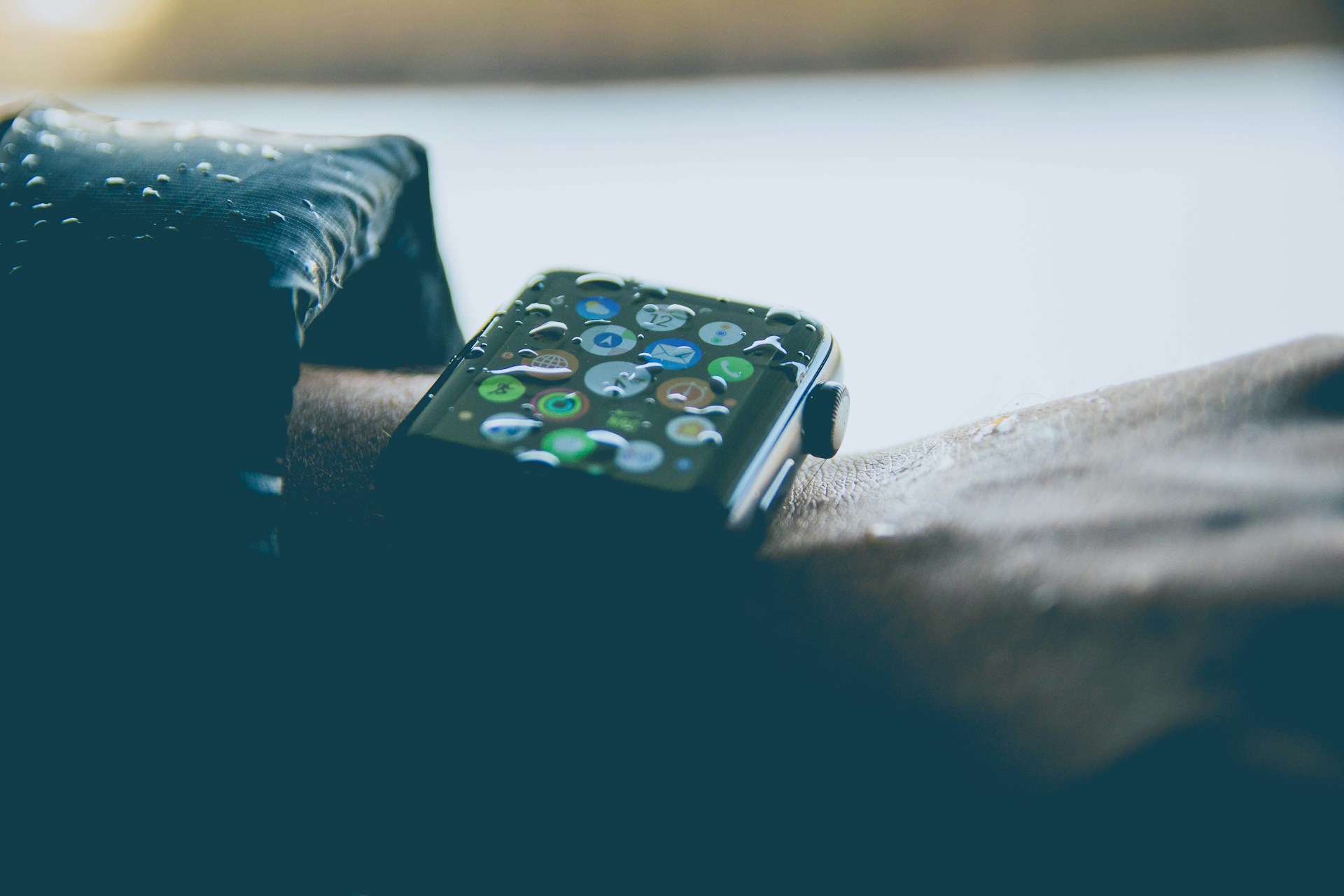
The European regulation that will require facilitating battery replacement starting February 2027 will not impact all electronic devices equally. The European Commission is considering exceptions for smartwatches, activity trackers, and other small equipment when allowing user-initiated replacement could compromise safety, water resistance, or device performance.
The key points for a 20-second battery replacement
- The general requirement will take effect from 02/18/2027.
- Smartwatches might be exempt from replacements performed by the user.
- Such exemption would not be reserved solely for the Apple Watch or any specific brand.
- Phones remain under another regulation that sets durability, IP protection, and professional repair requirements.
This measure has been interpreted as a concession toward the Apple Watch, but there is no individual negotiated exemption for Apple. European standards apply by product category, so any exception would also affect similar devices from Samsung, Garmin, Google, Huawei, and other manufacturers.
The nuance is important. Being exempt from the obligation for users to replace the battery does not necessarily mean the component will be permanently sealed. Regulations may allow professionals to perform replacements if spare parts, documentation, and procedures that do not destroy the device are available.
The technical challenge of opening a smartwatch
Smartwatches present challenges that are less prominent in other electronic products. A casing just a few millimeters thick must accommodate the screen, battery, processor, biometric sensors, antennas, haptic motors, and charging circuits.
Every tenth of a millimeter matters. Adding a removable cover, extra screws, or accessible extraction systems might require reducing battery capacity, increasing thickness, or altering internal layout.
Water resistance is also a concern. Many smartwatches are used during sports, in the rain, or even while swimming. Maintaining a stable seal demands adhesives, gaskets, and manufacturing tolerances with high precision.
Designing an opening that allows any user to change the battery introduces potential points of moisture ingress. The challenge does not end at opening the device: it must also be re-sealed with guarantees comparable to the original.
Lithium-ion batteries add another risk factor. They are small, glued near other components, and can deform or perforate during mishandling. Using screwdrivers, metal tools, or applying excessive force can cause internal short circuits.
For this reason, the European Commission is evaluating whether certain wearables should be exempt from requiring direct consumer replacement. The discussion is not only about protecting manufacturers from redesign efforts but also about determining when home repairs are reasonable and when repairs should be reserved for professionals.
The Apple Watch falls into this category because it uses an integrated battery beneath the screen and a case designed to maintain sealing. However, similar difficulties are present in most current smartwatches.
If approved as studied, the exception would not automatically validate all designs. Manufacturers might need to prove that user replacement poses a technical or safety risk that cannot be reasonably minimized.
What the European Battery Regulation really requires
Regulation (EU) 2023/1542 states that from 02/18/2027, portable batteries integrated into numerous devices must be removable and replaceable throughout the product’s lifespan.
This rule covers a broad range of equipment including headphones, speakers, e-readers, toys, cameras, controllers, portable consoles, and connected devices. It does not require reattaching the original backs of mobile phones nor mandating that batteries be removable by hand.
A battery can remain within its casing and require tools to remove it. The key requirement is that removal can occur without destroying the device, without professional knowledge, and without specialized equipment that is difficult to obtain.
Adhesives are not fully prohibited. Manufacturers can continue securing batteries with glue as long as removal is feasible through a reasonable procedure.
Problems arise when removal necessitates applying heat, solvents, cutting through strong adhesives, or disassembling delicate components that might break. The regulation aims to prevent battery swaps from becoming complex repairs.
Physical accessibility is only part of the equation. Compatible batteries, instructions, and spare parts must also be available for a reasonable period. A theoretically removable battery is of little use if the manufacturer stops selling it shortly after ceasing device sales.
The regulation also permits certain modifications to be handled by professional repairers—consistent with other European rules—supporting designs that are more difficult to open when justified by technical reasons.
Mobile devices have different conditions
Smartphones and tablets are governed by Regulation (EU) 2023/1670 on eco-design, effective from 06/20/2025. Their requirements are not identical to the general battery regulation.
Manufacturers can limit consumer-replaceable batteries to professional repairers if the device meets specific standards for resistance and durability.
For phones, one condition is having at least IP67 protection against dust and water. The battery must also retain at least 83% of its capacity after 500 full charge cycles, and at least 80% after 1,000 cycles.
Tablets follow a similar approach, with a minimum requirement of IP42 protection. In both cases, meeting these standards does not eliminate the obligation for the battery to be replaceable; rather, it influences who can perform the replacement.
Therefore, it is inaccurate to state that any mobile with IP67 automatically qualifies for exemption. Also, claiming an 80% retention after 1,000 cycles is not sufficient without proper documentation and adherence to all applicable conditions.
Manufacturers must ensure compliance across models and keep certain spare parts available for years after discontinuation.
Degradation figures also pose technical challenges. Achieving 80% capacity after 1,000 cycles depends on cell chemistry, thermal management, charge limits, voltage parameters, and software behavior.
Some brands already slow charging when batteries heat up, limit fast charging, or study user habits to optimize lifespan, though these adjustments can affect user experience.
Impact on future device design
Regulations will compel redesign of internal structures. Manufacturers might choose between facilitating battery access, demonstrating exemption criteria, or reserving replacements to professional services under legal conditions.
For larger devices, this could involve adding screws, adhesive tabs, or modular components. In smaller gadgets like earphones and watches, the challenge is greater due to space constraints.
Removable batteries may lower energy density because they require extra casing, connectors, and space. This could translate into shorter battery life or slightly larger product sizes.
Positively, emphasizing repairability from the start may prevent designs where screens, batteries, and mainboards are integrated in ways that make replacing a single part destructive or complex.
The industry will decide whether to develop Europe-specific models or keep uniform designs worldwide. Using a single design eases manufacturing, certification, and logistics, potentially extending some European-specific modifications globally.
The final impact depends on how exceptions are drafted. Broad exemptions could allow most current designs to persist; overly strict rules might limit device size, autonomy, or water resistance without proportional gains.
A middle ground is to require batteries to be replaceable within the product’s lifespan, with certain small devices reserved for professional repair.
Frequently Asked Questions
Will the Apple Watch need a removable battery in 2027?
Not necessarily. It could qualify for an exemption for small wearables, although no specific exemption has been granted to Apple.
Does the EU prohibit gluing batteries in devices?
Not outright. Adhesives are allowed if they enable removal without heat, solvents, or procedures that damage the device.
Does an IP67 phone automatically exempt it from a replaceable battery requirement?
Not automatically. It must also meet capacity retention standards of 83% after 500 cycles and 80% after 1,000 cycles.
Does a user-replaceable battery have to be removable by the user?
The general rule is that it should be user-replaceable, but certain categories may permit repairs to be performed solely by professionals.
