
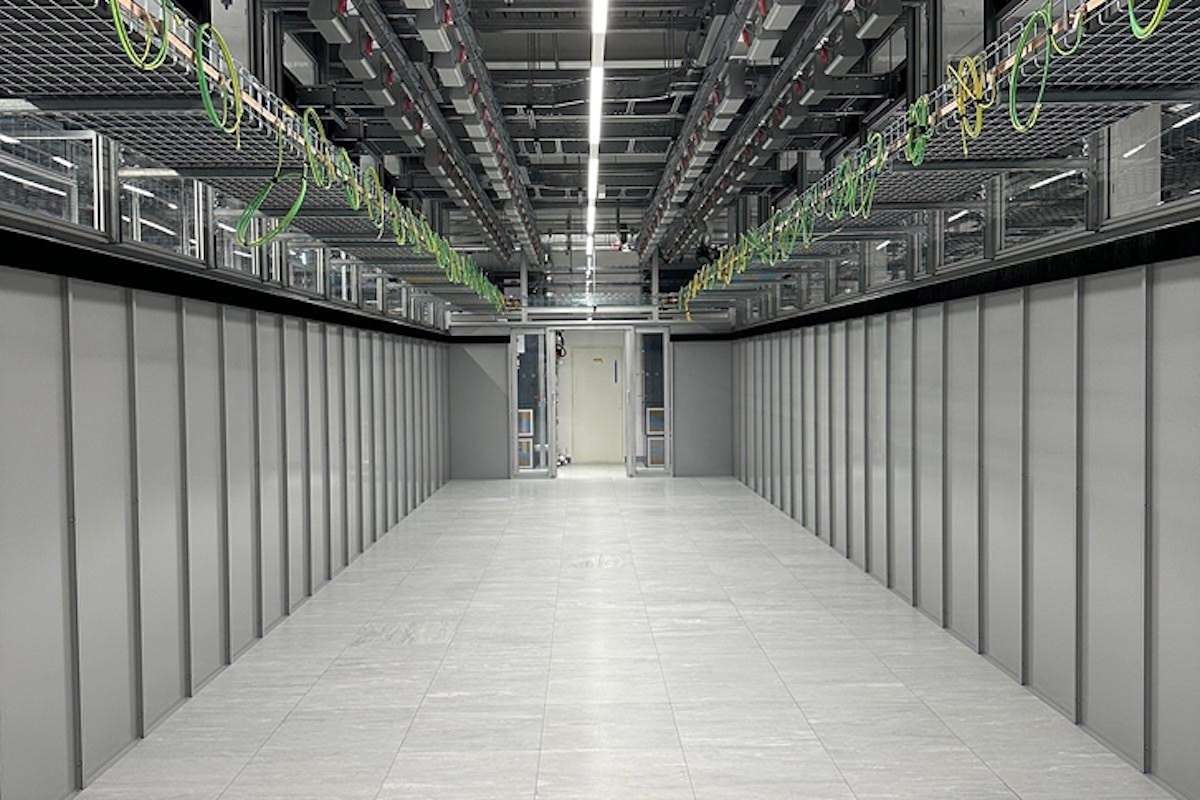
The electrical infrastructure is becoming one of the most strategic elements in data centers. According to a new MarketsandMarkets report, the global market for data center electrical systems will grow from $35.14 billion in 2025 to $50.51 billion in 2030, with a compound annual growth rate (CAGR) of 7.5%. This progress is driven by the expansion of artificial intelligence, hyperscale data centers, and the steady increase in energy consumption related to new workloads.
The key aspects of the data center electrical market in 20 seconds
- The market is expected to reach $50.51 billion by 2030, according to MarketsandMarkets.
- AI, cloud, and HPC are fueling demand for electrical infrastructure.
- North America will continue to lead the market, while Asia-Pacific will grow faster.
- Investments are concentrated in UPS systems, PDUs, energy storage, and DCIM software.
- Schneider Electric, Vertiv, ABB, and Eaton are among the leading providers in the sector.
Focus on data centers often emphasizes processors, GPUs, or liquid cooling, especially since the rise of generative artificial intelligence. However, all this hardware depends on an electrical infrastructure capable of delivering power continuously, efficiently, and with maximum availability.
A modern data center no longer only needs to power thousands of servers. It must do so with very high electrical quality, handle increasingly larger peak loads, and minimize any disruptions that could impact critical applications or cloud services used by millions of people.
AI Fully Transforms Energy Needs
The growth of artificial intelligence is changing the electrical design of data centers.
New training and inference clusters utilize thousands of specialized accelerators that consume much more energy than previous generations of servers. In some AI deployments, a single rack can vastly exceed traditional power densities, requiring a complete redesign of electrical distribution.
This shift explains why investments are no longer solely directed toward new buildings. Spending on uninterruptible power supplies (UPS), power distribution units (PDUs), electrical panels, battery storage, and energy management tools is also increasing.
MarketsandMarkets identifies these components as some of the segments with the greatest influence within the market.
The evolution also impacts planning. Operators need to anticipate future capacity expansions because many facilities built just a few years ago did not account for energy demands associated with large AI deployments.
Electricity Availability Becomes a Competitive Factor
In a data center, power outages can lead to significant economic losses.
Therefore, besides increasing installed capacity, operators aim to improve redundancy and reduce failure risk through architectures like N+1, 2N, or similar configurations, depending on the required level of availability.
Investments are also directed toward energy storage systems based on lithium-ion batteries, DCIM (Data Center Infrastructure Management) software, predictive monitoring, and platforms capable of analyzing the electrical behavior of the entire installation in real time.
Artificial intelligence is also being used to optimize energy consumption, detect anomalies before they cause incidents, and dynamically adjust load distribution among different equipment.
However, these technologies complement the physical infrastructure and do not replace the need for sufficient electrical capacity.
North America Leads, but Asia Accelerates
The report predicts North America will maintain the largest market share, thanks to the high concentration of hyperscale facilities, investments in AI infrastructure, and a mature data center ecosystem.
The United States remains the primary destination for large-scale campuses driven by companies like Microsoft, Google, Amazon Web Services (AWS), Meta, and Oracle, deploying ever larger facilities to meet AI service demands.
However, Asia-Pacific will experience the fastest growth in the coming years.
The expansion of cloud computing, enterprise digitization, and the construction of new data centers in countries such as India, Malaysia, Indonesia, Japan, and South Korea are fueling demand for specialized electrical infrastructure.
Europe is also strengthening its capacity, especially in markets like Germany, France, Ireland, Spain, the Netherlands, and Nordic countries, where energy availability has become a key factor in deciding the location of new data centers.
The Market Is No Longer Just About UPS Systems
While UPS systems remain essential components, the electrical ecosystem of a data center is much broader.
It includes transformers, medium- and low-voltage panels, backup generators, energy storage systems, intelligent distribution, monitoring, DCIM software, and solutions for integrating renewable energy sources.
The chart created by MarketsandMarkets shows the weight of some of the leading manufacturers specialized in this area.
Notable among them are:
- Schneider Electric (France)
- Vertiv (USA)
- ABB (Switzerland)
- Eaton (Ireland)
- Delta Electronics (Taiwan)
- Huawei (China)
- Legrand (France)
- Toshiba (Japan)
- Siemens (Germany)
- Mitsubishi Electric (Japan)
- Kehua Tech (China)
- Rittal (Germany)
- Socomec (France)
- Anord Mardix (Ireland)
- Cummins (USA)
Each maintains a different presence depending on the segment. Some excel in UPS solutions, others in electrical distribution, industrial automation, generators, or comprehensive data center solutions.
The Biggest Challenge Remains Obtaining Sufficient Energy
Market growth does not eliminate challenges.
MarketsandMarkets highlights as primary obstacles the high initial investment, rising electricity prices, management complexity of increasing loads, and regulatory requirements related to energy efficiency and sustainability.
Additionally, a problem affecting many projects is the availability of connection to the power grid.
In various markets, the timelines to establish new energy capacity are becoming one of the main bottlenecks for building large-scale data centers. Sometimes, land access alone is not enough; securing several hundred megawatts can determine whether a project moves forward or remains stalled for years.
The combination of artificial intelligence, high-performance computing, and cloud services will continue to drive demand for electrical infrastructure throughout this decade. Beyond processors or accelerators, the ability to supply energy reliably, efficiently, and scalably is becoming one of the defining factors of the next generation of data centers.
Frequently Asked Questions
How much will the data center electrical market grow?
MarketsandMarkets forecasts an increase from $35.14 billion in 2025 to $50.51 billion in 2030, with a CAGR of 7.5%.
What drives this growth?
Primarily, the expansion of artificial intelligence, high-performance computing (HPC), hyperscale data centers, and the rising energy demand associated with cloud computing.
Which components attract the greatest investment?
UPS systems, electrical distribution units (PDUs), energy storage, DCIM software, and intelligent monitoring tools.
Which companies are leading this market?
Leading manufacturers include Schneider Electric, Vertiv, ABB, Eaton, Delta Electronics, Huawei, Legrand, Siemens, Toshiba, Mitsubishi Electric, Rittal, Socomec, and Cummins.
