
Chinese activity targeting the Netherlands’ strategic industries should no longer be viewed as a series of isolated incidents but as a prolonged risk to its technological and economic sovereignty. This is the main conclusion of a report by the Hague Centre for Strategic Studies (HCSS) and the China Knowledge Network examining the semiconductor, shipping, and aerospace sectors.
The key points of Chinese pressure on the Netherlands in 20 seconds
- The report considers Chinese interference a systemic and cumulative problem.
- Semiconductors are rated as the highest risk sector, while maritime transport is considered high risk.
- Aerospace is rated moderate-high due to dual-use technology.
- HCSS recommends sharing intelligence, strengthening industrial security, and maintaining a selective relationship with China.
Published on 07/03/2026, the study was prepared by analysts Benedetta Girardi and Hans Horan. It was financed by the China Knowledge Network, supported by the Dutch Ministry of Foreign Affairs, though the document specifies that its conclusions and opinions are solely those of the authors.
The investigation combines open sources, previous studies, and interviews with industry professionals and experts. It is not a judicial resolution nor does it imply that every investment, academic collaboration, or contract from China is part of an operation directed by Beijing. Its goal is to identify patterns, entry points, and potential cumulative effects on sectors vital to Dutch economy and security.
The findings partly align with the official threat assessment published in 2025 by intelligence agencies AIVD and MIVD and the national coordinator NCTV. That document warned that espionage threats from China, Russia, and Iran remain high, with states using economic dependencies, trade restrictions, and covert technology acquisitions to exert pressure.
Semiconductors: the highest risk
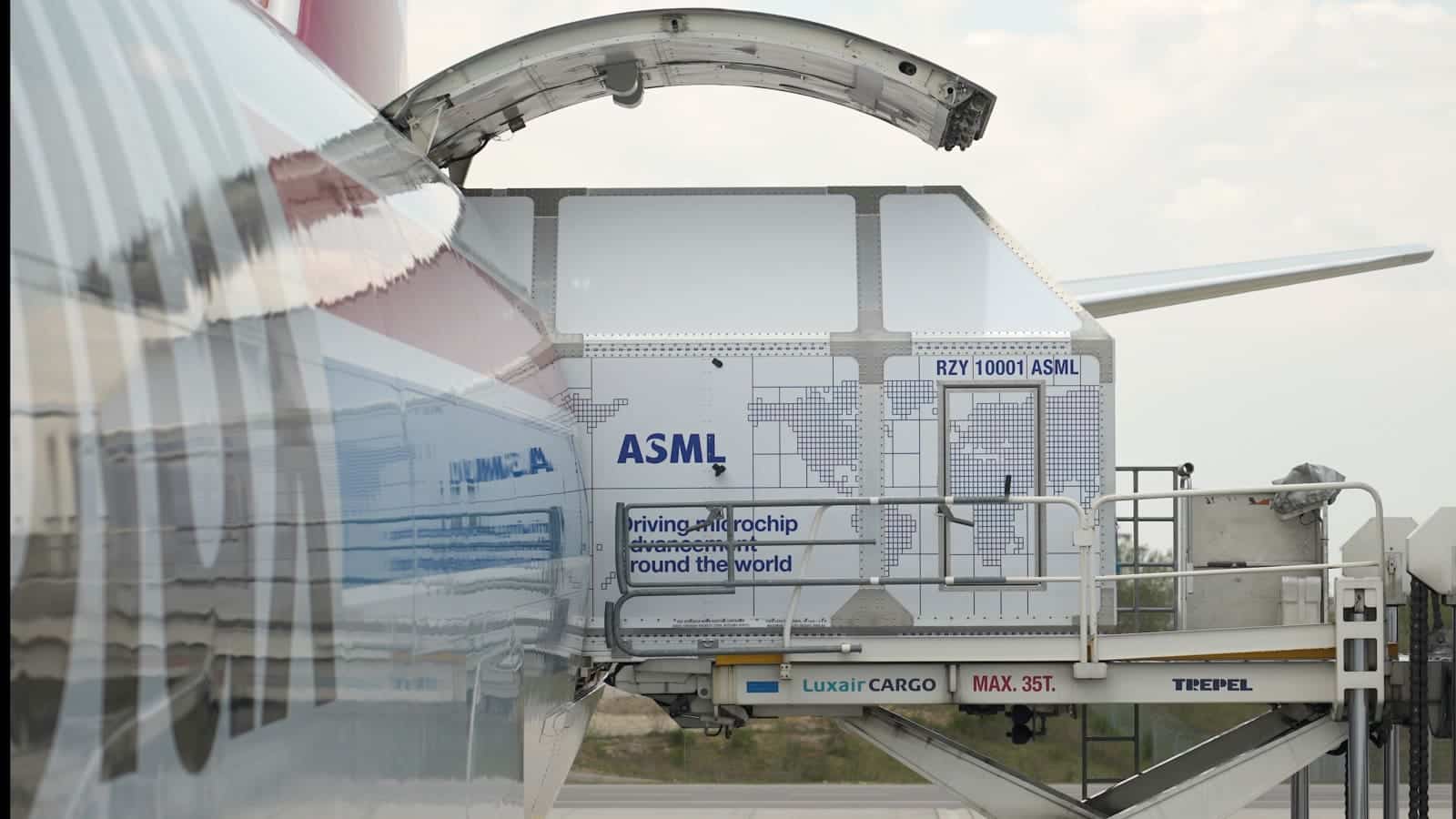
The Netherlands plays a difficult-to-replace role in the global chip supply chain. Its industry includes ASML, manufacturer of the most advanced lithography equipment, as well as NXP, ASM International, Nexperia, and a broad network of specialized suppliers in optics, materials, components, and machinery.
HCSS classifies semiconductors as the sector with the highest strategic risk. China continues to rely on foreign knowledge and equipment to produce advanced chips, while export restrictions complicate access to certain technologies. The report argues that this situation increases incentives for cyber espionage, talent capture, intellectual property theft, and the use of raw materials as tools of pressure.
| Sector Analyzed | Estimated Size in the Netherlands | Risk Level According to HCSS | Main Signal Pathways |
|---|---|---|---|
| Semiconductors | Approx. €30 billion | Very high | Cyberespionage, talent, IP, raw materials |
| Maritime Industry | Approx. €94 billion | High | Port data, suppliers, equipment, logistics platforms |
| Aerospace | Approx. €4.7 billion | Moderate-high | Research, dual-use tech, personnel, strategic materials |
The figures are sector estimates compiled in the report and do not solely measure exports or revenues from companies exposed to China. Their value lies in showing that disruptions could cascade to other European countries, especially in semiconductors and maritime logistics.
The study references past cases involving theft of trade secrets and transfer of manufacturing knowledge. It also highlights a more difficult-to-control issue: much of the Netherlands’ advantage isn’t contained in a specific patent or machine but resides in the collective knowledge of engineers, researchers, and suppliers skilled at integrating highly complex processes.
Export controls can prevent the sale of certain equipment but are less effective against the relocation of personnel, minor shareholdings, prolonged collaborations, or indirect access to suppliers. The report suggests that Dutch regulation is better suited for scrutinizing specific transactions than for detecting gradual knowledge loss.
The Netherlands has already tightened controls over certain manufacturing equipment exports and, since 2023, applies the Wet VIFO law to scrutinize investments and acquisitions in sensitive technologies. It also allocated €2.51 billion to the so-called Project Beethoven, aimed at strengthening the industrial and educational environment of Brainport Eindhoven.
In September 2025, the government also resorted to the Goods Availability Law to address issues at Nexperia, a Nimega-based manufacturer with Chinese ownership. The intervention aimed to prevent key capabilities, assets, and knowledge considered vital for Europe from falling outside its reach during a crisis.
HCSS believes these measures are relevant but insufficient to oversee subsequent access to investments, supplier relationships, personnel movement, or informal knowledge transfers.
Rotterdam port as a data infrastructure
Maritime exposure involves a different kind of risk. China already dominates much of the global naval manufacturing; thus, its interest isn’t limited to obtaining technology. It may also seek visibility over cargo, military movements, sanctions, supply chains, and the operation of major European ports.
The report classifies Dutch maritime sector as high risk due to its size, digitization, and reliance on international companies. Rotterdam handles over 30% of EU container traffic and connects to railway networks, roads, waterways, energy facilities, and supply chains spanning multiple countries.
Special attention is given to COSCO and Hutchison Port Holdings’ stakes in the Euromax terminal. While their ownership doesn’t automatically imply espionage activities, the report notes that ownership structures, logistics management, and port system access could serve as channels for sensitive information.
The transformation of Rotterdam into a smart port broadens these possibilities. Sensors, AI-based inspections, automated cranes, reservation platforms, and tracking systems improve efficiency but also expand the attack surface.
Unauthorized access could reveal cargo volumes, routes, dependencies on specific components, or movements related to NATO. Manipulating this data might delay operations without physically shutting down the port.
The report considers digital espionage, data collection, and calibrated disruptions more likely than outright sabotage. Even limited interference could impact energy supplies, German industry, domestic transportation, or NATO military logistics.
The Netherlands has already developed a cybersecurity strategy for its ports and a national platform for information sharing. However, HCSS detects significant gaps between large operators and smaller firms such as shipyards, transporters, cloud providers, and maintenance companies, which often have fewer resources.
Aerospace knowledge and military applications
The aerospace sector is rated moderate-high risk. While less significant economically, it involves technologies applicable to civil aviation, defense, satellites, Earth observation, and military communications.
The Netherlands hosts over 200 aerospace organizations, including Airbus Defence and Space Netherlands, ISISPACE, TNO, and the Dutch Space Agency. It develops launch structures, solar panels, small satellites, and observation systems.
The report highlights talent attraction, university collaborations, and cyber espionage as main access pathways. Over 90 Chinese researchers are believed to have been involved in Dutch environments related to aerospace knowledge, according to the official threat assessment of 2025 cited by the authors.
Concerns aren’t about the researchers’ nationality but potential institutional links, conflicts of interest, or collaborations with universities tied to the Chinese military complex. Applying blanket filters based on origin would be discriminatory and hinder research. HCSS suggests controls based on roles, access, affiliations, and project sensitivity.
Europe’s dependence on rare earths, alloys, and processed materials from China adds another layer. Beijing still needs Western technology for some aerospace programs, while European manufacturers depend on Chinese supplies. The report describes a ‘managed interdependence’ policy that maintains some relations but reduces dependencies that could be exploited during crises.
From export controls to shared industrial defense
HCSS’s main critique is fragmentation. Ministries, intelligence agencies, universities, ports, and companies have partial information; however, a stable system linking incidents across different sectors is lacking.
It proposes establishing a national foreign interference council under NCTV coordination, with dedicated groups for chips, maritime, and aerospace sectors. Additionally, creating a secure platform for AIVD, MIVD, ministries, and authorized companies to exchange intelligence in both directions is recommended.
The second recommendation is to impose security standards proportionate to the risk, including cybersecurity, supplier integrity, investment analysis, internal threat protection, and enhanced controls for roles with access to sensitive processes.
HCSS also advocates for creating a public-private fund to help small companies and research centers shoulder these compliance costs. Without funding, stricter obligations might only burden large groups like ASML, leaving smaller suppliers as the most accessible targets for risks.
This isn’t about severing economic ties with China but maintaining cooperation where mutual benefits, reciprocity, and mechanisms to limit exposure exist. The approach favors targeted risk reduction over full detachment.
The Dutch government itself follows this dual strategy. It has expanded export controls and espionage laws but continues to view China as a trade partner with which to sustain cooperation. In May 2025, both governments agreed to continue economic and technological dialogue, including in semiconductors.
The report warns that threats often don’t appear as visible crises. Instead, they build over years through accumulated access, dependencies, transferred knowledge, and commercial positions, thereby reducing options during an international dispute. Its recommendation is to act before such dependencies become irreversible, without treating every China relationship as inherently threatening.
Frequently Asked Questions
Who prepared the report on Chinese interference?
The Hague Centre for Strategic Studies and the China Knowledge Network. The work was funded by a program from the Dutch Ministry of Foreign Affairs, but the authors are responsible for the conclusions.
Which sector is most exposed?
Semiconductors. The report assigns the highest risk level due to the position of Dutch firms in advanced chip manufacturing and China’s interest in reducing its technological dependence.
Does the study claim that all Chinese investments are espionage?
No. It identifies potential access points and risk patterns. An investment, university collaboration, or hiring does not automatically imply interference.
Will the Netherlands cut trade relations with China?
The report does not recommend a full break. It advocates for “managed interdependence,” with selective cooperation, reciprocity, diversified supply chains, and protection of sensitive technologies.
Source: HCSS
