
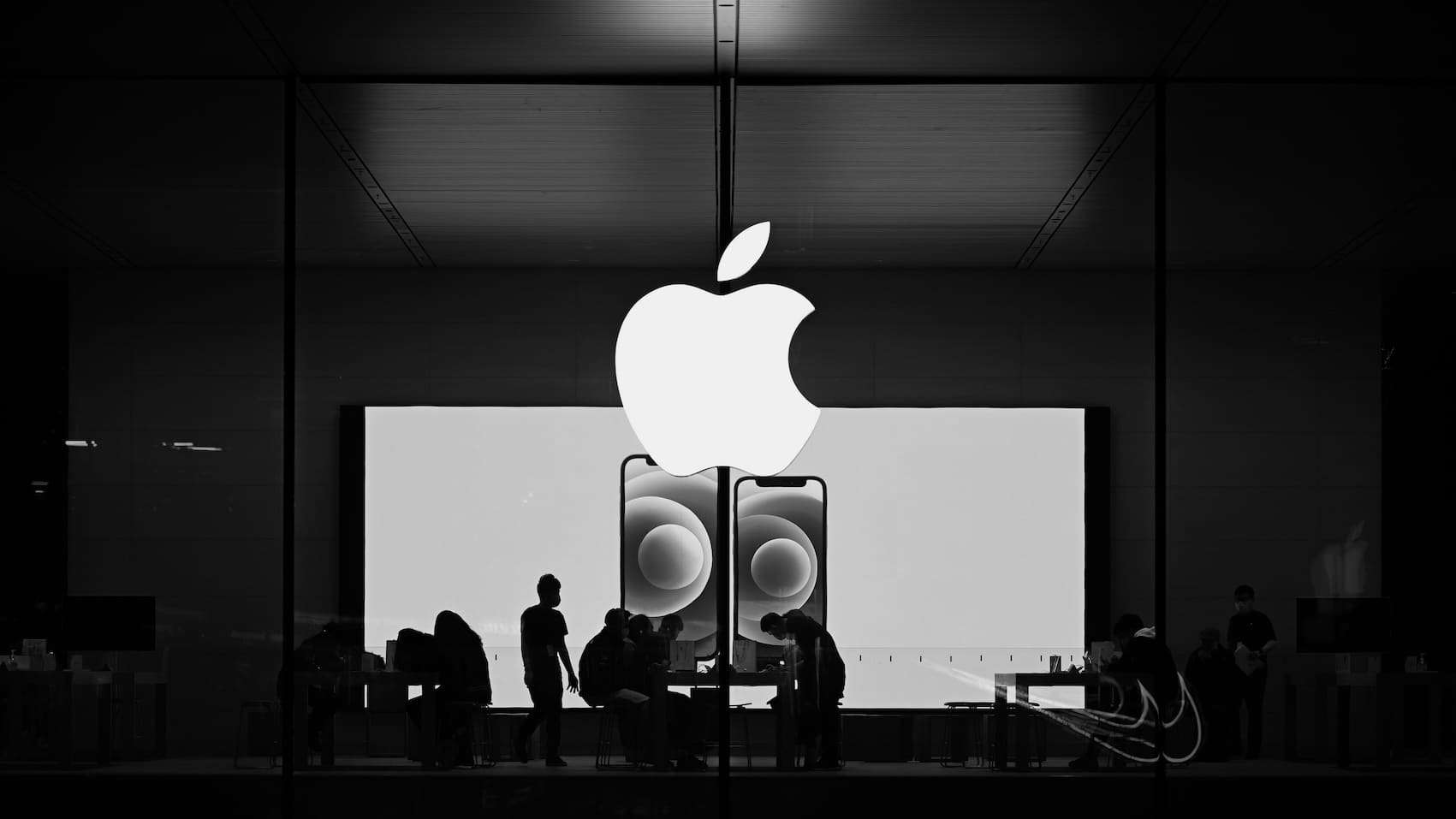
China has approved the deployment of Apple Intelligence in the country, a move that allows Apple to address one of its main disadvantages against Huawei, Xiaomi, Oppo, and other local manufacturers. The company will use technology from Alibaba and Baidu to adapt its AI functionalities to Chinese regulations, although it has not yet announced the exact activation date.
The key points of Apple Intelligence in China in 30 seconds
- The Cyberspace Administration of China has approved Apple’s artificial intelligence service.
- Alibaba will integrate its Qwen models into iOS, iPadOS, macOS, and visionOS.
- Baidu will collaborate on adapting other functions for Chinese users.
- This arrival fills a commercial gap for the iPhone compared to Huawei and Xiaomi.
- Apple is preparing for launch after increasing its shipments in China by 24.4% during Q2 2026.
The approval comes at a favorable time for Apple. iPhone shipments in China grew 24.4% year-over-year in the second quarter of 2026, positioning the brand as the second-largest manufacturer behind Huawei, according to Reuters data. Adding Apple Intelligence could strengthen this recovery by providing an additional reason for consumers to upgrade, especially among those who previously dismissed recent models due to the absence of generative AI features.
AI alone doesn’t guarantee increased sales. Factors such as pricing, promotions, distribution, economic conditions, and local competition will remain significant. However, Apple is removing one visible difference compared to Chinese brands, which already include assistants, generative image editing, summaries, translations, and productivity tools on their phones.
China is no longer the large market without Apple Intelligence
Apple began rolling out Apple Intelligence in other markets in 2024, but devices sold in mainland China remained unaffected. The company needed to adapt the technology to local regulations concerning generative AI, data management, algorithm registration, and content control.
The solution involves replacing part of the international infrastructure with Chinese providers. Alibaba confirmed that its Qwen models will be integrated into the Apple Intelligence experiences available on iPhone, iPad, Mac, and Apple Vision Pro. The company mentions capabilities for text and image generation, though hasn’t specified which Qwen version or what tasks it will handle.
Baidu will also serve as a technical partner. Its involvement has been linked to adapting functions for language, local knowledge, and certain connected services, but Apple and Baidu have not published a detailed responsibilities breakdown.
| Element | International Apple Intelligence | Apple Intelligence in China |
|---|---|---|
| Apple’s own models | Yes | Yes, with local adaptation |
| On-device processing | Yes | Likely yes |
| External infrastructure | Apple services and authorized integrations | Approved providers in China |
| Confirmed local model | Not applicable | Qwen, by Alibaba | Second partner | Depends on the market and function | Baidu |
| Approval by CAC | Not needed outside China | Granted |
| Activation date | Available in many markets | Not announced yet |
| Initial functions | Varies by language and device | Yet to be specified |
The Chinese version won’t be just a translation. Apple will need to determine which requests are processed locally on the device, which are sent to its servers, and which depend on Alibaba or Baidu.
It will also have to clarify what information partners receive, where the queries are stored, and what user controls exist. This is especially important because Apple has highlighted privacy and local processing as key differentiators for its AI platform.
The authorization doesn’t mean all features will activate simultaneously. Tools like text rewriting, notification summarization, or image generation may be easier to implement initially compared to a Siri version capable of accessing personal data and acting within multiple applications.
Support for prolonging iPhone’s recovery in China
China remains a crucial market for Apple due to three main reasons: its large number of buyers, its contribution to revenue, and the strength of domestic manufacturers capable of competing in the high-end segment.
Huawei reclaimed the top spot in the Chinese smartphone market in 2025, with an estimated market share of 16.4%, slightly ahead of Apple’s 16.2%. The small difference underscored that the U.S. brand could no longer rely solely on its reputation, camera quality, or seamless hardware-software integration.
The iPhone’s recovery in 2026 has been notable. In the fiscal quarter ending December 2025, Apple’s revenue from Greater China rose 38% year-over-year to $25.53 billion. The company credits part of this growth to the iPhone 17 series and an influx of Android switchers.
| Commercial indicator | Reported result |
| iPhone shipment growth in China, Q2 2026 | 24.4% |
| Apple’s market position in China during that quarter | Second |
| Market leader | Huawei | Apple’s revenue in Greater China, quarter ending December 2025 | $25.53 billion |
| YoY revenue growth | 38% |
| Main gap against local rivals | Apple Intelligence not available |
Introducing Apple Intelligence could extend this revival into a longer renewal cycle. Its effect would be especially noticeable among users of older models awaiting a clear software upgrade to justify purchasing a new iPhone.
AI features also help Apple defend its device prices. In a market with foldable phones, advanced cameras, and competitive local models, offering a device without globally announced generative tools made it harder to justify premium costs.
The approval also comes ahead of upcoming iPhone launches. Apple can now incorporate Apple Intelligence availability into its marketing campaigns, retail stores, and carrier deals, instead of selling phones that lose a highly promoted feature once activated in China.
Benefits aren’t limited to hardware. More compatible devices mean more opportunities to sell iCloud storage, apps, subscriptions, and other services. An increasing segment of Apple’s business relies on keeping customers within its ecosystem for years.
How it could boost iPhone sales
| Possible impact | Impact |
| Eliminates a disadvantage against Huawei and Xiaomi | Improves the comparison of high-end phones |
| Adds features to compatible models | May accelerate pending upgrades |
| Supports future-generation launches | Allows marketing the complete Apple experience |
| Integrates Chinese models | Facilitates regulatory compliance and language adaptation |
| Enhances service offerings | May increase app and storage usage |
| Reduces the gap between China and other markets | Prevents Chinese buyers from receiving an incomplete product |
These are potential effects, not guaranteed results. Apple must prove that its integration with Qwen and Baidu delivers helpful responses, good speed, and a cohesive experience within the operating system.
Chinese manufacturers will continue advancing as well. Huawei is developing its chips, models, and HarmonyOS, while Xiaomi, Oppo, and Vivo embed AI into photography, productivity, translation, and search features. Apple arrives later and will need to compete with services designed from the ground up for local users.
One brand, different AI platforms
The entry into China confirms that Apple Intelligence will increasingly depend on the market in which it’s used. An iPhone might maintain a consistent overall interface but rely on different models depending on region, language, and regulatory requirements.
In China, Qwen will be used, with Baidu involved. Elsewhere, Apple maintains its own infrastructure and external integrations. This fragmentation allows service deployment across more territories but increases technical complexity and might lead to variations in quality, availability, and privacy.
Apple hasn’t clarified what happens when a Chinese user travels abroad, changes regions, or uses an iPhone purchased elsewhere in China. Activation could depend on a mix of location, Apple ID, language, device region, and purchase site.
The main regulatory hurdle was licensing, but several issues remain: launch timing, compatible devices, initial functions, data management, and the precise roles of each partner.
For Apple, this is a timely opportunity. The company is already increasing iPhone sales in China and can now add a feature rivals have used as a sign of platform lag. While this doesn’t guarantee re-establishing leadership, it removes a barrier that could slow the renewal of millions of devices in one of its key markets.
Frequently Asked Questions
When will Apple Intelligence arrive on iPhones in China?
The Cyberspace Administration of China has approved the service, but Apple has not yet announced an exact launch date.
Which AI models will Apple use in China?
Alibaba confirmed that its Qwen family will be integrated into iOS, iPadOS, macOS, and visionOS. Baidu will also participate, though it hasn’t specified the functions each company will handle.
Can Apple Intelligence boost iPhone sales in China?
It could help address a disadvantage compared to Huawei, Xiaomi, and other local brands. However, results will also depend on price strategies, promotions, compatible devices, and the quality of the features.
Will the Chinese version be the same as the one available in Europe or the U.S.?
Not entirely. While maintaining integration with Apple systems, it will utilize local models and providers to meet Chinese regulations.
